



About Bernardo Strozzi
Genoese-born Capuchin friar who fled to Venice and synthesised Caravaggio, Rubens, and van Dyck into the foundations of the Venetian Baroque.
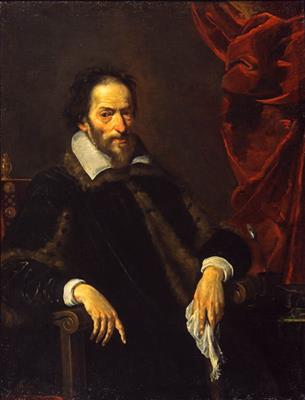
Where to see Bernardo Strozzi
Collection holdings are reported here; current display varies. Check with each museum before visiting.
-
 10 recorded works
Musei di Strada Nuova
Genoa, Italy
-
6 recorded works
Hermitage Museum
Saint Petersburg, Russia

-
5 recorded works
Kunsthistorisches Museum
Vienna, Austria
-
5 recorded works
Gallerie dell'Accademia
Venice, Italy
-
4 recorded works
Louvre
Paris, France
-
3 recorded works
Museum Boijmans Van Beuningen
Rotterdam, Netherlands
-
3 recorded works
National Trust
Swindon, United Kingdom
-
2 recorded works
National Gallery of Art
Washington D.C., United States
-
2 recorded works
Museo del Prado
Madrid, Spain
-
2 recorded works
Museum de Fundatie
Heino, Netherlands


Own a piece of it
Bernardo Strozzi prints
Hand-finished archival prints from Bernardo Strozzi's body of work.
 The Madonna of Justice - Bernardo Strozzi
From £28.00
The Madonna of Justice - Bernardo Strozzi
From £28.00
 Saint Antony of Padua holding Baby Jesus - Bernardo Strozzi
From £37.00
Saint Antony of Padua holding Baby Jesus - Bernardo Strozzi
From £37.00
 The Release of St. Peter - Bernardo Strozzi
From £37.00
The Release of St. Peter - Bernardo Strozzi
From £37.00
 St. John the Baptist Preaching - Bernardo Strozzi
From £37.00
St. John the Baptist Preaching - Bernardo Strozzi
From £37.00
 Doge Francesco Erizzo - Bernardo Strozzi
From £28.00
Doge Francesco Erizzo - Bernardo Strozzi
From £28.00
 A Personification of Fame - Bernardo Strozzi
From £28.00
A Personification of Fame - Bernardo Strozzi
From £28.00
 St. Roch - Bernardo Strozzi
From £28.00
St. Roch - Bernardo Strozzi
From £28.00
 David with the Head of Goliath - Bernardo Strozzi
From £28.00
David with the Head of Goliath - Bernardo Strozzi
From £28.00
View all 48 museums
-
2 recorded works
National Gallery of Ireland
Dublin, Ireland
Also here (6)
-
2 recorded works
National Museum in Warsaw
Warsaw, Poland
-
1 recorded work
National Galleries Scotland
Edinburgh, United Kingdom
-
1 recorded work
North Carolina Museum of Art
Raleigh, United States
-
1 recorded work
National Museum in Kraków
Kraków, Poland
-
 1 recorded work
Musée Granet
Aix-en-Provence, France
-
1 recorded work
Museum of Grenoble
Grenoble, France
-
 1 recorded work
Philbrook Museum of Art
Tulsa, United States
-
1 recorded work
Wallraf–Richartz Museum
Cologne, Germany
-
1 recorded work
Gemäldegalerie Berlin
Berlin, Germany
-
1 recorded work
Musée Magnin
Dijon, France
-
1 recorded work
National Gallery
London, United Kingdom
-
1 recorded work
Musée des Beaux-Arts de Dijon
Dijon, France
-
1 recorded work
Finnish National Gallery
Helsinki, Finland
Also here (6)
-
1 recorded work
Galleria Nazionale d'Arte Antica
Rome, Italy
-
1 recorded work
The Nelson-Atkins Museum of Art
Kansas City, United States
-
1 recorded work
Kunsthaus Zürich
Zurich, Switzerland
-
1 recorded work
Museo de Arte de Worcester
Worcester, United States
-
 1 recorded work
Art Gallery of South Australia
Adelaide, Australia
-
1 recorded work
Nationalmuseum
Stockholm, Sweden
-
1 recorded work
Foundation E.G. Bührle Collection
Zurich, Switzerland
-
1 recorded work
Museo de Arte de Ponce
Ponce, United States
-
1 recorded work
National Museum Cardiff
Cardiff, United Kingdom
-
1 recorded work
Museo Poldi Pezzoli
Milan, Italy
-
1 recorded work
Hessen Kassel Heritage
Kassel, Germany
-
1 recorded work
Art Institute of Chicago
Chicago, United States
-
1 recorded work
Cincinnati Art Museum
Cincinnati, United States
-
1 recorded work
Walters Art Museum
Baltimore, United States
-
1 recorded work
Seattle Art Museum
Seattle, United States
-
1 recorded work
Detroit Institute of Arts
Detroit, United States
-
1 recorded work
Metropolitan Museum of Art
New York City, United States
-
1 recorded work
Los Angeles County Museum of Art
Los Angeles, United States
-
1 recorded work
Musée des Augustins
Toulouse, France
-
1 recorded work
Royal Collection
London, United Kingdom
-
1 recorded work
Saint Louis Art Museum
St. Louis, United States
-
1 recorded work
Kirklees Museums and Galleries
Huddersfield, United Kingdom
-
1 recorded work
Museum of Fine Arts, Houston
Houston, United States
-
 1 recorded work
National Gallery of Armenia
Yerevan, Armenia
Also here (6)


Can't travel? Bring Bernardo Strozzi home.
See all Bernardo Strozzi prints →Frequently Asked Questions
Where can I see Bernardo Strozzi's work?
Bernardo Strozzi's paintings can be viewed in numerous museums. In Italy, his works are held at the Galleria degli Uffizi (Florence), the Pinacoteca di Brera (Milan), the Galleria e Museo Estense (Modena), the Palazzo Barberini (Rome), the Pinacoteca Nazionale di Siena, the Galleria dell’ Accademia (Venice), and the Museo Correr (Venice). Outside Italy, Strozzi's art has travelled to collections such as the Nationalmuseum (Stockholm). Other European museums that hold his paintings include the Kunsthistorisches Museum (Vienna). In the Netherlands, you can find his works in the Rijksmuseum (Amsterdam) and the Mauritshuis (The Hague). In the United Kingdom, Strozzi's paintings are in the collections of the National Gallery (London), the National Portrait Gallery (London), and the Victoria and Albert Museum (London). In the United States, his works can be viewed at the Metropolitan Museum of Art (New York) and the National Gallery of Art (Washington).Why are Bernardo Strozzi's works important today?
Bernardo Strozzi was a significant figure in the Italian[9] Baroque. He is notable as one of the few Baroque masters whose reputation remained strong even when the style fell out of favour. Strozzi was a leading Genoese painter. Walter P. Chrysler, Jr, owned three paintings by Strozzi, including a Portrait of a Man, a portrait of Paolo Gregorio Raggi (Genoese governor of Corsica), and a Martyrdom of Saint Justina (once thought to be Saint Dorothea). The Martyrdom is still held in Norfolk; it was probably from a Venetian church, in the collection of Italico Brass in Venice from 1920 to 1951, and then with Julius Weitzner from 1951 to 1953. The Metropolitan Museum collected his work from an early date, acquiring a painting by Strozzi in 1927. This reflects a broader American collecting practice.What techniques or materials did Bernardo Strozzi use?
Bernardo Strozzi, a 17th-century Italian[9] painter, worked primarily with oil on canvas. Venetian painters favoured canvas over plaster or wood panels because the lagoon climate was not suited to fresco, and canvas was more practical for large works, or for export. Venice was a centre for weaving linen, hemp, and jute; these were the fabrics Venetian artists used, sometimes blending them. For larger pieces, painters selected thicker twill and herringbone canvases for their strength, applying thin gesso grounds to maintain flexibility for transport. The combination of canvas and ground created a textured surface that influenced paint application. Oil paint was applied in thin layers. Strozzi, like other Baroque masters, employed impasto, a technique using thick applications of paint (usually white) to create highlights. This allowed for a freer style and larger formats. Dark areas were achieved with thin, transparent washes, often revealing a preliminary wash or imprimatura. The highlights, in contrast, appear thick and raised. This approach allowed the image to evolve during the painting process, resulting in dramatic chiaroscuro.Who did Bernardo Strozzi influence?
Bernardo Strozzi's artistic impact is registered in the work of numerous artists. Venetian Renaissance painters provided a base for Baroque artists in Rome. The achievements of artists such as Titian and Tintoretto inspired not only the Carracci family and Caravaggio, but also artists outside Italy. Rubens, Van Dyck, Rembrandt, and Velázquez all studied Venetian paintings, and their pictorial style and subject interpretation show this influence. Appreciation for Venetian art continued into the eighteenth century. French painters like Boucher, Watteau, and Fragonard reflected Venetian influence in their mythological scenes and portraits. Many European artists travelled to Italy to study Venetian works, often knowing them through copies and engravings. Caravaggio's style was absorbed into Western art. Painters such as Rubens, Velázquez, and Pietro da Cortona echoed his compositions. French artists, including Valentin de Boulogne and Georges de La Tour, also show Caravaggio's impact. Interest in Caravaggio resurged during the Neoclassical and Romantic periods; Jacques-Louis David and Théodore Géricault were among those who drew inspiration from his work.Who influenced Bernardo Strozzi?
Bernardo Strozzi, a prominent figure in the early Baroque period, absorbed a range of influences that shaped his distinctive style. Venetian Renaissance painters, such as Titian and Tintoretto, provided a foundation for Strozzi's artistic development, particularly in his use of colour and dynamic composition. Strozzi was also responsive to the work of Paolo Veronese, whose art was rooted in the Italian[9] High Renaissance. Veronese's love of worldly splendour and his subordination of content to form had an impact. A visit to Rome exposed Strozzi to the work of Michelangelo, especially the figures in the Sistine Chapel. Northern European artists who studied Venetian art also had an impact. Rubens and Van Dyck, both admirers of Titian, transmitted elements of the Venetian style through Europe. Strozzi synthesised these influences, creating a style that blended Venetian colourism with Baroque dynamism.What is Bernardo Strozzi's most famous work?
Bernardo Strozzi (1581[9]-1644[9]) was an Italian[9] painter, and one of the founders of the Venetian Baroque style. Born in Genoa, he trained with Pietro Sorri. Strozzi joined the Capuchin Monastery of St. Barnabas at age 17, painting devotional works. He left in 1608[9] to care for his family, but was later ordered to return. Instead, he moved to Venice and established a workshop, achieving considerable recognition. It is difficult to name one single "most famous" work. However, several paintings are frequently cited. The Cook (c. 1625; Galleria di Palazzo Rosso, Genoa) is often mentioned; it bridges Italian and Flemish art. Strozzi combines close observation of objects, reminiscent of northern European painting, with a focus on the figure of the cook herself. Other notable works include the Calling of St. Matthew (c. 1620; Worcester Art Museum), which draws inspiration from Caravaggio's version of the same scene. Also of note is the Adoration of the Shepherds (c. 1616-1618[9]; Walters Art Gallery, Baltimore), in which Strozzi combines Baroque trends with solid naturalism.What style or movement did Bernardo Strozzi belong to?
Bernardo Strozzi (1581[9]-1644[9]) is considered one of the founders of the Venetian Baroque style. Born in Genoa, he trained with Pietro Sorri, and later entered the Capuchin Monastery of St Barnabas, painting devotional works. Genoa in the early 17th century was artistically active, shaped by strong links with Antwerp. Peter Paul Rubens and Anthony van Dyck, both influenced by Venetian colour, worked there. The city also saw Caravaggesque realism, particularly through Orazio Gentileschi, and the influence of Lombard painters. Strozzi synthesised these elements into his own style. His *Calling of St Matthew* (circa 1620[9]) draws from Caravaggio's work of the same name. Both paintings feature Christ pointing to St Matthew, who gestures in response. Light enters diagonally, and other figures are unaware of the interaction. Strozzi's Genoese period and later Venetian phase included paintings and frescoes for aristocratic clients, plus religious works, particularly altarpieces for the Capuchin Order.
Sources
Where to See guide aggregates verified holdings of Bernardo Strozzi's works across the following collections.
- [1] museum Musée Granet Used for: museum holdings.
- [2] museum Philbrook Museum of Art Used for: museum holdings.
- [3] museum Art Gallery of South Australia Used for: museum holdings.
- [4] museum Musei di Strada Nuova Used for: museum holdings.
- [5] museum Samuel H. Kress Collection Used for: museum holdings.
- [6] museum National Gallery of Armenia Used for: museum holdings.
- [7] academic The Editors of Encyclopaedia Britannica, Bernardo Strozzi | Italian painter Used for: biography.
- [8] academic Chiara Krawietz, Strozzi, Bernardo Used for: biography.
- [9] wikipedia Wikipedia: Bernardo Strozzi Used for: biography.
- [10] book Victoria Charles, Baroque Art Used for: biography.
- [11] book Zuffi, Stefano, 1961-, Baroque painting : two centuries of masterpieces from the era preceding the dawn modern art Used for: biography.
- [12] book Lilian H. Zirpolo, Historical Dictionary of Baroque Art and Architecture Used for: biography.
- [13] book Masterpieces of western art : a history of art in 900 individual studies from the Gothic to the present day Used for: biography.
- [14] book Irving Lavin;, Visible Spirit Used for: stylistic analysis.
- [15] museum Bernardo Strozzi (1581 - 1644) Used for: biography.
Editorial overseen by Solis Prints. Sources verified 2026-09-30. Click a source for details, or hover over [N] in the page above to preview.
Editorial standardsMethodologyCorrectionsAI disclosureAbout the editorial team