



About Adam van der Meulen
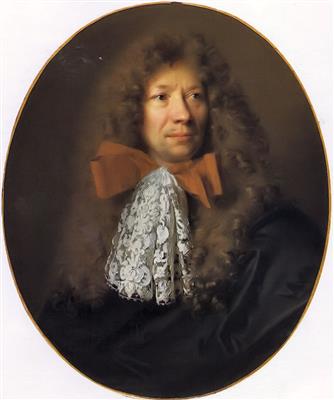
Where to see Adam van der Meulen
Ranked by works you can see in person.
-
32 works
Louvre
Paris, France
-
13 works
Museum of the History of France
Versailles, France


-
8 works
National Trust
Swindon, United Kingdom
-
6 works
Museum of Fine Arts of Rennes
Rennes, France
-
6 works
Palace of Versailles
Versailles, France
-
6 works
Hermitage Museum
Saint Petersburg, Russia
-
6 works
Royal Collection
London, United Kingdom
-
3 works
Apsley House
London, United Kingdom
-
3 works
Nationalmuseum
Stockholm, Sweden
-
3 works
National Museum in Warsaw
Warsaw, Poland


View all 40 museums
-
2 works
Gemäldegalerie Berlin
Berlin, Germany
-
2 works
Musée des beaux-arts de Marseille
Marseille, France
-
2 works
Museo del Prado
Madrid, Spain
-
2 works
Rijksmuseum
Amsterdam, Netherlands
-
2 works
Hessen Kassel Heritage
Kassel, Germany
-
2 works
Musée des Beaux-Arts de la ville de Paris
Paris, France
-
2 works
Musée Fabre
Montpellier, France
-
1 works
Westphalian State Museum of Art and Cultural History
Münster, Germany
-
1 works
Museum of Grenoble
Grenoble, France
-
1 works
Musée Magnin
Dijon, France
-
1 works
National Gallery
London, United Kingdom
-
1 works
Staatliche Kunstsammlungen Dresden
Dresden, Germany
-
1 works
Musée des Beaux-Arts de Dijon
Dijon, France
-
1 works
Ferens Art Gallery
Kingston upon Hull, United Kingdom
-
1 works
Ashmolean Museum
Oxford, United Kingdom
-
1 works
Kunsthistorisches Museum
Vienna, Austria
-
1 works
Palais des Beaux-Arts de Lille
Lille, France
-
1 works
Royal Museums of Fine Arts of Belgium
Brussels, Belgium
-
1 works
Metropolitan Museum of Art
New York City, United States
-
1 works
Birmingham Museums Trust
Birmingham, United Kingdom
-
1 works
King Baudouin Foundation
Brussels, Belgium
-
1 works
National Gallery of Athens
Athens, Greece
-
1 works
Statens Museum for Kunst
Copenhagen, Denmark
-
1 works
National Museum of Art, Architecture and Design
Oslo, Norway
-
1 works
Musée Carnavalet
Paris, France
-
1 works
Philadelphia Museum of Art
Philadelphia, United States
-
0 works
Musea Brugge
Bruges, Belgium
-
0 works
Speed Art Museum
Louisville, United States
-
0 works
National Gallery of Art
Washington D.C., United States
-
0 works
Virginia Museum of Fine Arts
Richmond, United States


Frequently Asked Questions
Where can I see Adam van der Meulen's work?
Adam van der Meulen's artwork can be found in numerous museums and galleries. In Germany, his works are held at the Staatliche Museen zu Berlin, Kupferstichkabinett, Herzog Anton Ulrich-Museum (Braunschweig), Gemäldegalerie Alte Meister (Dresden), Städel Museum (Frankfurt am Main), and Hamburger Kunsthalle. Other European locations include the National Gallery of Scotland (Edinburgh), Galleria degli Uffizi (Florence), Sinebrychoff Art Museum (Helsinki), Kunsthistorisches Museum (Vienna), Musée du Louvre (Paris), and Royal Cabinet of Paintings, Mauritshuis (The Hague). In the United Kingdom, van der Meulen's art can be viewed at the British Library, the British Museum, the National Gallery, the National Portrait Gallery, the Tate, UCL Art Collections (University College London), the Victoria and Albert Museum, and the National Museums Liverpool, Walker Art Gallery (Liverpool). Outside of Europe, collections include the Metropolitan Museum of Art (New York), the J. Paul Getty Museum (Los Angeles), the National Gallery of Art (Washington), the National Gallery of Victoria (Melbourne) and the National Gallery of Canada (Ottawa).What should I know about Adam van der Meulen's prints?
Adam van der Meulen (1632[1]-1690[1]) was a Flemish painter who specialised in battle scenes. He entered the Guild of Saint Luke in 1651[1]. Later, he moved to France and entered the Académie Royale in 1673. Prints relating to van der Meulen would likely have been sold in Amsterdam during his lifetime. The painter and dealer Jan Basse, for instance, owned prints by numerous artists, and was more than casually acquainted with Rembrandt. Rembrandt himself was an avid collector of prints, drawings, and sculpture. He bought works by Dürer, Lucas van Leyden, and others at auction, sometimes intending to resell them. Collectors like Joachim von Sandrart bought paper art on a grand scale. Sandrart's collection included Italian drawings by Perugino, Correggio, and Raphael; drawings by Dürer and Holbein; and prints by major Italian and German artists.Why are Adam van der Meulen's works important today?
Adam Frans van der Meulen (1632[1]-1690[1]) was a painter from Brussels who is important for his documentation of military events and court life in the 17th century. Working for Louis XIV, van der Meulen created numerous paintings and drawings that offer insight into the battles, sieges, and diplomatic exchanges of the era. His images often include detailed depictions of battle scenes, as well as portraits of prominent figures. Van der Meulen's style, characterised by attention to detail and a sense of movement, brought him recognition during his lifetime. His works are valued for their historical accuracy and artistic merit. They provide a visual record of significant events and offer a glimpse into the world of the French court under Louis XIV. Today, his art remains a valuable resource for historians and art enthusiasts interested in this period.What techniques or materials did Adam van der Meulen use?
Adam van der Meulen's specific techniques and materials are not extensively documented; however, some general observations about 17th-century painting practices can be made. Artists of the period often adhered to established formulas, a tradition that influenced the consistency of their work. In portraiture, a common procedure involved a toned, monochrome underpainting. The lighter areas of the face and clothing were often heightened with paint containing white-lead. The background was likely worked on next, followed by the head or costume, excluding the collar, cap, and cuffs. These items were typically added last, overlapping adjacent parts of the painting. Documents from the period reveal that sitters sometimes left items of clothing, such as lace collars, with the artist to be painted in detail later. This suggests that the model was not always present for every stage of the painting process. The head might be completed first to capture the likeness, with the rest of the painting finished afterwards.Who did Adam van der Meulen influence?
It is difficult to summarise the precise nature of Adam van der Meulen's influence on later artists. The concept of artistic influence during the Dutch[1] Golden Age involved emulation and competition. Artists were encouraged to draw inspiration from classical examples to develop their own innovations. Samuel van Hoogstraten noted that painters should draw inspiration from the classics precisely to make inventions of their own. He identified a 'zest for rivalry' as the force behind peaks in art history. Van Hoogstraten gave examples of envy between painters and its results: ambition or slander. He also stated that it is particularly good for art if masters cherish each other’s work and buy it for substantial sums, as Rembrandt did with the prints of Lucas van Leyden. Making copies of other artists’ work was a way of paying tribute and boosting an artist’s reputation.Who influenced Adam van der Meulen?
Adam van der Meulen's artistic development occurred within a milieu influenced by various artists and theoretical writings. Samuel van Hoogstraten's art theory, for instance, was shaped by a desire to emulate the erudition found in Jan or Johannes Junius's book on classical artists, Schilderkonst der oude (1641[1]), itself a translation of De pictura veterum (1637). Van Hoogstraten saw Junius as a primary source. Karel van Mander's 'Grondt' was the first theoretical treatise published in Dutch[1]. Van Hoogstraten, while critical of van Mander's inspirational (rather than didactic) purpose, was a faithful reader. Van Hoogstraten's Inleyding modified Junius's systematic classification, using principles derived from rhetoric. Arnold Houbraken, a student of Van Hoogstraten, shared his teacher's classicist leanings. Both men believed in standards of beauty derived from ancient sculpture or nature's best features. Both preferred a painterly use of colour, rather than the disegno favoured since Giorgio Vasari. They also favoured natural colours over monochrome palettes, and prioritised history painting, in line with the doctrine of ut pictura poesis.What is Adam van der Meulen's most famous work?
It is difficult to name Adam van der Meulen's single most famous work, as different sources list a variety of paintings. He completed many battle scenes and equestrian portraits for Louis XIV, which are now held in the Louvre. Van der Meulen joined the Académie Royale in 1673[1], and continued to work until his death in 1690[1]. Other notable works include: *Allegory of Air*, *Allegory of Fire*, *The Archdukes Albert and Isabella before Castle Mariemont*, *The Archdukes Albert and Isabella Hunting before Castle Mariemont*, *The Archdukes at the Chase*, *The Baths of Diocletian or the Cluvius Scauri*, *The Battle of Issus*, *Calvary*, *The Continence of Scipio*, *Daniel in the Lions' Den*, *The Entry of the Animals into Noah's Ark*, *The Flood with Noah's Ark*, *Flower Still Life*, *The Garden of Eden with the Fall of Man*, *Harbor Scene with Christ Preaching*, *Jonah Emerging from the Whale*, *The Palace of Isabella Clara Eugenia at Tervuren*, and *Paradise Landscape with the Creation of Adam*.What style or movement did Adam van der Meulen belong to?
Adam van der Meulen, who was active from the mid- to late-1600s, belonged to the Baroque[1] movement. The Baroque style originated around 1600, mainly in Italy, and it remained dominant until around 1700. It then spread to France, Germany, the Netherlands, Spain, and Britain. The Baroque succeeded Mannerism. The term itself likely came from "barocco", a Portuguese word for an imperfect pearl. Baroque art moved away from Renaissance ideals. It is characterised by dynamism, drama, and emotion, often with strong tonal contrasts. Baroque artists presented stories realistically. They commonly used ordinary people as models. The style is exuberant and intense, with believable figures. Two significant aspects are the use of highlight and shadow, and the close observation of textures.
Sources
Where to See guide aggregates verified holdings of Adam van der Meulen's works across the following collections.
- [1] wikipedia Wikipedia: Adam van der Meulen Used for: biography.
- [2] book Beard, Lee, 1973- author, Butler, Adam, author; Van Cleave, Claire, author; Fortenberry, Diane, author; Stirling, Susan, author, Beard, Lee, 1973- author, Butler, Adam, author; Van Cleave, Claire, author; Fortenberry, Diane, author; Stirling, Susan, author - The Art Book_ New Edition, Mini Format Used for: biography.
- [3] book Masterpieces of western art : a history of art in 900 individual studies from the Gothic to the present day Used for: biography.
- [4] book Metropolitan Museum Of Art, Metropolitan Museum Of Art - Dutch Painting, the Golden Age_ an Exhibition of Dutch Pictures of the Seventeenth Century, under the High Patronage of Her Majesty the Queen of the Netherlands - Metropolitan Museum of Art, Toledo Museum of Art, Art Used for: biography.
Editorial overseen by Solis Prints. Sources verified 2026-09-24. Click a source for details, or hover over [N] in the page above to preview.
Editorial standardsMethodologyCorrectionsAI disclosureAbout the editorial team