



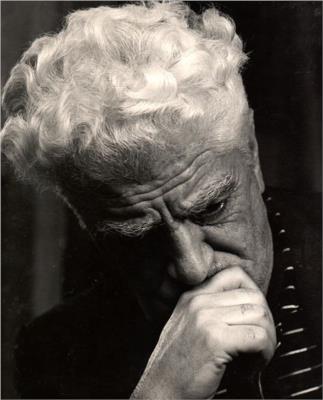
About Eduard Isabekyan
Russian · 1914–2007
Armenian painter and People's Painter of Armenia whose monumental historical compositions are among the defining works of 20th-century Armenian art.
Museums1
Countries1
Largest reported holdingNational Gallery of Armenia, Yerevan · 65 recorded works
Loading map…
Where to see Eduard Isabekyan
Collection holdings are reported here; current display varies. Check with each museum before visiting.
-
65 recorded works
National Gallery of Armenia
Yerevan, Armenia
Also here (6)

Frequently Asked Questions
What should I know about Eduard Isabekyan's prints?
Eduard Isabekyan (1914[2]-2007[2]) was an Armenian painter. While he is known for his large canvases depicting historical scenes, prints offer a more accessible way to engage with his art. Prints, unlike unique works, are produced in multiples. The practice of printmaking dates back centuries, with early examples found in ancient Egypt and China. As paper became readily available in Europe around the end of the 14th century, printmaking began to flourish. Originally, prints served a commercial purpose, reproducing images for a wider audience. However, artists like Dürer, Rembrandt, and Goya elevated printmaking to a high art form. In the 19th century, prints gained recognition as a major artistic medium. Artists began signing and numbering their prints, thereby creating limited editions. A signature confirms the print's authenticity, while limiting the edition size controls quality and influences price. When buying an Isabekyan print, check for these details: a signature, edition number (e.g., 1/50), and title, typically written in pencil on the bottom margin. These conventions, while not legally binding, are widely respected in printmaking.Why are Eduard Isabekyan's works important today?
Eduard Isabekyan's works are important because they represent a style of art that valued depicting the world with care and attention, rather than focusing on the artist's personality. This approach contrasts with more recent trends in art, where the artist's persona often takes precedence over the artwork itself. Some critics suggest this older style has a charm that awakens minds and hearts, promising growth and development. However, this viewpoint is not universally shared. Some argue that such art promotes a dissolution of individual self-awareness into a collective will, potentially leading to a mindless bliss akin to a distorted utopia. Others see value in exploring connections between folk traditions and elite values, or continuities between the past and present. Ultimately, Isabekyan's work provides a point of comparison for analysing different approaches to art and their potential cultural implications.What techniques or materials did Eduard Isabekyan use?
Eduard Isabekyan employed varied techniques and materials in his art. The principle of Faktura, which considers how a material generates specific forms, is relevant to an analysis of his practice. This idea, current during the Futurist period in pre-revolutionary Russia, influenced artists to use materials while maintaining their expressive potential. Artists understood Faktura to mean using old or introducing new materials. The forms of painting, for example, were to be produced by paint itself. The consistency of paint and the orientation of brushwork created the "reality" of Rayonism. The concept of the literal value of the material is the determinant of form and, thus, the meaning the work of art will obtain. The artist's selection of materials leaves its mark on the techniques, as well as those forms which symbolise the eye or other human body parts.Who did Eduard Isabekyan influence?
It is difficult to identify specific artists directly influenced by Eduard Isabekyan. However, one can discuss the general influences on artists of his era in the region. Many artists working in the Soviet Union during the 20th century were affected by the Russian[2] avant-garde movement. Artists encountered the avant-garde in different ways and at different times. Some accessed works in gallery reserves, while others visited collectors, such as George Costakis, who held a large number of avant-garde works. Exhibitions of American and French art in Moscow in the early 1960s also provided exposure. More generally, the work of Mikhail Vrubel had a wide effect on painters and sculptors. His approach to form, with its deconstructed, analytical qualities, influenced Constructivist art. Naum Gabo considered Vrubel's effect on visual consciousness to be as important as Cézanne's. Artists such as Liubov Popova, Alexander Rodchenko, and Vladimir Tatlin all responded to Vrubel's art. John Bowlt has suggested that Gabo, Rodchenko, and Tatlin were drawn to Vrubel's constructive method.Who influenced Eduard Isabekyan?
Identifying specific influences on Eduard Isabekyan is difficult using the available references. However, the period in which he worked saw many Russian[2] artists looking to diverse sources. Mikhail Vrubel, for example, had a broad effect on the avant-garde. His approach, deconstructing and analysing form, became central to Constructivist art. His paintings used geometric patterns and textures to create a constructive effect. Naum Gabo considered Vrubel's impact on visual consciousness as significant as Cézanne's influence on painting in Western Europe. Other influences on Russian artists of the period included icon painting, folk art (lubok), Byzantine art, Persian art, Egyptian art, and Japanese art. French artists such as Matisse were also influential. Some artists experimented with painterly colouring methods and altered object shapes, while others focused on transforming objects in plane.What is Eduard Isabekyan's most famous work?
It is difficult to name Eduard Isabekyan's single most famous work, as his artistic output was substantial and varied. He is celebrated as a master of Armenian historical painting, and his pieces often depict significant events and figures from the nation's past. Isabekyan's body of work includes a wide array of paintings, drawings, and illustrations. His art often explores themes of national identity, historical memory, and cultural heritage, securing his place as an important figure in Armenian art history. While pinpointing one definitive piece is challenging, recurring subjects in his art include depictions of Armenian life, folklore, and key moments in Armenian history. His style blends realism with elements of romanticism, creating powerful images that resonate with viewers. Further research into specific exhibitions or museum collections may offer more insight into which works are most frequently recognised.What style or movement did Eduard Isabekyan belong to?
Without specific references to Eduard Isabekyan's artistic affiliations, it is challenging to place him definitively within a particular style or movement. Art history often involves categorising artists based on their techniques, themes, and philosophical approaches. Examining Isabekyan's body of work, considering the period in which he was active, and analysing critical responses to his art would be necessary to determine his alignment with any specific movement. Such movements might include (but are not limited to) Realism, Impressionism, Expressionism, or other more contemporary styles that developed during his career. A careful study of his paintings, drawings, and any writings or statements he may have made about his artistic intentions would offer insight into his artistic identity.What was Eduard Isabekyan known for?
Without more specific source material, it is difficult to say what Eduard Isabekyan was known for. The available texts mention many Russian[2] painters, such as Ivan Aivazovsky (1817-1900[2]), Marc Chagall (1889-1985[2]), Wassily Kandinsky (1866-1944), and Kazimir Malevich (1878-1935). These painters worked in diverse styles, including watercolour, oil, etching, and gouache. Some were also graphic artists, designing book covers and illustrations. Others designed decorative typescripts, trademarks, emblems, and labels. Still others worked in engraving, using techniques such as xylography, linocut, and metal engraving. Some also tinted their prints in watercolour or printed pictures from multiple blocks. The subjects of their works included street scenes, views of cities, fishermen, still lifes, flowers, and landscapes.
Sources
Where to See guide aggregates verified holdings of Eduard Isabekyan's works across the following collections.
- [1] museum National Gallery of Armenia Used for: museum holdings.
- [2] wikipedia Wikipedia: Eduard Isabekyan Used for: biography.
- [3] book Natalya Strizhkova Andrei Sarabyanov, Art and Power_ The Russian Avant-garde under Soviet Rule, 1917–1928 Used for: biography.
- [4] book guggenheim-arshi00wald Used for: biography.
- [5] book guggenheim-ilyabolotowskyso00bolo Used for: biography.
- [6] book guggenheim-onehundredpainti00thom Used for: biography.
- [7] book Peter. Leek, Russian Painting Used for: biography.
Editorial overseen by Solis Prints. Sources verified 2026-09-30. Click a source for details, or hover over [N] in the page above to preview.
Editorial standardsMethodologyCorrectionsAI disclosureAbout the editorial team