



About Cornelis de Vos
- Flemish Baroque painting
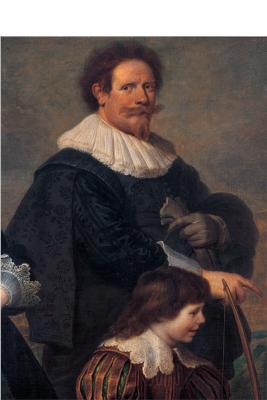
Flemish Baroque portraitist in Rubens's circle, celebrated for children's faces and family portraits of rare psychological directness.
Where to see Cornelis de Vos
Collection holdings are reported here; current display varies. Check with each museum before visiting.
-
18 recorded works
Royal Museum of Fine Arts Antwerp
Antwerp, Belgium
-
4 recorded works
Gemäldegalerie Berlin
Berlin, Germany


-
4 recorded works
Museo del Prado
Madrid, Spain
-
4 recorded works
Hermitage Museum
Saint Petersburg, Russia
-
3 recorded works
Museum Boijmans Van Beuningen
Rotterdam, Netherlands
-
3 recorded works
Museum of Fine Arts Ghent (MSK)
Ghent, Belgium
-
3 recorded works
Nationalmuseum
Stockholm, Sweden
-
3 recorded works
Metropolitan Museum of Art
New York City, United States
-
3 recorded works
Fine Arts Museums of San Francisco
San Francisco, United States
-
2 recorded works
Städel Museum
Frankfurt, Germany


View all 34 museums
-
2 recorded works
North Carolina Museum of Art
Raleigh, United States
-
2 recorded works
Wallraf–Richartz Museum
Cologne, Germany
-
2 recorded works
Kunsthistorisches Museum
Vienna, Austria
-
2 recorded works
Wallace Collection
London, United Kingdom
-
2 recorded works
Hessen Kassel Heritage
Kassel, Germany
-
2 recorded works
National Museum in Warsaw
Warsaw, Poland
-
1 recorded work
New York Historical
New York City, United States
-
1 recorded work
National Museum in Kraków
Kraków, Poland
-
1 recorded work
Musée des Beaux-Arts de Rouen
Rouen, France
-
1 recorded work
Princeton Art Museum
Princeton, United States
-
1 recorded work
Museum of John Paul II Collection
Warsaw, Poland
-
1 recorded work
Finnish National Gallery
Helsinki, Finland
Also here (6)
-
1 recorded work
Dulwich Picture Gallery
London, United Kingdom
-
1 recorded work
Charles Sedelmeyer collection
Paris, France
-
1 recorded work
Palais des Beaux-Arts de Lille
Lille, France
-
1 recorded work
RISD Museum
Providence, United States
-
1 recorded work
National Trust
Swindon, United Kingdom
-
1 recorded work
Galleria Sabauda
Turin, Italy
-
1 recorded work
Detroit Institute of Arts
Detroit, United States
-
1 recorded work
Los Angeles County Museum of Art
Los Angeles, United States
-
1 recorded work
Thyssen-Bornemisza Museum
Madrid, Spain
-
1 recorded work
National Gallery of Victoria
Melbourne, Australia
-
1 recorded work
Smithsonian American Art Museum
Washington D.C., United States
-
1 recorded work
King Baudouin Foundation
Brussels, Belgium


Frequently Asked Questions
Where can I see Cornelis de Vos's work?
Paintings by Cornelis de Vos are held in collections throughout Europe and the United States. Examples can be seen in Berlin at the Staatliche Museen zu Berlin, or at the Gemäldegalerie. Other German museums holding his works include the Herzog Anton Ulrich-Museum (Braunschweig), the Städelsches Kunstinstitut (Frankfurt am Main), the Niedersächsische Landesmuseum (Hanover), and the Staatliche Kunstsammlungen (Dresden). In the UK, works by de Vos are held at the National Gallery of Scotland (Edinburgh) and the National Museums Liverpool, Walker Art Gallery. Other European museums include the Galleria degli Uffizi (Florence), the Musée du Louvre (Paris), the Museo Thyssen-Bornemisza (Madrid), the Royal Cabinet of Paintings Mauritshuis (The Hague), and the Kunsthistorisches Museum (Vienna). In the United States, examples can be seen at the Metropolitan Museum of Art (New York), the National Gallery of Art (Washington), and the J. Paul Getty Museum (Los Angeles).What should I know about Cornelis de Vos's prints?
Cornelis de Vos (1584[1]-1651[1]) was a Flemish painter; he also designed prints, although these are less well known than his paintings. De Vos is mainly known for his portraits and history paintings. Many prints related to de Vos are reproductive engravings; these were made by other artists after his paintings. For example, Alexander Voet the Younger and Paulus Pontius produced engravings after de Vos. These prints circulated his compositions to a wider audience. Some of de Vos's paintings, such as family portraits, were particularly popular and were reproduced in print form. Peter Paul Rubens and Anthony van Dyck influenced de Vos's style. He collaborated with Rubens on occasion, and his work shows the influence of the Antwerp school. De Vos's paintings and the prints made after them offer insight into Flemish Baroque art and portraiture of the period. They also show the artistic connections and collaborations that existed between artists in Antwerp during the 17th century.Why are Cornelis de Vos's works important today?
Cornelis de Vos was a Flemish Baroque painter, working in Antwerp during the first half of the 17th century. He is remembered today for his contributions to portraiture, particularly his sensitive depictions of children and families. De Vos's importance lies in his ability to capture the likenesses and social status of his sitters. He provides insight into the lives of the Antwerp bourgeoisie during a period of economic and artistic flourishing. His portraits offer a window into the fashions, customs, and family structures of the time. While Peter Paul Rubens and Anthony van Dyck dominated the Antwerp art scene, de Vos carved out his own niche. He developed a more restrained and naturalistic style compared to the dramatic flair of Rubens or the aristocratic elegance of van Dyck. This approach made him a popular choice for middle-class patrons seeking accurate and relatable portrayals. His paintings are valuable historical documents, as well as aesthetically pleasing works of art. They are found in major museum collections around the world.What techniques or materials did Cornelis de Vos use?
Cornelis de Vos was a Baroque painter, and like other artists of the period, his techniques involved a limited palette of colours chosen for specific stages of a work. The first stage in producing a painting usually involved a contract between the artist and client. This might specify the timescale, the quality of materials, the extent of the master's involvement versus his assistants, and payment schedules, typically in three instalments. Workshops, such as that of van Eyck, were often north-facing and on an upper floor to maximise natural light. The painting process involved multiple layers of oil paint, which took considerable time to dry. Artists often had several projects underway simultaneously. Assistants prepared paints and might work on backgrounds under supervision as part of their training. Studios contained straw mats to control dust, wooden easels, and planks to support works in progress.Who did Cornelis de Vos influence?
Cornelis de Vos was an important influence on later artists. His impact can be seen in the work of Eugène Delacroix, Félix-Joseph-Henri de Vollen, and Jean-Baptiste-Antoine Bonvin. These artists made interpretations and copies of paintings that demonstrate the influence of Dutch[1] artistry and solid workmanship. They also show the Romantic quintessence of colour that de Vos helped to establish. De Vos's influence extended beyond his immediate circle. Wilhelm Busch painted his *Slaughtered Pig* in a similar spirit, although he was more directly influenced by Isaac van Ostade. The motif of an animal carcass allowed for experiments with colour patches and thick textures. It also provided an opportunity to recreate effects of light, eliciting the form and materialness of the subject.Who influenced Cornelis de Vos?
Cornelis de Vos (1584[1]-1651[1]) was a Flemish painter. He is known for his portraits and history paintings. His artistic development shows the influence of several earlier artists. De Vos likely trained with David Remeeus in Antwerp. This early instruction would have provided a foundation in the prevailing artistic styles of the region. He was also influenced by Peter Paul Rubens. Rubens's impact is evident in de Vos's use of colour and dynamic compositions. Some scholars suggest that de Vos's work, particularly his group portraits, shows the impact of Rubens's style. Another important influence was Anthony van Dyck. Van Dyck's refined portrait style affected de Vos's later works. De Vos adapted van Dyck's approach to portraying the aristocracy. This is visible in his attention to detail in costume and his subjects' dignified bearing. While de Vos's style is individual, these influences helped shape his artistic output.What is Cornelis de Vos's most famous work?
Cornelis de Vos was a Flemish painter, and many art historians consider his family portraits to be his best works. He is particularly known for capturing the likenesses and personalities of his subjects. One painting stands out: *Family Portrait* from c.1631[1]. It is housed in the Royal Museum of Fine Arts Antwerp. The sitters are probably a wealthy Antwerp family, though their identities are unconfirmed. The work is a large-scale group portrait in a domestic setting. De Vos presents the family with an emphasis on their affluence and familial bonds. Other notable works include portraits of artists, merchants, and members of the Antwerp elite. He painted individual portraits as well as group scenes. These paintings offer insights into the social and cultural context of 17th-century Antwerp. His skill in depicting fabrics, textures, and facial expressions contributed to his success as a sought-after portraitist.What was Cornelis de Vos known for?
Cornelis de Vos (1584[1]-1651[1]) emerged as a leading Antwerp painter as Frans Floris's popularity declined. De Vos may have travelled in Italy with Bruegel. Unlike Floris, de Vos largely avoided direct references to Rome in his art. He reduced generic quotations of ruins and even the work of Raphael to static ornament in paintings. These paintings vaguely referenced an Italianate pictorial idiom based partly on a Venetian approach to colour. The absence of specific references to Roman conventions may account for the popularity of his art after the Iconoclasm. His *Saint Paul Bitten by a Viper on the Island of Malta* (c. 1567) marks a turn away from Floris's style. De Vos created a cluttered image without a single stylistic antecedent. The composition is not relief-like or explicitly 'Roman' in its setting. The details overtake narrative cohesion. The absence of an iconographic centre disturbs the unified pictorial field.
Sources
Where to See guide aggregates verified holdings of Cornelis de Vos's works across the following collections.
- [1] wikipedia Wikipedia: Cornelis de Vos Used for: biography.
- [2] book Lassaigne, Jacques, 1910-, Flemish painting Used for: biography.
- [3] book STBGD Trusted, Flemish Painting - From Hieronymus Bosch to Rubens (Art Ebook) Used for: biography.
- [4] book Edward H. Wouk, Frans Floris (1519_20-1570)_ Imagining a Northern Renaissance (Brill's Studies in Intellectual History _ Brill's Studies on) Used for: biography, stylistic analysis.
- [5] book Edward H. Wouk, Frans Floris (1519_20-1570)_ Imagining a Northern Renaissance (Brill's Studies in Intellectual History _ Brill's Studies on) Used for: biography, stylistic analysis.
- [6] book "Michael Brand, Frederik J. Duparc, Ariane van Suchtelen, Anne T. Woollett, Tiarna Doherty, Mark Leonard and Jørgen Wadum", Rubens and Brueghel: A Working Friendship Used for: biography.
- [7] museum Cornelis de Vos - Portrait of a Woman - The Metropolitan Museum of Art Used for: museum holdings.
- [8] museum Vos, Cornelis de - Museo Nacional del Prado Used for: biography.
Editorial overseen by Solis Prints. Sources verified 2026-09-30. Click a source for details, or hover over [N] in the page above to preview.
Editorial standardsMethodologyCorrectionsAI disclosureAbout the editorial team