



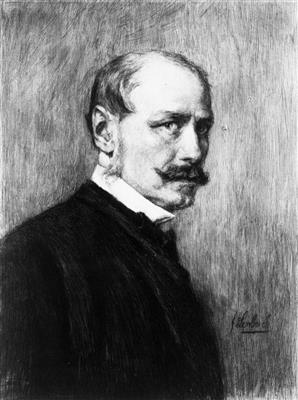
About August von Pettenkofen
Austrian · 1822–1889
- landscape painting
Vienna-trained painter whose melancholy scenes of Hungarian peasants and Romani life at Szolnok brought the Barbizon influence to Central Europe.
Museums12
Countries8
Most worksBelvedere, Vienna · 36 works
Loading map…
Where to see August von Pettenkofen
Ranked by works you can see in person.
-
36 works
Belvedere
Vienna, Austria
-
17 works
Munich Central Collecting Point
Munich, Germany
Also here (6)

-
15 works
Führermuseum
Linz, Austria
Also here (6)
-
9 works
Hungarian National Gallery
Budapest, Hungary
Also here (6)
-
7 works
Kunsthistorisches Museum
Vienna, Austria
-
2 works
Alte Nationalgalerie
Berlin, Germany
-
2 works
Amsterdam Museum
Amsterdam, Netherlands
-
2 works
Wallace Collection
London, United Kingdom
-
1 works
Charles Sedelmeyer collection
Paris, France
-
1 works
Hermitage Museum
Saint Petersburg, Russia


View all 12 museums
-
1 works
Walters Art Museum
Baltimore, United States
-
1 works
Metropolitan Museum of Art
New York City, United States


Frequently Asked Questions
Where can I see August von Pettenkofen's work?
August von Pettenkofen's paintings are held in several central European museums. The Hungarian National Gallery in Budapest holds a collection of his works, as does the Österreichische Galerie Belvedere in Vienna. Other museums with his paintings include the Albertina, Vienna; the Neue Pinakothek, Munich; and the Kunsthaus Zürich. These collections offer opportunities to view a range of Pettenkofen's output, from early genre scenes to later works focusing on rural life. Smaller regional museums in Austria and Hungary may also hold examples of his art. Auction catalogues from major auction houses such as Dorotheum in Vienna are another resource for tracking his work. These catalogues often contain detailed images and provenance information. Art-historical databases and online museum collections can further aid in locating specific pieces and exhibition histories.What should I know about August von Pettenkofen's prints?
August von Pettenkofen (1822[1]-1889[1]) was an Austrian[1] painter, mainly of genre and military scenes. While he is not primarily known as a printmaker, his works were reproduced as prints, following a common practice of the time. Prints offered a way for a wider audience to access an artist's work. These reproductions allowed people who could not afford original paintings to still enjoy and collect images of Pettenkofen's compositions. The prints would vary in quality and technique, depending on the publisher and intended market. Some would be simple, mass-produced items, while others would be carefully crafted art objects in their own right. To understand Pettenkofen's prints, consider the context of 19th-century print culture. Print collecting was popular, and a market existed for both original prints and reproductions of paintings. Collectors often kept prints in albums or portfolios. Some early collectors even pasted prints into books. The medium allowed Pettenkofen's images to circulate widely, contributing to his fame beyond Austria.Why are August von Pettenkofen's works important today?
August von Pettenkofen (1822[1]-1889[1]) was an Austrian[1] painter whose works offer insight into 19th-century Central European art. While not a figure of international fame, his paintings are important for several reasons. His depictions of military life, such as *Austrian Soldiers Crossing a Ford* (1851[1]), provide a glimpse into the Austrian army and its place in society. These works are valuable historical documents, showing uniforms, equipment, and the everyday lives of soldiers. Pettenkofen's art also connects to broader trends in Austrian art. He was a contemporary of Emil Jakob Schindler, an artist associated with atmospheric painting. The focus on capturing atmosphere and the effects of light was a significant aspect of art in Vienna during this period. Pettenkofen's works contribute to our understanding of this artistic milieu. His paintings may not be as well known as those of some of his contemporaries; however, they provide a valuable record of Austrian military history and contribute to the study of 19th-century Austrian art.What techniques or materials did August von Pettenkofen use?
August von Pettenkofen was an Austrian[1] painter known for his genre scenes and military subjects. Although specific details about his techniques are scarce in the provided texts, we can infer some practices from the context of 19th-century painting and printmaking. Pettenkofen likely employed traditional oil painting techniques on canvas or panel. This would involve layering paints to achieve desired effects of colour and texture. He may have used glazing techniques, applying thin, transparent layers of paint to modify the colours underneath. Given the era, he may also have produced prints of his work. Common printmaking methods of the time included etching, woodcut, and lithography. Etching involves using acid to create lines on a metal plate, while woodcut relies on carving an image into a block of wood. Lithography uses a stone or metal plate and greasy inks. The choice of technique would affect the character of the final print, with each offering different possibilities for line, tone, and texture.Who did August von Pettenkofen influence?
August von Pettenkofen (1822[1]-1889[1]) was an Austrian[1] painter known for his genre scenes and military subjects. He is associated with the Austrian school of genre painting. Pettenkofen's influence is most apparent in the work of artists who followed his approach to genre painting, particularly those who focused on scenes of peasant life and military subjects. His impact can be seen in the works of painters such as Johann Matthias Ranftl (1805-1888[1]), also an Austrian genre painter. Ranftl shared Pettenkofen's interest in depicting everyday life, often with a critical or sympathetic eye. Pettenkofen's style, characterised by its attention to detail and realistic depiction of figures, influenced younger artists who adopted similar techniques. His focus on Hungarian subjects also inspired others to explore similar themes in their work. Although not as widely recognised as some of his contemporaries, Pettenkofen played a role in shaping the direction of Austrian genre painting during the 19th century.Who influenced August von Pettenkofen?
August von Pettenkofen (1822[1]-1889[1]) was an Austrian[1] painter known for his genre scenes of rural life, particularly his depictions of Hungarian peasants and soldiers. Several artists influenced his development. Initially, Pettenkofen studied at the Academy of Fine Arts in Vienna. There, he was taught by Leopold Kupelwieser, a painter associated with the Nazarene movement. However, Pettenkofen moved away from Kupelwieser's more idealised style. He was more interested in Realism. A significant influence was the work of Dutch Golden Age painters. Artists such as Adriaen van Ostade and David Teniers the Younger, known for their scenes of everyday life, provided a model for Pettenkofen's subject matter and style. He carefully observed and represented the details of peasant life. Furthermore, Pettenkofen's travels to Hungary exposed him to the work of Hungarian artists. Their depictions of local customs and costumes likely shaped his approach to representing Hungarian subjects. He aimed to capture the character of the people and the atmosphere of the Hungarian countryside.What is August von Pettenkofen's most famous work?
August von Pettenkofen (1822[1]-1889[1]) was an Austrian[1] painter known for his genre scenes and depictions of rural life. Although he produced a substantial body of work, pinpointing a single, universally recognised "most famous work" is difficult. His paintings often featured scenes of peasant life, markets, and military subjects, reflecting the social and political climate of 19th-century Austria-Hungary. Pettenkofen's artistic approach involved careful observation and a talent for capturing the atmosphere of everyday life. He worked primarily in oil paint, and his style is characterised by realistic detail and attention to light. Some of his better-known paintings include "Markttag in Ungarn" (Market Day in Hungary), which captures a bustling market scene with figures in traditional dress, and depictions of soldiers. These works are held in museum collections, such as the Albertina in Vienna. While no single piece eclipses all others in fame, his market and military scenes are representative of his artistic strengths and are frequently reproduced.What style or movement did August von Pettenkofen belong to?
August von Pettenkofen (1822[1]-1889[1]) was an Austrian[1] painter associated with the Realist movement. He is known for his genre scenes depicting rural life, particularly in Hungary. Pettenkofen studied at the Academy of Fine Arts in Vienna. Initially, he focused on historical subjects and military scenes. However, his style shifted after travels to Hungary in the 1850s. He became interested in portraying everyday life, the peasantry, and the landscape of the region. His work displays careful observation and naturalistic detail. Pettenkofen's paintings often feature scenes of village markets, festivals, and military life. He had an ability to capture the character of the people he painted, and his works offer insight into the social conditions of the time. He was part of a circle of artists who moved away from academic traditions in favour of more realistic depictions of contemporary life. His paintings gained popularity during his lifetime, and he received recognition for his contribution to Austrian art.
Sources
Where to See guide aggregates verified holdings of August von Pettenkofen's works across the following collections.
- [1] wikipedia Wikipedia: August von Pettenkofen Used for: biography.
- [2] book Horst Bredekamp;, Galileo's Thinking Hand Used for: stylistic analysis.
- [3] book Gianlorenzo Bernini: new aspects of his art and thought : a commemorative volume Used for: stylistic analysis.
- [4] book Husslein-Arco, Agnes, editor; Koja, Stephan, editor; Law, Rebecca (Translator), translator; McInnes, Robert (Translator), translator; Somers, Nick, translator; Monet, Claude, 1840-1926. Paintings. Selections; Österreichische Galerie Belvedere, h Used for: biography.
- [5] book Masterpieces of western art : a history of art in 900 individual studies from the Gothic to the present day Used for: biography.
- [6] book Post-impressionism : cross-currents in European painting Used for: biography.
Editorial overseen by Solis Prints. Sources verified 2026-09-24. Click a source for details, or hover over [N] in the page above to preview.
Editorial standardsMethodologyCorrectionsAI disclosureAbout the editorial team