



About Camille Corot
- Barbizon school
- French Realism
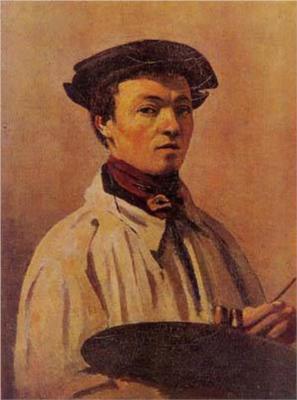
Jean-Baptiste Camille Corot was a French[2] artist and a leading painter of the Barbizon School who influenced the Impressionists.
Where to see Camille Corot
Ranked by works you can see in person.
-
117 works
Louvre
Paris, France
-
39 works
Metropolitan Museum of Art
New York City, United States


-
33 works
Musée d'Orsay
Paris, France
-
30 works
Museum of Fine Arts of Reims
Reims, France
-
27 works
National Gallery
London, United Kingdom
-
25 works
National Gallery of Art
Washington D.C., United States
-
12 works
The Mesdag Collection
The Hague, Netherlands
-
11 works
National Galleries Scotland
Edinburgh, United Kingdom
-
10 works
Munich Central Collecting Point
Munich, Germany
Also here (6)
-
10 works
Art Institute of Chicago
Chicago, United States


Own a piece of it
Camille Corot prints
Hand-finished archival prints from Camille Corot's body of work.
 Algérienne - Camille Corot
From £28.00
Algérienne - Camille Corot
From £28.00
 Near Auriet - Jean-Baptiste-Camille Corot
From £28.00
Near Auriet - Jean-Baptiste-Camille Corot
From £28.00
 River View with a Bridge - Jean-Baptiste-Camille Corot
From £28.00
River View with a Bridge - Jean-Baptiste-Camille Corot
From £28.00
 Village of Avray: Boat under the Willows - Jean-Baptiste-Camille Corot
From £28.00
Village of Avray: Boat under the Willows - Jean-Baptiste-Camille Corot
From £28.00
 In the Dunes: Souvenir of the Woods of The Hague - Jean-Baptiste-Camille Corot
From £28.00
In the Dunes: Souvenir of the Woods of The Hague - Jean-Baptiste-Camille Corot
From £28.00
 Souvenir d'Italie - Jean-Baptiste-Camille Corot
From £28.00
Souvenir d'Italie - Jean-Baptiste-Camille Corot
From £28.00
 Village of Avray: Boating Pond - Jean-Baptiste-Camille Corot
From £28.00
Village of Avray: Boating Pond - Jean-Baptiste-Camille Corot
From £28.00
 Wooded Countryside - Jean-Baptiste-Camille Corot
From £28.00
Wooded Countryside - Jean-Baptiste-Camille Corot
From £28.00
View all 149 museums
-
10 works
Minneapolis Institute of Art
Minneapolis, United States
-
9 works
Clark Art Institute
Williamstown, United States
-
9 works
Nationalmuseum
Stockholm, Sweden
-
9 works
Hermitage Museum
Saint Petersburg, Russia
-
9 works
Cincinnati Art Museum
Cincinnati, United States
-
9 works
Ny Carlsberg Glyptotek
Copenhagen, Denmark
-
8 works
Museum collection Am Römerholz
Winterthur, Switzerland
-
8 works
Yale University Art Gallery
New Haven, United States
-
7 works
Museum Langmatt Sidney and Jenny Brown Foundation
Baden, Switzerland
-
6 works
Norton Simon Museum
Pasadena, United States
-
6 works
Walters Art Museum
Baltimore, United States
-
6 works
Hamburger Kunsthalle
Hamburg, Germany
-
5 works
Amgueddfa Cymru – Museum Wales
Cardiff, United Kingdom
-
5 works
Kunstmuseum Basel
Basel, Switzerland
-
5 works
Kunsthaus Zürich
Zurich, Switzerland
-
5 works
RISD Museum
Providence, United States
-
5 works
São Paulo Museum of Art
São Paulo, Brazil
-
5 works
Fitzwilliam Museum
Cambridge, United Kingdom
-
5 works
Musée des Beaux-Arts d'Angers
Angers, France
-
4 works
Städel Museum
Frankfurt, Germany
-
4 works
National Gallery Prague
Prague, Czech Republic
-
4 works
National Museum of Fine Arts, Argentina
Buenos Aires, Argentina
Also here (6)
-
4 works
Artizon Museum
Tokyo, Japan
-
4 works
Museo de Arte de Worcester
Worcester, United States
-
4 works
Hermann Göring Collection
Carinhall, Germany
-
4 works
Foundation E.G. Bührle Collection
Zurich, Switzerland
-
4 works
Rijksmuseum
Amsterdam, Netherlands
-
4 works
Kelvingrove Art Gallery and Museum
Glasgow, United Kingdom
-
4 works
Thyssen-Bornemisza Museum
Madrid, Spain
-
4 works
National Gallery of Victoria
Melbourne, Australia
-
4 works
Belvedere
Vienna, Austria
-
4 works
Fine Arts Museums of San Francisco
San Francisco, United States
-
4 works
National Gallery of Canada
Ottawa, Canada
-
3 works
Museum of Fine Arts of Rennes
Rennes, France
-
3 works
Hungarian National Gallery
Budapest, Hungary
Also here (6)
Bertalan SzekelyVilmos Aba-NovakEndre BalintAladar Korosfoi-KrieschEgry JózsefAugust von Pettenkofen -
3 works
Burrell Collection
Glasgow, United Kingdom
-
3 works
Musée des Beaux-Arts de Rouen
Rouen, France
-
3 works
Shelburne Museum
Shelburne, United States
Also here (2)
-
3 works
Wallraf–Richartz Museum
Cologne, Germany
-
3 works
Musée Marmottan Monet
Paris, France


99 more museums hold works by Camille Corot with smaller collections, not listed here.
Can't travel? Bring Camille Corot home.
See all Camille Corot prints →Frequently Asked Questions
What should I know about Camille Corot's prints?
Jean-Baptiste-Camille Corot[8] (1796[2]-1875[2]) was a French[2] painter. Progressive artists admired Corot, including Degas; Berthe Morisot and Camille Pissarro listed themselves as his pupils. His impact on Gauguin continued well into Gauguin's Tahitian period. This admiration was based almost entirely on Corot's abilities as a painter, since the numerous figure subjects he did throughout his life were little known until the beginning of this century. Corot only showed two figure subjects during his lifetime: *A Monk* at the Salon of 1840[2] and *A Woman Reading* in 1869. He preferred to keep such works in his studio or give them to pupils and friends. The critic Theophile Gautier was perplexed by *A Woman Reading*, although he ultimately found it "pleasing for its naivete and colour in spite of the faulty drawing of the figure." Four figures (out of a total of forty-four works) were shown in Paris at the Exposition Universelle in 1889, and an appreciation of this aspect of Corot's work slowly began to emerge. It was not until 1909, when a group of figure pieces was shown alone at the Salon d'Automne in Paris, that a broad critical understanding began to develop.What techniques or materials did Camille Corot use?
Jean-Baptiste-Camille Corot[8] (1796[2]-1875[2]) studied painting from 1822[2] to 1825. His instructors included the Classical painter Victor Bertin, who taught him drawing. More importantly, Bertin emphasised making small, open-air studies called pochades; these were rapidly executed colour studies in oil. Corot travelled extensively in France, with a particular attachment to the countryside around Paris. He also visited Italy (1825-1828[2], 1834, and 1843), Switzerland, the Netherlands, and England. During his first stay in Italy, he produced about 150 small paintings, mostly of famous sites. View of Rome is typical; it is an oil on paper, made on the spot in about an hour. From the 1850s, Corot adopted a more lyrical style, using a light touch and a muted palette. By adding white to many of his colours, he gave his pictures an ethereal, silvery appearance.Who did Camille Corot influence?
Jean-Baptiste-Camille Corot[8] (1796[2]-1875[2]) painted over 3,000 canvases and inspired generations of painters. His approach combines academic tradition with a fresh vision. Corot has been called both 'the last of the Classical landscapists, and the first of the Impressionists'. Aspects of his later paintings can be seen in the work of Alfred Sisley and Claude Monet. Living in Ville d’Avray near Paris, Corot painted the ponds near his house, the reflection in their water of weeping willows, and the shaded paths that led into the forest. Even if his depictions evoked memories of Italy, Ville-d’Avray was still recognisable. Corot was sensitive to nature. Within the range of a simple grey-green palette, he produced subtle gradations of shadow and light. In Corot’s painting, colour played a secondary role; its luminosity created a misty, atmospheric effect and a sad, lyrical mood. All these characteristics gave his paintings a quality of visual reality and movement to which the Impressionists aspired.Who influenced Camille Corot?
Camille Corot (1796[2]-1875[2]) studied painting from 1822[2] to 1825. His initial instructors were the painter Michallon and the Classical painter Victor Bertin. He also learned by copying works by Joseph Vernet and 17th-century Dutch masters. A decisive period for Corot's artistic growth was his first trip to Rome (1825 to 1828). While there, he created numerous oil studies from nature, capturing views of Roman monuments and the surrounding scenery. These studies displayed a freshness, capturing light and atmosphere with subtle variations in tonal values. Upon his return from Italy, Corot worked in various locations in France. Later in his career, his art was greatly affected by his friendship with the Barbizon painters, including Rosseau, Millet, Troyon, and Dupré, in the late 1840s. Around this time, his style shifted towards romantic-lyrical scenery, interpreting nature in her various moods with delicate, muted tones. His work had an inspiring effect on the Impressionists.What was Camille Corot known for?
Jean-Baptiste Camille Corot (1796[2]-1875[2]) is known as an important figure in French[2] painting and a leading painter of the Barbizon School. He influenced the Impressionists and many painters of scenery in the latter half of the 19th century. Corot united truth and lyricism in his work. His truthfulness influenced artists such as Honoré Daumier and the Barbizon School. His style was far from the heroics of the Romantics; he saw the world with an innocent truthfulness. In 1825[2], a trip to Italy influenced his approach to painting. He experienced the benefits of painting *en plein air*, and his depictions of light set a new precedent in French scenery painting. He valued making sketches *in situ* for their spontaneity, truth, and atmosphere. Although he was responsive to the serenity of classical scenery, he sometimes painted from memory later on. An example is *A View near Volterra* (1834), painted from sketches.What was Camille Corot's art style?
Jean-Baptiste Camille Corot studied painting from 1822[2] to 1825, first with the painter Michallon, then with the Classical painter Victor Bertin. He also copied works by Joseph Vernet and other artists, including the 17th century Dutch masters.
Sources
Where to See guide aggregates verified holdings of Camille Corot's works across the following collections.
- [1] academic The Editors of Encyclopaedia Britannica, Camille Corot | Artist, Biography, French Landscape Painter, Paintings, Realist, Barbizon School, Impressionism, & Facts Used for: biography.
- [2] wikipedia Wikipedia: Camille Corot Used for: biography.
- [3] book Susie Hodge, Art Used for: biography, stylistic analysis.
- [4] book Susie Hodge, Art: Everything You Need to Know About the Greatest Artists and Their Work Used for: biography, stylistic analysis.
- [5] book Masterpieces of western art : a history of art in 900 individual studies from the Gothic to the present day Used for: biography.
- [6] museum Corot: Women Used for: exhibition history.
- [7] museum Italian Landscape (Site d'Italie, Soleil Levant) Used for: notable works.
- [8] museum Jean-Baptiste-Camille Corot Used for: exhibition history.
- [9] museum The Muse: History Used for: museum holdings.
Editorial overseen by Solis Prints. Sources verified 2026-09-26. Click a source for details, or hover over [N] in the page above to preview.
Editorial standardsMethodologyCorrectionsAI disclosureAbout the editorial team