



About Bartholomeus Spranger
- Northern Mannerism
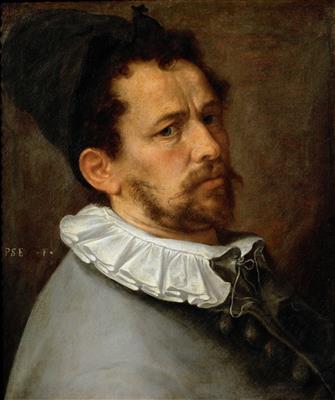
Flemish Mannerist court painter to Rudolf II in Prague, whose mythological scenes defined the sensual style of late-sixteenth-century Northern Mannerism[1].
Where to see Bartholomeus Spranger
Ranked by works you can see in person.
-
20 works
Kunsthistorisches Museum
Vienna, Austria
-
6 works
National Gallery Prague
Prague, Czech Republic


-
4 works
Rijksmuseum
Amsterdam, Netherlands
-
2 works
Munich Central Collecting Point
Munich, Germany
Also here (6)
-
2 works
Germanisches Nationalmuseum
Nuremberg, Germany
-
2 works
Louvre
Paris, France
-
2 works
Hermann Göring Collection
Carinhall, Germany
-
1 works
Museum of Fine Arts of Rennes
Rennes, France
-
1 works
Royal Museum of Fine Arts Antwerp
Antwerp, Belgium
-
1 works
Liechtenstein Museum
Vienna, Austria


Own a piece of it
Bartholomeus Spranger prints
Hand-finished archival prints from Bartholomeus Spranger's body of work.


View all 19 museums
-
1 works
Gemäldegalerie Berlin
Berlin, Germany
-
1 works
National Gallery
London, United Kingdom
-
1 works
Royal Museums of Fine Arts of Belgium
Brussels, Belgium
-
0 works
Groeningemuseum
Bruges, Belgium
-
0 works
National Gallery of Art
Washington D.C., United States
-
0 works
Nationalmuseum
Stockholm, Sweden
-
0 works
Royal Library of Belgium
Brussels, Belgium
-
0 works
Metropolitan Museum of Art
New York City, United States
-
0 works
National Museum in Warsaw
Warsaw, Poland


Can't travel? Bring Bartholomeus Spranger home.
See all Bartholomeus Spranger prints →Frequently Asked Questions
Where can I see Bartholomeus Spranger's work?
Bartholomeus Spranger's paintings and drawings can be found in several major European collections. Spranger spent much of his career as court painter to Rudolf II in Prague, so the Kunsthistorisches Museum in Vienna, which absorbed many Habsburg collections, holds a good selection of his work. Other significant holdings are located in the Louvre Museum, Paris; the Rijksmuseum, Amsterdam; and the National Gallery, London. Germany also has several important works by Spranger, for instance at the Alte Pinakothek in Munich. Smaller collections can be found in various museums across Europe and North America. These include the Metropolitan Museum of Art in New York, the Art Institute of Chicago, and the National Gallery of Art in Washington, D.C. University art museums, such as the Princeton University Art Museum, also occasionally hold prints or drawings by the artist. It is always advisable to check museum websites for current exhibitions and collection information before planning a visit.What should I know about Bartholomeus Spranger's prints?
Bartholomeus Spranger, born in Antwerp in 1546[1], was a painter and print designer. He is associated with Northern Mannerism[1], a style popular in the late 16th century. Spranger's prints often served as a means of disseminating his artistic ideas. Printmaking allowed his compositions to reach a wider audience. Many of his prints were produced by Aegidius Sadeler, a prominent engraver who worked closely with Spranger. Sadeler's skill helped translate Spranger's designs into detailed and refined prints. These prints frequently feature mythological and allegorical subjects, characterised by elongated figures and dynamic poses. Spranger's style is also marked by a certain sensuality and dramatic use of light and shadow. His prints are considered important examples of the late Mannerist style, reflecting the artistic tastes of the Habsburg court, where Spranger served as court painter to Rudolf II in Prague.Why are Bartholomeus Spranger's works important today?
Bartholomeus Spranger (1546[1]-1611[1]) was a Flemish painter, draughtsman, and print designer. He is important to art history because of his role in developing Northern Mannerism[1], particularly in Prague during the reign of Rudolf II. Spranger's style is characterised by elongated figures, complex compositions, and erotic undertones. His work combined elements of Italian Mannerism with Northern European traditions. He initially trained in Antwerp and Paris, then travelled to Italy, where he studied the works of Parmigianino and other Mannerist artists. This Italian experience was formative. Appointed court painter to Rudolf II in 1580[1], Spranger produced paintings, drawings and designs for prints that influenced artists across Europe. Rudolf's patronage allowed Spranger to experiment and develop his distinctive style. His mythological and allegorical scenes, such as "Venus and Adonis" (1585), became highly sought after. Spranger's influence extended beyond painting. His drawings were widely circulated as engravings, disseminating his Mannerist aesthetic. Although his reputation declined after his death, recent scholarship has recognised his contribution to the development of late 16th-century art. His works offer insight into the intellectual and artistic climate of Rudolfine Prague, a centre of European culture.What techniques or materials did Bartholomeus Spranger use?
Bartholomeus Spranger (1546[1]-1611[1]) was a Flemish painter, draughtsman, and printmaker. He is associated with Northern Mannerism[1], a style characterised by elongated figures in exaggerated poses. Spranger's paintings often feature mythological and allegorical subjects. He worked primarily in oil paint, building up layers of colour to create a smooth, polished surface. His application of paint is often described as enamel-like. Spranger was skilled at rendering the human form, paying close attention to anatomy and musculature. His figures often have a sculptural quality, as if they were carved from marble. Spranger was also a prolific draughtsman. He produced numerous drawings in pen and ink, chalk, and watercolour. Many of these drawings were preparatory studies for his paintings, while others were independent works of art. His drawings are characterised by their fluid lines and dynamic compositions. He also designed prints, which were produced by printmakers such as Hendrik Goltzius. These prints helped to disseminate Spranger's style throughout Europe.Who did Bartholomeus Spranger influence?
Bartholomeus Spranger (1546[1]-1611[1]) began his career studying with Netherlandish artists. Frans Floris's home in Antwerp set a precedent for other Netherlandish artists, including Spranger. Floris's workshop attracted many artists from both the Northern and Southern Netherlands, as well as at least one German artist, all of whom were influenced by his style. Some of these artists include Anthonis Blocklandt and Isaac van Swanenburgh, who continued to reference Floris’s style in their own work and instruction. Van Swanenburgh's student, Otto van Veen, carried Floris’s example into the seventeenth century; van Veen then taught Peter Paul Rubens. Other artists influenced by Floris include Frans Francken, Pieter Pourbus, and Frans Pourbus the Elder. Many members of Floris's workshop travelled to France, finding employment and becoming important artists in the so-called second school of Fontainebleau and in the Parisian art market.What is Bartholomeus Spranger's most famous work?
It is difficult to name one single work as Bartholomeus Spranger's most famous. He produced a large number of paintings, drawings, and prints, many of which exist in multiple versions or were part of larger series. Rubens's collection includes many works with similar titles, such as multiple versions of *The Last Supper*, *The Resurrection of Christ*, *The Raising of the Cross*, *The Three Graces*, *Venus and Adonis*, and *Virgin and Child*. Other frequently recurring subjects in his paintings are *The Triumph of the Church*, *The Union of Earth and Water*, and various depictions of the Holy Family with saints. Some of his well-known mythological subjects include *Venus Frigida*, and *The Abduction of Ganymede*.What style or movement did Bartholomeus Spranger belong to?
Bartholomeus Spranger (1546[1]-1611[1]) was a Flemish artist associated with the Mannerist style. Mannerism, which flourished as a style, is characterised by self-conscious poses and suave gestures. Spranger was born in Antwerp and travelled in Italy and France early in his career. He later worked in Vienna before settling in Prague. In 1581[1], he became court painter to Emperor Rudolf II. He also exerted considerable influence on the Academy of Haarlem. His work, such as *Vulcan and Maia*, possesses an erotic charge. The figures are arranged in complex poses, typical of Mannerist aesthetics. While the art of Fontainebleau had an aristocratic innocence, Mannerism north of the Alps took on a more sinister quality in the hands of Spranger and his followers.What was Bartholomeus Spranger known for?
Bartholomeus Spranger (1546[1]-1611[1]) was a Flemish painter, draughtsman, and printmaker. He is associated with Northern Mannerism[1]. His style combines Netherlandish realism with Italian influences. Spranger trained in Antwerp, and then in Paris. By 1565[1], he was working in Italy. He spent time in Milan, Parma, and Rome. In Rome, he became part of the circle of artists working for Pope Pius V. Giorgio Vasari recommended him to the Pope. Spranger produced designs for the Vatican. In 1575, he travelled to Vienna to work for Emperor Maximilian II. After Maximilian's death, Spranger continued as court painter for Rudolf II in Prague. Prague became a major centre of Mannerist art during Rudolf's reign. Spranger was ennobled in 1595. His paintings often feature mythological and allegorical subjects. These works are characterised by elongated figures, complex compositions, and a polished finish. Spranger's drawings were highly valued. Many were made as preparatory studies for paintings. Others were independent works of art. He also produced designs for engravings, which helped to disseminate his style.
Sources
Where to See guide aggregates verified holdings of Bartholomeus Spranger's works across the following collections.
- [1] wikipedia Wikipedia: Bartholomeus Spranger Used for: biography.
- [2] book Lassaigne, Jacques, 1910-, Flemish painting Used for: biography.
- [3] book STBGD Trusted, Flemish Painting - From Hieronymus Bosch to Rubens (Art Ebook) Used for: biography.
- [4] book Mark Lamster, Master of shadows Used for: biography, stylistic analysis.
- [5] book Beckett, Wendy, The story of painting Used for: stylistic analysis.
Editorial overseen by Solis Prints. Sources verified 2026-09-24. Click a source for details, or hover over [N] in the page above to preview.
Editorial standardsMethodologyCorrectionsAI disclosureAbout the editorial team