

About Al Held
Brooklyn-born painter who shifted from gestural abstraction to large-scale geometric hard-edge canvases and monumental public murals across America.
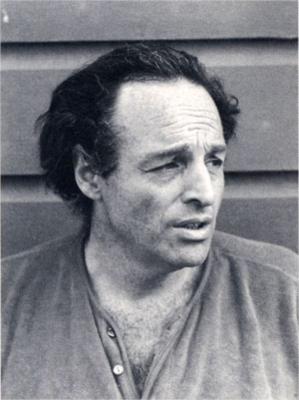
Where to see Al Held
Ranked by works you can see in person.
-
7 works
Buffalo AKG Art Museum
Buffalo, United States
-
7 works
Museum of Modern Art
New York City, United States


-
6 works
Metropolitan Museum of Art
New York City, United States
-
4 works
Whitney Museum of American Art
New York City, United States
-
4 works
Seattle Art Museum
Seattle, United States
-
3 works
Carnegie Museum of Art
Pittsburgh, United States
-
3 works
Detroit Institute of Arts
Detroit, United States
-
2 works
Neue Nationalgalerie
Berlin, Germany
-
2 works
National Gallery of Art
Washington D.C., United States
-
2 works
Yale University Art Gallery
New Haven, United States


View all 17 museums
-
1 works
Cleveland Museum of Art
Cleveland, United States
-
1 works
Museum of Fine Arts Boston
Boston, United States
-
1 works
Kunsthaus Zürich
Zurich, Switzerland
-
1 works
Solomon R. Guggenheim Museum
New York City, United States
-
1 works
Art Institute of Chicago
Chicago, United States
-
1 works
The Phillips Collection
Washington D.C., United States
-
1 works
Museum of Fine Arts, Houston
Houston, United States


Can't travel? Bring Al Held home.
See all Al Held prints →Frequently Asked Questions
Where can I see Al Held's work?
Al Held's work can be seen in numerous public collections across the United States and Europe. In New York City, major museums holding his pieces include the Solomon R. Guggenheim Museum, the Metropolitan Museum of Art, the Whitney Museum of American[1] Art, and the Museum of Modern Art. Outside New York, his work is held in the Albright-Knox Art Gallery (Buffalo), the Philadelphia Museum of Art, and the Yale University Art Gallery (New Haven). Several institutions in Washington, D.C. also hold works, such as the Hirshhorn Museum and Sculpture Garden, and the National Gallery of Art. Internationally, Held's art can be found in the Aargauer Kunsthaus (Aarau, Switzerland), the Museo de Arte Moderno (Barcelona), the Musée National d'Art Moderne, Centre Georges Pompidou (Paris), and the Kunstmuseum (Lucerne). Examples are also held in Scandinavian museums, such as the Aarhus Kunstmuseum in Denmark.What should I know about Al Held's prints?
Al Held, born in New York in 1928[1], is known for abstract paintings and prints characterised by geometric forms and bold colours. His prints often explore spatial relationships and the interplay of shapes. Held's printmaking includes lithographs and serigraphs (also known as screen prints). For example, the Guggenheim Museum owns a screen print by Al Held, titled "Untitled I", dating from 1966[1]-68. These prints are not merely reproductions of his paintings; they are original works conceived specifically for the print medium. Held manipulated colour and form to create optical effects, sometimes using contrasting hues to generate a sense of depth. His prints are often large in scale, reflecting the monumentality of his paintings. Held had gallery representation at Andre Emmerich Gallery and Poindexter Gallery, both in New York.Why are Al Held's works important today?
Al Held (1928[1]-2005[1]) was an American[1] abstract painter. His work is associated with Abstract Expressionism[1] and hard-edge painting. He is known for large-scale geometric compositions with bold colours. Held's early work in the 1950s was more gestural, but he shifted towards geometric abstraction in the 1960s. His paintings often feature overlapping and intersecting shapes that create a sense of depth and movement. Some critics saw his work as "struggle painting" with "disassociated" forms. This positioned him against the impersonal "Cool-Art". Held's art can be seen in relation to the formalist criticism of the time. Formalist critics analysed art by separating elements and isolating syntax. Some critics thought this approach neglected other aspects of art. Held's paintings, with their emphasis on form and colour, invite formal analysis.What techniques or materials did Al Held use?
Al Held's practice involved varied materials and techniques. Brice Marden primed cotton duck canvas with turps-thinned Flake White, sanding the surface when dry. Marden mixed oil paint with a medium of wax and turpentine, keeping it warm on a hot plate. The mixture was applied with a brush and worked with a painting spatula and knife, striving for constant surfaces within a painting. The amount of wax added to the oil paint varied, but oil remained the primary binder, unlike encaustic where wax is the binder. Other artists used industrial lacquers and oil pigments on transparent sheets of rhodoid and Plexiglas. To prevent colours from peeling, they scratched fine lines into the plastic, filling the crevices with oil paint. Painting on both sides of the sheets created spatial effects. A specific brush technique was needed, leading to unexpected textures. Colour was sometimes rubbed into the engraved lines, creating intensified, vibrating effects. Metals were also used in primary zones, dispersing finely across the surface and acting as a filter for subsequent colours.Who did Al Held influence?
Al Held's work had an impact on a number of other artists. Hans Hofmann felt a friendly competition with Held's paintings, and, according to Held, Hofmann's "very turpentiney paintings" were a response to Held's work. Held himself cited a range of influences, including masters of Cubism, such as Braque and Picasso, as well as early Kandinsky, Miró, Matisse, and Mondrian. He studied the structure of their paintings, analysing works such as Matisse's *Blue Window* (1913), Miró's *Person Throwing a Stone at a Bird* (1926), Cézanne's *Card Players* (1890-92), and Mondrian's grid paintings. Brice Marden stated that he related to Rothko more than any other abstract expressionist. Marden found Rothko a big influence in trying things with colour and liked it when the work started to become harder, combining atmosphere and hard edge. Marden felt more in tune with abstract expressionists than with the minimalists, but got stuck in with the minimalists because there were a lot of things that were very similar.Who influenced Al Held?
Al Held cited Analytic Cubism, particularly the work of Braque and Picasso, as formative influences during his college years. He also studied early Kandinsky and Miró, with additional interest in Matisse and Mondrian. He analysed the structure of their paintings exhaustively, paying close attention to works such as Matisse's *Blue Window*, Miró's *Person Throwing a Stone at a Bird*, Cézanne's *Card Players*, and Mondrian's grid paintings. In the New York art community, Held found Hans Hofmann and David Smith to be important colleagues. Hofmann's friendly competition pushed Held, and they visited each other's studios. By 1950[1]-51, Pollock, de Kooning, and Rothko became mentors. Seeing Gorky's 1951 exhibition, including *Agony* and *The Liver Is the Cock's Comb*, also made a significant impression. Held was moved and intrigued by Louis's Veils and Unfurleds, and Noland's targets and chevrons, in the late 1950s and early 1960s.What is Al Held's most famous work?
It is difficult to identify one single work as Al Held's most famous. He produced a large number of paintings, drawings, and prints throughout his career. Among his early works are paintings such as *Turnsole* (1961[1]), *Winter Sun* (1961), *Burnt Day* (1961), and *New Problem* (1961). These acrylic on canvas pieces are from a period when he worked in a more abstract style. Later examples include *Spring Cool* (1962), *Eyre* (1962), *Target* (1961), and *Winter Sun* (1962). These paintings show his exploration of colour relationships and geometric forms. Other notable paintings by Held are *Blue Horizon* (1963), *Dusk* (1963), *East-West* (circa 1963), and *Hover* (1963). These works demonstrate his continued interest in abstract expressionism and the use of bold colours.
Sources
Where to See guide aggregates verified holdings of Al Held's works across the following collections.
- [1] wikipedia Wikipedia: Al Held Used for: biography.
- [2] book guggenheim-guhe00solo Used for: biography.
- [3] book guggenheim-systemicpainting00allo Used for: biography.
- [4] book guggenheim-transfsi00wald Used for: biography.
Editorial overseen by Solis Prints. Sources verified 2026-09-26. Click a source for details, or hover over [N] in the page above to preview.
Editorial standardsMethodologyCorrectionsAI disclosureAbout the editorial team