



About Aleksander Gierymski
Russian · 1850–1901
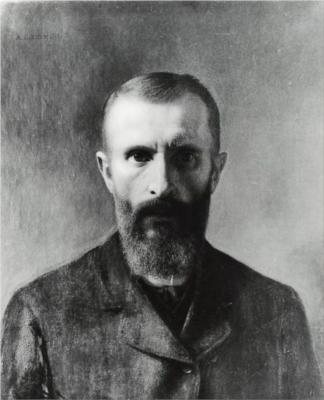
Polish Realist and proto-Impressionist whose candid Warsaw scenes of Jewish life anticipated Impressionism[1] through independent study.
Museums2
Countries1
Most worksNational Museum in Warsaw, Warsaw · 51 works
Loading map…
Where to see Aleksander Gierymski
Ranked by works you can see in person.
-
51 works
National Museum in Warsaw
Warsaw, Poland
-
20 works
National Museum in Kraków
Kraków, Poland


Frequently Asked Questions
Where can I see Aleksander Gierymski's work?
Unfortunately, the provided texts do not contain information about where to view works by Aleksander Gierymski. They consist of lists of museums and galleries, but do not mention Gierymski or his paintings. Without specific information, a comprehensive list of locations is impossible. However, as Gierymski was a Polish painter, it is reasonable to suggest that his works are most likely to be found in Polish museums. Major national museums in cities such as Warsaw, Krakow, and Poznan would be logical places to start your search. It is also possible that some of his paintings are held in private collections, or in museums outside Poland, particularly in countries with strong historical or cultural links to Poland. Checking museum websites and online art resources may provide more precise information about the current locations of his works.Why are Aleksander Gierymski's works important today?
Aleksander Gierymski's paintings are significant because they exemplify a nineteenth-century engagement with artistic tradition and a desire to synthesise past and present. Like many artists of his era, Gierymski looked to the Old Masters, particularly Dutch painters such as Rembrandt, for inspiration. This interest in the past was not merely antiquarian; it reflected a broader cultural ambition to define modern tendencies through a dialogue with heritage. Gierymski, along with other academy students in Dusseldorf, Munich, Berlin and Vienna, would have toured Holland to study the Dutch masters. Artists saw in Rembrandt's work a model of painterly skill, realism, and the ability to capture the essence of reality. This fascination extended to Rembrandt's use of colour and light, which was seen as a means of imbuing objects with a sense of life and spirituality. By engaging with these traditions, Gierymski and his contemporaries sought to create a modern art that was both innovative and rooted in the achievements of the past.What techniques or materials did Aleksander Gierymski use?
Aleksander Gierymski's techniques involved a combination of academic training and close observation of the world. He was influenced by French Realists, and his approach included both studio work and plein air studies. Gierymski often began with careful underdrawings to establish the composition. He then applied paint in layers, building up forms and colours gradually. His early works show an interest in detail and a precise rendering of textures. He employed a range of brushstrokes, from smooth blending to more visible, textured marks. In terms of materials, Gierymski used oil paints on canvas. He prepared his canvases with a ground layer, often a mid-tone grey, which allowed him to establish tonal relationships quickly. He also experimented with different pigments, including newly available manufactured colours, to achieve specific effects of light and atmosphere. His palette was carefully chosen, and he paid close attention to the interaction of colours.Who did Aleksander Gierymski influence?
It is difficult to make definitive statements about Aleksander Gierymski's influence on other artists. One source suggests that Arshile Gorky, an Armenian-American painter, was "invoked and imitated" by younger New York painters wishing to retain traditional draughtsmanship in abstract painting. However, this source also claims that Gorky's innovations were so complete that any artist following him would be reduced to academicism. Another source mentions Alexej von Jawlensky, a Russian[1] expressionist painter active in Germany. Jawlensky's paintings from 1907 show a more decorative arrangement of colour and form. The source suggests this may be a result of his friendship with Paul Sérusier or through absorbing Gauguin's work. Jawlensky's use of primary colours also suggests knowledge of Matisse, whom he may have met in 1905. His renewal of friendship with Kandinsky in 1908 also seems to have been mutually profitable, with both exploring colour.Who influenced Aleksander Gierymski?
Aleksander Gierymski, like many artists of his time, engaged with the art of the past. His brother, Maksymilian Gierymski, who studied in Munich from 1867[1], made a point of viewing works by Rembrandt at the Alte and Neue Pinakothek. Students at academies in Düsseldorf, Munich, Berlin, and Vienna commonly travelled to Holland during the last quarter of the 19th century. This suggests that Dutch masters were a point of interest for artists of the period. Rembrandt's use of light, a dominant element in his art, also influenced artists working with "painting of light", such as Félix Ziem, Johan Jongkind, and Claude Monet. Rembrandt's influence is also evident in portraits by Jozef Israëls, Wilhelm Leibl, Hugon von Habermann, and Lovis Corinth.What style or movement did Aleksander Gierymski belong to?
Aleksander Gierymski (1850[1]-1901[1]) was a Polish painter; he is primarily associated with Realism. This artistic movement sought to depict subjects truthfully, avoiding idealisation. Gierymski's early work included genre scenes and portraits. His time in Munich during the 1860s exposed him to new artistic ideas. He then lived in Italy from 1873[1] to 1879. During this period, he created paintings such as "Italian Inn" (1879), which showed ordinary people in everyday settings. Later, Gierymski explored Impressionism[1]. This is evident in his attention to light and atmosphere. Paintings like "The Jewish Holiday" (1884) and views of the River Vistula demonstrate this shift. These works capture fleeting moments and the effects of light on surfaces. Although he experimented with Impressionist techniques, Gierymski's foundation remained in Realism. He aimed to portray the world as he saw it, with an emphasis on detail and accuracy. His oeuvre bridges the gap between Realism and early Impressionism in Polish painting.What was Aleksander Gierymski known for?
Aleksander Gierymski (born in Warsaw in 1850[1], died in 1901[1]) was a Polish painter known for his contributions to Realism and Impressionism[1]. However, Symbolism also touched his work. Symbolism, according to Remy de Gourmont, is anti-naturalism. Therefore, in painting, sculpture and graphics, it is anti-realism and anti-impressionism. Symbolism in fine art was more of a reflection of the literary-intellectual movement. Ideas of Symbolism dominated minds in the Post-Impressionism era and were present in works by painters who were very different in their creative styles. At the end of the nineteenth century, there were a few dozen painters in Europe who tied their work in with ideas, symbols, graphic systems and the plots of symbolist literature. In Germany, they were called “late romantics”. In some cases, Symbolism just touched in passing some major masters without becoming the main line of their work; Auguste Rodin is an example.What is Aleksander Gierymski known for?
Aleksander Gierymski is now considered the principal precursor of Polish Impressionism[1]. He was a painter who saw clearly and spent his career in advance of the audiences available to him. He is known for painting the Jewish community, labourers, and festivals with social candour.
Sources
Where to See guide aggregates verified holdings of Aleksander Gierymski's works across the following collections.
- [1] wikipedia Wikipedia: Aleksander Gierymski Used for: biography.
- [2] book Masterpieces of western art : a history of art in 900 individual studies from the Gothic to the present day Used for: biography.
- [3] book Post-impressionism : cross-currents in European painting Used for: biography.
- [4] book Post-impressionism : cross-currents in European painting Used for: biography.
Editorial overseen by Solis Prints. Sources verified 2026-09-24. Click a source for details, or hover over [N] in the page above to preview.
Editorial standardsMethodologyCorrectionsAI disclosureAbout the editorial team