

About Edgar Chahine
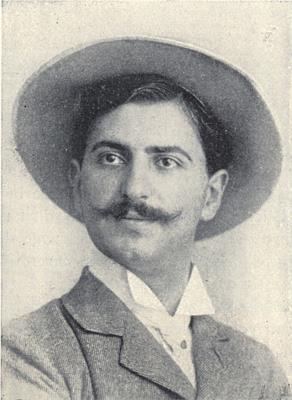
Museums2
Countries2
Largest reported holdingNational Gallery of Armenia, Yerevan · 334 recorded works
Loading map…
Where to see Edgar Chahine
Collection holdings are reported here; current display varies. Check with each museum before visiting.
-
334 recorded works
National Gallery of Armenia
Yerevan, Armenia
Also here (6)
-
3 recorded works
National Gallery of Art
Washington D.C., United States


Frequently Asked Questions
Where can I see Edgar Chahine's work?
Edgar Chahine's works can be viewed in several museum collections. These include the Metropolitan Museum of Art in New York; the Minneapolis Institute of Arts; the Museum of Modern Art, also in New York; and the Royal Ontario Museum in Toronto. Other locations include the Los Angeles County Museum of Art (LACMA); the Virginia Museum of Fine Arts in Richmond; the Wolfsonian at Florida International University in Miami Beach; and the Charles Hosmer Morse Museum of American Art in Winter Park, Florida. In the United Kingdom, you can find his pieces at the Brighton Museum & Art Gallery; the Geffrye Museum in London; the Manchester Art Gallery; the National Museums of Scotland, Royal Museum in Edinburgh; and the Victoria & Albert Museum in London. Chahine's art is also held in various galleries and museums throughout France, such as the Musee des Beaux-Arts in Nantes, and the Musee d’Orsay in Paris.What should I know about Edgar Chahine's prints?
Edgar Chahine (1874[1]-1947[1]) was an Armenian-French[1] artist known for his printmaking. Prints are made in editions, and each impression is numbered. The artist's signature testifies to the print's authenticity. The terminology around prints can be confusing. A vintage print is made around the time the negative was taken, while a period print is made within roughly 10 to 15 years. A modern print is produced recently from the original negative. An original print is made by the artist or under their supervision. The practice of limiting print editions arose in the later nineteenth century. By inscribing the impression number and the edition number, artists could influence the price and prevent prints from being pulled after the plate or stone degraded. Handmade or specially manufactured paper also contributed to the aesthetic value. The decision to limit an edition is the artist's choice, not a technical limitation. There is no inherent need to make limited editions, although most printmakers do.Why are Edgar Chahine's works important today?
Edgar Chahine's works offer a valuable record of Parisian life during the late 19th and early 20th centuries. Born in Vienna and raised in Constantinople (now Istanbul), Chahine moved to Paris in 1895[1], where he studied at the Académie Julian. His prints and drawings document the city's streets, cafés, and working-class neighbourhoods. Chahine captured everyday scenes, from bustling markets to intimate portraits of individuals. His work provides insight into the social realities of the time, including poverty, labour, and leisure. Chahine's technical skill as a printmaker is also significant. He mastered various techniques, including etching, aquatint, and drypoint, to create atmospheric effects and detailed compositions. His prints are admired for their expressive lines, tonal range, and ability to convey a sense of immediacy. Today, Chahine's works are appreciated for their historical and artistic value. They offer a glimpse into a bygone era, while also demonstrating the enduring power of printmaking as a medium for social observation and artistic expression.What techniques or materials did Edgar Chahine use?
Edgar Chahine was a printmaker who employed a variety of techniques, including etching, drypoint, and aquatint. Soft-ground etching was one method he used. This involves a non-hardening wax that adheres to anything pressed into it, allowing for varied textures. Aquatint, another technique used by Chahine, achieves tonal gradations by sprinkling powdered resin on a plate and then immersing it in acid. The areas not covered by resin are then bitten away. Sugar-lift etching, also known as lift-ground etching, is another method that Chahine may have used. Drypoint, which falls between etching and engraving, was another technique employed by Chahine. In drypoint, a drawing is scratched directly into the metal plate with a needle, leaving a burr that gives the line a soft, blurred texture when printed.Who did Edgar Chahine influence?
Edgar Chahine's direct influence on specific artists is not well documented. However, some connections can be drawn through his involvement in artistic circles and movements. Chahine did not directly mentor artists associated with the Art and Liberty Group in Egypt. However, the group's activities, especially their engagement with Surrealism, provide a context for understanding artistic influence in the region. The group's members, who included Ramses Younane and Kamel el-Telmisany, sought to liberate art from political propaganda and bourgeois conventions. Georges Henein, a central figure in Art and Liberty, championed the absurd and irrational, aiming for the emancipation of the individual. While Chahine's name does not appear in connection with these figures, the broader artistic environment of the time suggests a network of shared ideas and aesthetic approaches.What is Edgar Chahine's most famous work?
Edgar Chahine was a French[1] artist of Armenian extraction, known for his prints and paintings of Parisian life. It is difficult to name one single piece as his "most famous". However, some works are more recognisable than others. Chahine's etchings of Parisian street scenes and portraits are well known. These capture the atmosphere of Belle Époque Paris. His skill in drypoint and aquatint techniques allowed him to create atmospheric effects, which made his prints popular among collectors. "La Vague" (The Wave) is one example of his better-known prints. It depicts a woman struggling against the wind and rain. Another example is "Boulevard Saint-Michel", which captures a busy Parisian street scene. These images have been reproduced and are widely available today. Chahine's work is held in many museum collections, including the Bibliothèque Nationale in Paris, and the British Museum in London. His prints continue to be admired for their technical skill and their depiction of Parisian life.What style or movement did Edgar Chahine belong to?
Edgar Chahine (1874[1]-1947[1]) was an Armenian-French[1] artist known for his etchings and prints. He depicted scenes of urban life, particularly in Paris. Although the reference passages do not directly address Chahine's affiliations, his work can be situated within a broader context of artistic movements at the turn of the 20th century. His subject matter, focusing on modern city life, aligns with aspects of Impressionism and Post-Impressionism; these movements captured fleeting moments of everyday existence. Additionally, Chahine's printmaking techniques connect him to the etching revival, which saw renewed interest in traditional printmaking methods. The Art Deco movement, which emerged later, also has some links to his style. His images of Parisian society and modern life have some affinity with its aesthetic.What was Edgar Chahine known for?
Edgar Chahine was an Armenian-French[1] artist, primarily known for his etchings and engravings. He captured scenes of urban life, particularly in Paris. Born in Vienna in 1874[1], Chahine's family moved to Constantinople when he was a child. He received his initial art education there before relocating to Paris in 1895[1]. In Paris, he studied at the Académie Julian. Chahine's work often depicted the everyday lives of ordinary people: street scenes, café culture, and portraits of working-class individuals. He had a talent for capturing the atmosphere of Belle Époque Paris. His technical skill in printmaking, combined with his observant eye, made him a celebrated artist in his time. He died in Paris in 1947[1].
Sources
Where to See guide aggregates verified holdings of Edgar Chahine's works across the following collections.
- [1] wikipedia Wikipedia: Edgar Chahine Used for: biography.
- [2] book Masterpieces of western art : a history of art in 900 individual studies from the Gothic to the present day Used for: biography.
- [3] book Bardaouil, Sam; , Surrealism in Egypt Used for: biography.
- [4] book Landauer, Susan, The not-so-still life : a century of California painting and sculpture Used for: biography.
Editorial overseen by Solis Prints. Sources verified 2026-09-30. Click a source for details, or hover over [N] in the page above to preview.
Editorial standardsMethodologyCorrectionsAI disclosureAbout the editorial team