



About Ferdynand Ruszczyc
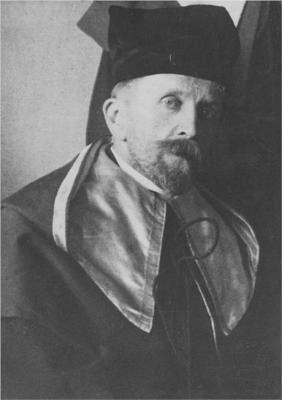
Museums2
Countries1
Largest reported holdingNational Museum in Warsaw, Warsaw · 14 recorded works
Loading map…
Where to see Ferdynand Ruszczyc
Collection holdings are reported here; current display varies. Check with each museum before visiting.
-
14 recorded works
National Museum in Warsaw
Warsaw, Poland
-
4 recorded works
National Museum in Kraków
Kraków, Poland


Frequently Asked Questions
What should I know about Ferdynand Ruszczyc's prints?
Ferdynand Ruszczyc (1870[1]-1936[1]) was a Polish painter, printmaker, and educator associated with the Young Poland movement. While primarily known for his paintings, he also produced graphic works, including posters. Printmaking in Poland experienced a resurgence around the turn of the century, with artists exploring traditional techniques and adapting them to modern aesthetics. Many Polish artists, trained in painting and drawing, turned to poster design and printmaking for economic reasons, bringing their diverse artistic perspectives to the field. Ruszczyc's prints, like those of his contemporaries, often reflect the influence of various artistic movements, including symbolism and art nouveau. Technical limitations in Polish print shops at the time encouraged artists to experiment with traditional methods, resulting in works that sometimes evoke linocuts and metal techniques. The poster art of the era was characterised by narrative qualities and a strong emphasis on drawing.Why are Ferdynand Ruszczyc's works important today?
Ferdynand Ruszczyc (1870[1]-1936[1]) was a Polish painter, printmaker, and educator, known for his contributions to the development of Polish modernism. He created symbolic, mood-filled artworks. Ruszczyc's art connects to the Romantic tradition. His atmospheric works share some qualities with artists such as Caspar David Friedrich, Ernst Ferdinand Oehme, and Carl Lessing. These artists created evocative works with universal symbolism. Ruszczyc's approach to representing nature and imbuing it with emotional weight resonates with this artistic lineage. His legacy also exists through his students. As a professor at the Warsaw School of Fine Arts and later at Vilnius University, Ruszczyc influenced generations of Polish artists. He promoted new approaches to art education. His emphasis on individual expression helped shape the course of Polish art in the 20th century. His work continues to be studied for its artistic qualities and historical importance.Who did Ferdynand Ruszczyc influence?
It is difficult to identify a single artist who Ruszczyc directly influenced. However, one can look at the artistic movements of the late 19th and early 20th centuries to find possible connections. Cézanne, for example, was a source of inspiration for many modern painters. His approach resonated with artists working in an abstract style. Cézanne's painting, Bridge at Maincy (1879[1]-80), invokes Courbet's Shaded Stream (1865). The connections to Courbet are rooted in technique, notably in his use of the palette knife and physical manner of painting. Painters associated with Gauguin, such as Verkade, Jawlensky, Munter, Serusier, and Denis, also explored new avenues of artistic expression. Jawlensky's paintings reflected a more decorative and symbolic arrangement of colour and form. His Yellow Sounds, for example, replaced Neo-Impressionist brushstrokes with large flat areas of colour. The curvilinear blue outline and delicate shapes recall paintings such as Verkade's Farmyard at le Pouldu.Who influenced Ferdynand Ruszczyc?
Ferdynand Ruszczyc's artistic development involved several influences. Exposure to various movements and artists helped shape his style. Analysing the influences on an artist is always difficult. Ruszczyc would have been exposed to many styles and ideas. The work of artists such as Edouard Manet and Rembrandt, with their treatment of space and form, offered examples of how to approach painting. Ruszczyc would have been aware of Impressionism and Cubism, movements that allied with each other. Other artists, such as Arshile Gorky, and the New York School, also made an impression. The work of Hans Hofmann and David Smith provided a sense of artistic community and competition. Earlier artists, including Braque, Picasso, Kandinsky, and Miro, were also important in his formative years. Ruszczyc studied their structures and compositions. He also looked at Matisse, Mondrian, Leger, Renaissance artists, Old Masters, American masters, and African art.What is Ferdynand Ruszczyc's most famous work?
Without specific references to Ruszczyc's works, it's challenging to pinpoint his single most famous painting. However, based on available information, I can offer a general overview of his artistic focus. Ferdynand Ruszczyc (1870[1]-1936[1]) was a Polish painter, printmaker, and educator, associated with the Young Poland movement. This movement favoured symbolism and emotional expression. Although I cannot name his single most famous work, Ruszczyc is generally known for depictions of the Polish countryside and for his symbolic approach. Ruszczyc's work often explored themes of nature, solitude, and the relationship between humanity and the environment. His prints and paintings frequently feature expansive vistas, dramatic skies, and a sense of quiet contemplation. He aimed to capture the spirit and character of the land.What style or movement did Ferdynand Ruszczyc belong to?
Assigning Ferdynand Ruszczyc to a single style can be difficult. Around the start of the 20th century, a number of styles emerged, including cubism and futurism. Cubism uses form to expose the third dimension and transfer forms onto canvas as they are created. Futurism, first promoted by Italian artists, aimed to reform all types of art, promoting dynamism and movement in painting, since painting is inherently static. Cubism appeared in classical, academic, romantic, realist, and abstract forms. Futurism influenced cubists, resulting in a short-lived cubism with futurist characteristics. Some consider the emergence of movements that advocated for the coloured surface to be an important development. This led to theories about displaced coloured surfaces and the movement of surfaces, along with rondism, which involved constructing based on the curve of a circle. These approaches aimed to enhance constructiveness within the picture's surface. The doctrine of surface painting naturally led to figural construction, as the figure is part of the surface's movement.What was Ferdynand Ruszczyc known for?
Without more specific source material, it's difficult to summarise Ferdynand Ruszczyc's artistic output. However, the art of Rembrandt was extremely popular among 18th-century collectors and art enthusiasts. Rembrandt's stylistics, his realistic models, and his images of philosophers, Jewish sages, and beggars were subjects of references, reworkings, and copies. Jean-Pierre Norblin, who arrived in Poland in 1774 to work for the Czartoryski family, made drawings and engravings in the manner of Rembrandt. His graphic output, in particular, was extremely popular. The repertoire of Rembrandtesque personages, settings, and accessories exerted an influence on the imagination of Christian Wilhelm Ernst Dietrich, Januarius and Johannes the brothers Zick, Franz Anton Maulbertsch, Martin Johann Schmidt, Johann Georg Trautmann, and Jean-Pierre Norblin, and his pupils Giovanni Battista Piazetta and Giovanni Battista Tiepolo. Claude Watelet in Paris and Thomas Worlidge in Bath also worked in the manner of Rembrandt.What was Ferdynand Ruszczyc's art style?
Ferdynand Ruszczyc's art style combines the scale and earthiness of the Russian school of painting with the moody symbolism he encountered in Germany. His landscapes often capture different registers of northern light, reflecting his travels across various regions, including Crimea, the Baltic islands, Sweden, and Western Europe.
Sources
Where to See guide aggregates verified holdings of Ferdynand Ruszczyc's works across the following collections.
- [1] wikipedia Wikipedia: Ferdynand Ruszczyc Used for: biography.
- [2] book guggenheim-mest00aten Used for: biography.
- [3] book Bernard Denvir, World of Art_ Post-Impressionism Used for: biography.
- [4] book Bernard Denvir, World of Art_ Post-Impressionism Used for: biography.
Editorial overseen by Solis Prints. Sources verified 2026-09-30. Click a source for details, or hover over [N] in the page above to preview.
Editorial standardsMethodologyCorrectionsAI disclosureAbout the editorial team