



About Antonio Canova
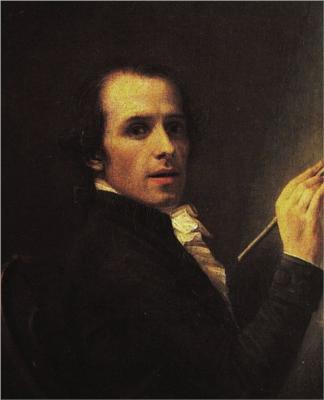
The defining sculptor of Neoclassicism[3], whose Roman studio drew commissions from Napoleon, the Pope, and collectors across Europe.
Where to see Antonio Canova
Collection holdings are reported here; current display varies. Check with each museum before visiting.
-
15 recorded works
Gallerie dell'Accademia
Venice, Italy
-
4 recorded works
Metropolitan Museum of Art
New York City, United States


-
 3 recorded works
Galleria d'arte moderna di Milano
Milan, Italy
-
3 recorded works
National Gallery of Art
Washington D.C., United States
-
3 recorded works
Hermitage Museum
Saint Petersburg, Russia
-
2 recorded works
Victoria and Albert Museum
London, United Kingdom
-
1 recorded work
Louvre
Paris, France
-
1 recorded work
Museo di Capodimonte
Naples, Italy
-
 1 recorded work
Galleria Nazionale d'Arte Moderna e Contemporanea di Roma
Rome, Italy
-
1 recorded work
J. Paul Getty Museum
Los Angeles, United States


Own a piece of it
Antonio Canova prints
Hand-finished archival prints from Antonio Canova's body of work.


View all 20 museums
-
1 recorded work
Pinacoteca di Brera
Milan, Italy
-
1 recorded work
Nantes Museum of Arts
Nantes, France
-
1 recorded work
Alte Nationalgalerie
Berlin, Germany
-
1 recorded work
Kunsthistorisches Museum
Vienna, Austria
-
1 recorded work
Bode Museum
Berlin, Germany
-
1 recorded work
Vanderbilt Museum of Art
Nashville, United States
-
1 recorded work
Smithsonian American Art Museum
Washington D.C., United States
-
1 recorded work
National Museum in Warsaw
Warsaw, Poland
-
1 recorded work
Vatican Museums
Vatican City, Vatican City
-
1 recorded work
Musée Fabre
Montpellier, France


Can't travel? Bring Antonio Canova home.
See all Antonio Canova prints →Frequently Asked Questions
Where can I see Antonio Canova's work?
Antonio Canova's sculptures and other works can be viewed in museums and collections around the world. In Paris, the Musée du Louvre has Canova's *Cupid and Psyche*. Other European museums include the Kunsthistorisches Museum in Vienna and the Museo di Arte in São Paulo. In the United Kingdom, the Barber Institute of Fine Arts at the University of Birmingham has *Tancred and Erminia*. Stour Head in Wiltshire (National Trust collection) has *The Choice of Hercules*. In the United States, the National Gallery of Art in Washington, D.C. holds *The Assumption of the Virgin*, *The Holy Family on the Steps*, and *The Seven Sacraments: Baptism*. The Museum of Fine Arts in Boston has *Achilles Among the Daughters of Lycomedes* and *Mars and Venus*. The Art Institute of Chicago has *Landscape with St. John on Patmos*. The John and Mable Ringling Museum of Art in Sarasota has *The Ecstasy of St Paul* and *The Holy Family with St John*. The M. H. de Young Memorial Museum has *The Adoration of the Golden Calf*.What should I know about Antonio Canova's prints?
Antonio Canova (1757[3]-1822[3]) was a Venetian sculptor, famous in his day. He is associated with a revival of classical ideals in European art. While Canova is best known for his sculptures, prints related to his work were produced. Many publications document Canova's sculptures and life. Isabella Albrizzi-Teotochi's *Opera di scultura e di plastica di A. Canova*, from 1821[3], catalogues his sculptural work. Reveil and H. de Latouche published *Oeuvre de Canova* in 1825. Prints of Canova's sculptures circulated in magazines and journals. For example, the *Mercure de France* carried an article on the gesso model of the Monument to Pope Clement XIV in December 1784. Some prints were based on drawings by Canova. A catalogue exists of Canova's drawings in the Museo di Bassano, Gastello Sforzesco, Milan, from 1982. Hans Ost published *Ein Skizzenbuch Antonio Canovas, 1796-1799[3]*, in 1970. Massimo Pantaleoni published *Disegni Anatomici di Antonio Canova* in 1949. These drawings may have been reproduced as prints.Why are Antonio Canova's works important today?
Antonio Canova (1757[3]-1822[3]) was an Italian[3] sculptor who achieved fame during his lifetime, and his works remain important for several reasons. He is associated with Neoclassicism[3], a movement that looked to classical antiquity for inspiration. Canova's sculptures are admired for their technical skill and their ability to capture emotion. His work *Amor and Psyche* (1786[3]-93) in the Louvre, for example, depicts the mythological couple in a moment of anticipation before a kiss; this captures both desire and the knowledge of potential disappointment. Canova's influence extended to the political sphere. Napoleon Bonaparte commissioned him to create a portrait bust and a statue. Canova wanted to depict Napoleon as Mars, the Roman god of war, in heroic nudity. Napoleon declined this concept for the statue, as he felt it was inappropriate for the representation of modern power. Although Canova completed the statue in 1811, it was not installed due to Napoleon's declining power. In 1815, the British government presented it to the Duke of Wellington as a souvenir of his victory at Waterloo.What techniques or materials did Antonio Canova use?
Antonio Canova, an Italian[3] sculptor regarded as a leading artist of Neoclassicism[3], was born into a family of stonemasons. He began his career in Rome in 1779[3]. Canova's process involved preparatory work, including sketches and models. He created terracotta bozzetti (small-scale, rough models) as initial studies. These allowed him to explore compositions and poses before working in marble. Canova also made more detailed modelli, larger and more refined versions of the bozzetti. When working with marble, Canova employed a pointing system. This technique involved transferring precise measurements from the model to the marble block using pointers. The method allowed for accurate replication of the model's form in the final sculpture. He worked "con assai pochi punti nell’abbozzo di marmo" during his Venetian years. Canova was also known to apply a special finish to his marble sculptures, giving them a soft, luminous appearance.Who did Antonio Canova influence?
Antonio Canova's influence was widespread across Europe, particularly in France, during the late eighteenth and early nineteenth centuries. His studio in Rome became a popular destination, and collectors sought his work. Napoleon even offered Canova a position as Director General of Museums, which he refused. French sculptors were particularly affected by Canova's success. Some emulated his style, while others deliberately rejected his approach. Sculptors like Chaudet, Deseine, and David d’Angers felt the weight of Canova's prominence. Even those who consciously emulated his classicising works did so at an intuitive level. Canova's impact is evident in drawings and reliefs, with Jean-Auguste-Dominique Ingres transmitting Canova's ideas to sculptors such as Louis Petitot and Jean-Pierre Cortot. Canova's presence was so significant that it enabled him to transcend national and political barriers. At his death, Europe honoured him with a monument in Venice. His work became a standard against which sculpture was judged.Who influenced Antonio Canova?
Antonio Canova's artistic development occurred in Rome, where he was welcomed by Gavin Hamilton and his circle. This pro-classical group encouraged Canova to move away from the naturalism seen in his earlier work, Daedalus and Icarus. The group included figures such as Hewetson, Jenkins, Byres, and the sculptor Angelini. Canova admired classical sculpture, particularly Bernini's Apollo and Daphne. He also made references to Michelangelo in his notebooks and knew Michelangelo's Moses was famous. Some critics saw "hyperbolic Michelangelism" in Canova's male figures. Canova's Sleeping Endymion (1819[3]-22) has been compared to Michelangelo's earlier works, and Canova may have incorporated the pose of the Dying Slave into it. Quatremere de Quincy saw Canova as self-taught. However, Canova was influenced by the theories of Winckelmann. Canova's Perseus was seen as embodying Winckelmann's aesthetic principles. Canova drew inspiration from the Horse Tamers.What style or movement did Antonio Canova belong to?
Antonio Canova (1757[3]-1822[3]) is considered a key figure in Neoclassical sculpture. Born near Venice, he gained recognition in Rome by the 1780s. He secured commissions from across Europe and America; many sculptors emulated his style well into the nineteenth century. Canova's sculptures, such as *Cupid and Psyche* (1787[3]-1793[3]), exemplify the Neoclassical focus on idealised forms and refined finish. His work drew inspiration from classical Greco-Roman art and mythology. Canova also studied Renaissance and Baroque works. He travelled extensively, visiting France, Germany, and England. His *Perseus with the Head of Medusa* (circa 1800) references both ancient Greek sculpture and the work of the mannerist artist Benvenuto Cellini. Canova advised on acquiring the Parthenon Marbles for England, demonstrating the period's increased interest in Greek classicism.
Sources
Where to See guide aggregates verified holdings of Antonio Canova's works across the following collections.
- [1] museum Galleria d'arte moderna di Milano Used for: museum holdings.
- [2] museum Galleria Nazionale d'Arte Moderna e Contemporanea di Roma Used for: museum holdings.
- [3] wikipedia Wikipedia: Antonio Canova Used for: biography.
- [4] book Alison West, From Pigalle to Préault Used for: biography, stylistic analysis.
- [5] book Allison Lee Palmer, Historical Dictionary of Neoclassical Art and Architecture Used for: biography, stylistic analysis.
- [6] book Palmer, Allison Lee, Historical Dictionary of Neoclassical Art and Architecture Used for: biography, stylistic analysis.
Editorial overseen by Solis Prints. Sources verified 2026-09-30. Click a source for details, or hover over [N] in the page above to preview.
Editorial standardsMethodologyCorrectionsAI disclosureAbout the editorial team