



About Alexander Helwig Wyant
- landscape painting
American[1] landscape painter who shifted from the Hudson River School towards Tonalism after a stroke forced him to paint left-handed.
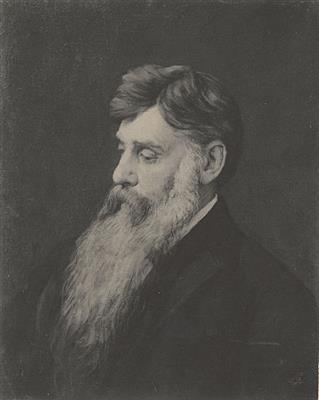
Where to see Alexander Helwig Wyant
Ranked by works you can see in person.
-
7 works
Metropolitan Museum of Art
New York City, United States
-
6 works
Museo de Arte de Worcester
Worcester, United States


-
6 works
Cincinnati Art Museum
Cincinnati, United States
-
5 works
Detroit Institute of Arts
Detroit, United States
-
4 works
RISD Museum
Providence, United States
-
4 works
Smithsonian American Art Museum
Washington D.C., United States
-
3 works
New Britain Museum of American Art
New Britain, United States
-
3 works
The Nelson-Atkins Museum of Art
Kansas City, United States
-
3 works
Los Angeles County Museum of Art
Los Angeles, United States
-
2 works
Toledo Museum of Art
Toledo, United States


View all 26 museums
-
2 works
Cleveland Museum of Art
Cleveland, United States
-
2 works
Museum of Fine Arts Boston
Boston, United States
-
2 works
Pennsylvania Academy of the Fine Arts
Philadelphia, United States
-
2 works
Harvard Art Museums
Cambridge, United States
-
2 works
Minneapolis Institute of Art
Minneapolis, United States
-
2 works
Yale University Art Gallery
New Haven, United States
-
1 works
Brooklyn Museum
New York City, United States
-
1 works
Carnegie Museum of Art
Pittsburgh, United States
-
1 works
Dayton Art Institute
Dayton, United States
Also here (2)
-
1 works
John and Mable Ringling Museum of Art
Sarasota, United States
-
1 works
National Gallery of Art
Washington D.C., United States
-
1 works
David Owsley Museum of Art Ball State University
Muncie, United States
Also here (2)
-
1 works
Art Institute of Chicago
Chicago, United States
-
1 works
Indianapolis Museum of Art
Indianapolis, United States
-
1 works
Mildred Lane Kemper Art Museum
St. Louis, United States
-
1 works
Fine Arts Museums of San Francisco
San Francisco, United States


Frequently Asked Questions
Where can I see Alexander Helwig Wyant's work?
Many major art museums in the United States and Canada hold examples of Alexander Helwig Wyant's work. These include the Metropolitan Museum of Art in New York, the Los Angeles County Museum of Art (LACMA), the Minneapolis Institute of Arts, and the Virginia Museum of Fine Arts in Richmond. You can also view his work at the Charles Hosmer Morse Museum of American[1] Art in Winter Park, Florida; the Royal Ontario Museum in Toronto; the Yale University Art Gallery in New Haven, and the National Gallery of Art in Washington, DC. Other institutions that have exhibited Wyant's paintings, drawings, and watercolours include the Art Institute of Chicago, the Philadelphia Museum of Art, the Museum of Fine Arts in Boston, and the National Gallery of Canada in Ottawa. Check each museum's website for details on current exhibitions and collection holdings.What should I know about Alexander Helwig Wyant's prints?
Alexander Helwig Wyant (1836[1]-1892[1]) was an American[1] painter associated with the Hudson River School. Wyant's paintings were reproduced as prints, but information about them is scarce. When collecting fine art prints, bear in mind that limited editions command higher prices than posters because the plates are made by hand and can only withstand a certain amount of use. The number of prints is limited by the number of impressions that can be made before the plate wears out; some publishers impose their own limits to increase a print’s value. These limits may be set as high as 700 to 1,000 impressions, but some prints are limited to just 250 to 500, making them highly prized by collectors. When buying prints, be aware that prices can vary substantially, even for identical prints sold around the same time, due to condition, quality, and market noise.Why are Alexander Helwig Wyant's works important today?
Alexander Helwig Wyant (1836[1]-1892[1]) was an American[1] painter associated with the Hudson River School. These artists explored the relationship between individuals, the country, and the environment. Wyant, along with other painters, sought to capture the unique qualities of the American countryside. Thomas Cole, often regarded as a leader within the Hudson River School, articulated this sentiment, emphasising the beauty and sublimity of the American environment as a birthright. Artists from the Hudson River School addressed moral and spiritual concerns through their art. They frequently depicted panoramic views and participated in an ongoing exploration of the nation's connection to its land. These artists often allegorised nature, imbuing their works with spiritual, moral, historical, or philosophical meaning. Wyant's paintings provide a glimpse into the artistic and cultural values of 19th-century America.What techniques or materials did Alexander Helwig Wyant use?
Alexander Helwig Wyant was an American[1] painter associated with the late nineteenth-century American art movement often called tonalism. Wyant's artistic output included oil paintings and watercolours. Wyant began his art career as a painter of stage scenery. He was largely self-taught, though he briefly studied with the Norwegian-American artist Hans Gude in Germany. Gude's influence gave Wyant a solid grounding in traditional techniques. Wyant's early works show the influence of the Hudson River School. Later, he developed a more personal and atmospheric style, often using muted colours and soft brushwork to create a sense of mood and atmosphere. He often worked on commercially primed canvas with white grounds. Wyant's methods included applying thin layers of paint, sometimes scraping down areas and reworking them. He was known to experiment with different materials and approaches. He also produced many pencil sketches.Who did Alexander Helwig Wyant influence?
Although it is difficult to identify specific artists directly influenced by Alexander Helwig Wyant, the broader context of artistic influence during his time can be examined. Painters from the Düsseldorf Academy, such as Johann Wilhelm Schirmer and Caspar Scheuren, highlighted aspects of mood and fluid painterly gesture in their work. These elements also appear in the work of painters such as Decamps, Diaz de la Peña, and Rousseau. Painters are bound to be involved in painting; old and new are just one thing. Influence is not just a matter of older art nourishing the pictorial imaginations of subsequent generations. As Willem de Kooning observed, contemporary artists keep influencing the old masters. He claimed Courbet as a point of reference, admiring his ability to see something concretely, like the bark on a tree. De Kooning proposed that someone like Clyfford Still, who probably never looked at Monet, got them to see it.What is Alexander Helwig Wyant's most famous work?
It is difficult to identify one single work as Alexander Helwig Wyant's 'most famous'. He was an American[1] painter associated with the Hudson River School, a group of artists who depicted romanticised views of the American wilderness. Wyant's paintings often explored themes related to nature and the changing American countryside. Other painters of the Hudson River School, such as Thomas Cole and Frederic Church, created well-known works that captured the vastness and drama of the American landscape. Cole's *Scene from Last of the Mohicans* (1827) evokes the awe-inspiring scale of the wilderness. Church's *Twilight in the Wilderness* (1860[1]) is celebrated for its depiction of nature's power. Albert Bierstadt's *The Rocky Mountains* (1863) romanticised the American West during a period of industrial expansion. These artists aimed to convey a sense of the sublime and to inspire appreciation for the natural world.What style or movement did Alexander Helwig Wyant belong to?
Alexander Helwig Wyant is associated with the Hudson River School, a group of American[1] artists who primarily painted scenes of the Hudson River Valley. However, many of these artists also depicted scenes from across the country. The Hudson River School artists presented Romantic panoramic views and explored the relationship between individuals, the country, and the land. They sought to identify qualities that made America unique. Wyant's artistic style shares qualities with other members of the Hudson River School, such as Albert Bierstadt and Frederic Edwin Church. These artists often allegorised nature in their work, touching on spiritual, moral, historical, or philosophical issues. The Hudson River School artists worked during a time of upheaval, and their paintings often presented an idealistic view of America.What was Alexander Helwig Wyant known for?
Alexander Helwig Wyant (1836[1]-1892[1]) was an American[1] painter associated with the Hudson River School. This group of artists, active in the mid-19th century, became known for their depictions of the American countryside, especially the Hudson River Valley. Though named for that region, their subject matter expanded to other areas of the United States. Wyant and other Hudson River School artists presented grand, panoramic views. Their paintings touched on spiritual, moral, historical, or philosophical issues. They often placed human figures in their compositions to demonstrate humanity’s small stature when compared to nature. Other artists associated with the Hudson River School include Thomas Cole (1801-1848[1]), Albert Bierstadt (1830-1902), and Frederic Edwin Church (1826-1900).
Sources
Where to See guide aggregates verified holdings of Alexander Helwig Wyant's works across the following collections.
- [1] wikipedia Wikipedia: Alexander Helwig Wyant Used for: biography.
- [2] book Beard, Lee, 1973- author, Butler, Adam, author; Van Cleave, Claire, author; Fortenberry, Diane, author; Stirling, Susan, author, Beard, Lee, 1973- author, Butler, Adam, author; Van Cleave, Claire, author; Fortenberry, Diane, author; Stirling, Susan, author - The Art Book_ New Edition, Mini Format Used for: biography.
- [3] book Masterpieces of western art : a history of art in 900 individual studies from the Gothic to the present day Used for: biography.
- [4] book Christensen, Erwin Ottomar, 1890-, The history of Western art Used for: biography.
Editorial overseen by Solis Prints. Sources verified 2026-09-24. Click a source for details, or hover over [N] in the page above to preview.
Editorial standardsMethodologyCorrectionsAI disclosureAbout the editorial team