



About Sir John Everett Millais
- Symbolism
- Pre-Raphaelite Brotherhood
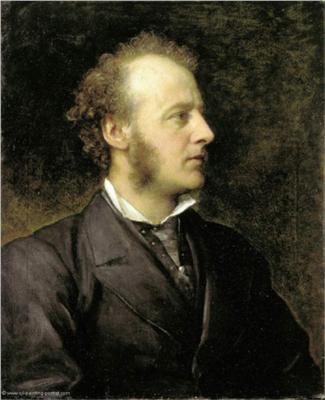
The youngest student the Royal Academy ever admitted, co-founded the Pre-Raphaelites, painted Ophelia from a model in a cold bath, and sold Bubbles to a soap company.
Where to see Sir John Everett Millais
Ranked by works you can see in person.
-
28 works
Tate
London, United Kingdom
-
22 works
National Gallery
London, United Kingdom


-
16 works
Birmingham Museums Trust
Birmingham, United Kingdom
-
11 works
Manchester Art Gallery
Manchester, United Kingdom
-
11 works
Lady Lever Art Gallery
Port Sunlight, United Kingdom
-
8 works
National Portrait Gallery
London, United Kingdom
-
7 works
Aberdeen Archives, Gallery and Museums collections
Aberdeen, United Kingdom
-
6 works
Walker Art Gallery
Liverpool, United Kingdom
-
4 works
Gallery Oldham
Oldham, United Kingdom
-
4 works
Glasgow Museums Resource Centre
Glasgow, United Kingdom


View all 39 museums
-
4 works
Leeds Art Gallery
Leeds, United Kingdom
-
4 works
Ashmolean Museum
Oxford, United Kingdom
-
4 works
Sudley House
Liverpool, United Kingdom
-
4 works
Fitzwilliam Museum
Cambridge, United Kingdom
-
3 works
Guildhall Art Gallery
London, United Kingdom
-
3 works
Musée d'Orsay
Paris, France
-
3 works
National Trust
Swindon, United Kingdom
-
3 works
National Gallery of Victoria
Melbourne, Australia
-
3 works
Perth Art Gallery
Perth, United Kingdom
-
3 works
Royal Collection
London, United Kingdom
-
2 works
Jersey Museum and Art Gallery
Saint Helier, Jersey
Also here (1)
-
2 works
Barts Health Archives
London, United Kingdom
-
2 works
Temple Newsam
Leeds, United Kingdom
-
2 works
National Museum of Western Art
Tokyo, Japan
-
2 works
Yale Center for British Art
New Haven, United States
-
2 works
Bristol City Museum & Art Gallery
Bristol, United Kingdom
-
2 works
Eton College
Eton, United Kingdom
Also here (2)
-
2 works
Victoria and Albert Museum
London, United Kingdom
-
2 works
Royal Holloway, University of London
Egham, United Kingdom
-
2 works
Sheffield Galleries and Museums Trust
Sheffield, United Kingdom
-
2 works
Auckland Art Gallery Toi o Tāmaki
Auckland, New Zealand
-
1 work
Royal College of Physicians
London, United Kingdom
Also here (4)
-
1 work
Hunterian Museum and Art Gallery
Glasgow, United Kingdom
-
1 work
Dundee Art Galleries and Museums
Dundee, United Kingdom
-
1 work
Southampton City Art Gallery
Southampton, United Kingdom
-
1 work
Calderdale Metropolitan Borough Council
Halifax, United Kingdom
-
1 work
Royal Pharmaceutical Society Museum
London, United Kingdom
Also here (1)
-
1 work
Oxford Town Hall
Oxford, United Kingdom
-
0 works
National Gallery of Art
Washington D.C., United States


Frequently Asked Questions
What should I know about Sir John Everett Millais's prints?
Sir John Everett Millais (1829-1896) was a founding member of the Pre-Raphaelite Brotherhood; he painted, illustrated, and occasionally etched. In 1837, Millais moved to London and attended the Royal Academy Schools in 1840. He exhibited at the Royal Academy from 1846 to 1896 and was elected RA in 1863. Millais was in demand among print dealers, and his works were engraved in large numbers. He produced designs for books and magazines, including Trollope novels in *The Cornhill* (1860-3) and works by Tennyson. By the 1860s, he concentrated on gallery paintings, portraits, and sentimental genre works, which brought him popularity and wealth. He was made a baronet in 1885. Prints after Millais attracted a diverse audience. His *Cherry Ripe* was found in a Tartar peasant's hut, while *Cinderella* was framed in a Samoan chieftain's home. *The North-West-Passage* was found in a South African shepherd's hut. Millais produced only thirteen etchings, but they secured his reputation, especially among Etching Club members. His first etching, *The Young Mother*, appeared in *Etchings for the Art Union of London* (1857) and was praised by print historian P. J. Hamerton.Why are Sir John Everett Millais's works important today?
Sir John Everett Millais was a child prodigy who gained fame as a founder of the Pre-Raphaelite Brotherhood in 1848. This group of artists, including Dante Gabriel Rossetti and William Holman Hunt, rejected the Royal Academy's promotion of post-Renaissance art. They favoured the detailed realism and bright colours of earlier Italian and Flemish painting. Millais's early Pre-Raphaelite works, such as "Ophelia" (1851-52), are celebrated for their precise detail and symbolic content. "Ophelia" is particularly well known; it depicts a character from Shakespeare's Hamlet drowning in a stream. The painting's naturalism and the model Elizabeth Siddal's tragic story have contributed to its continued appeal. Later in his career, Millais moved away from Pre-Raphaelite ideals. He adopted a broader, more conventional style, achieving great commercial success with portraits and sentimental genre scenes. His painting "Bubbles" (1886) became famous through its use in advertising for Pears soap. While his later works were popular, some critics have viewed them as a decline from the artistic innovation of his Pre-Raphaelite period. Millais's importance lies in his contribution to this significant art movement and the technical skill displayed in his early paintings.Sir John Everett Millais ophelia?
Sir John Everett Millais's painting Ophelia depicts the character from Shakespeare's Hamlet, partially submerged in a stream. She is shown having fallen into the water while picking flowers, driven mad by her father's murder at the hands of her lover, Hamlet.Who was Sir John Everett Millais and what is his connection with a bar of soap?
Sir John Everett Millais was a co-founder of the Pre-Raphaelite Brotherhood and president of the Royal Academy in 1896. His portrait of his grandson blowing soap bubbles, entitled Bubbles, was used in an advertisement for Pears soap.Sir John Everett Millais's ophelia influenced by shakespeare's ophelia from hamlet?
Sir John Everett Millais's Ophelia is based on the character in Shakespeare's Hamlet. The painting depicts the tragic figure partially submerged in a stream after falling in while picking flowers, driven mad by Hamlet's murder of her father.Sir John Everett Millais bubbles?
Bubbles is a portrait by Sir John Everett Millais of his grandson blowing soap bubbles. It was later used in an advertisement for Pears soap.What techniques or materials did Sir John Everett Millais use?
Millais is best known as a painter, and he worked primarily in oils. He was a founding member of the Pre-Raphaelite Brotherhood, and their aesthetic demanded close observation and detail. Early in his career, Millais prepared his canvases with a wet white ground. This was an attempt to achieve a jewel-like quality of colour, and it was based on the methods of the early Italian painters. He and his fellow Pre-Raphaelites William Holman Hunt and Ford Madox Brown each experimented with techniques described in a book about medieval painting methods. Millais used translucent paint glazes over this white ground. Later, his painting technique changed. He began to use a drier brushstroke and a more open style. Some critics complained that his later work was too loosely painted. Millais was also an accomplished watercolourist and draughtsman, and he produced many illustrations for books and magazines.Who did Sir John Everett Millais influence?
Millais's impact is complex, with both direct followers and those who reacted against his style. Within the Pre-Raphaelite Brotherhood, his shift away from detailed realism towards a looser, more painterly style influenced some members. Artists such as Frank Dicksee adopted Millais's later aesthetic, characterised by sentimental themes and bravura brushwork. Outside the Pre-Raphaelite circle, Millais's commercial success and popular appeal had an effect on the broader art world. His paintings, reproduced as prints, reached a wide audience and shaped Victorian taste. Illustrators, in particular, drew inspiration from his compositions and figure types. However, Millais also faced criticism for what some saw as a decline in artistic integrity. Later generations of artists, seeking to move beyond Victorian sentimentality, reacted against his work. Despite this, his technical skill and innovative approach to subject matter continue to be recognised, securing his place in art history.
Sources
Where to See guide aggregates verified holdings of Sir John Everett Millais's works across the following collections.
- [1] museum UCL Art Museum Used for: museum holdings.
- [2] museum Royal Shakespeare Theatre Used for: museum holdings.
- [3] museum National Galleries Scotland Used for: museum holdings.
- [4] museum Amgueddfa Cymru – Museum Wales Used for: museum holdings.
- [5] museum Leighton House Used for: museum holdings.
- [6] museum Guildhall Art Gallery Used for: museum holdings.
- [7] book Susie Hodge, Art Used for: biography.
- [8] book Susie Hodge, Art: Everything You Need to Know About the Greatest Artists and Their Work Used for: biography.
- [9] book Beard, Lee, 1973- author, Butler, Adam, author; Van Cleave, Claire, author; Fortenberry, Diane, author; Stirling, Susan, author, Beard, Lee, 1973- author, Butler, Adam, author; Van Cleave, Claire, author; Fortenberry, Diane, author; Stirling, Susan, author - The Art Book_ New Edition, Mini Format Used for: biography.
Editorial overseen by Solis Prints. Sources verified 2026-09-26. Click a source for details, or hover over [N] in the page above to preview.
Editorial standardsMethodologyCorrectionsAI disclosureAbout the editorial team