



About Albert Marquet
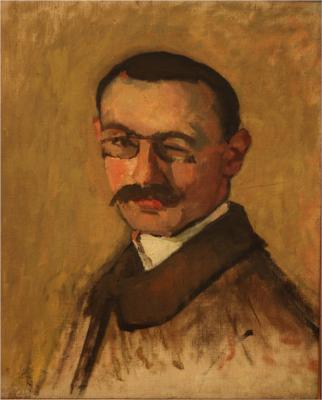
Where to see Albert Marquet
Ranked by works you can see in person.
-
43 works
Musée des Beaux-Arts de Bordeaux
Bordeaux, France
-
38 works
Musée National d'Art Moderne
Paris, France


-
13 works
Hermitage Museum
Saint Petersburg, Russia
-
11 works
MuMa Museum of modern art André Malraux
Le Havre, France
-
8 works
Pushkin Museum of Fine Arts
Moscow, Russia
-
7 works
Annonciade Museum
Saint-Tropez, France
-
6 works
Musée des Beaux-Arts et d'Archéologie de Besançon
Besançon, France
-
6 works
Musée d'art moderne de Paris
Paris, France
Also here (6)
-
6 works
Pola Museum of Art
Hakone, Japan
-
6 works
Centre national des arts plastiques
Paris, France


Own a piece of it
Albert Marquet prints
Hand-finished archival prints from Albert Marquet's body of work.
 The Blonde Woman - Albert Marquet
From £37.00
The Blonde Woman - Albert Marquet
From £37.00
 The Port of Saint-Tropez - Albert Marquet
From £28.00
The Port of Saint-Tropez - Albert Marquet
From £28.00
 Le Havre - Albert Marquet
From £28.00
Le Havre - Albert Marquet
From £28.00
 Farmyard at La Percaillerie (Normandy) - Albert Marquet
From £28.00
Farmyard at La Percaillerie (Normandy) - Albert Marquet
From £28.00
 Port of Marseilles - Albert Marquet
From £28.00
Port of Marseilles - Albert Marquet
From £28.00
 Quai des Grands-Augustins - Albert Marquet
From £28.00
Quai des Grands-Augustins - Albert Marquet
From £28.00
 Fruit, Knife and Napkin - Albert Marquet
From £28.00
Fruit, Knife and Napkin - Albert Marquet
From £28.00
 The Port, Le Havre - Albert Marquet
From £28.00
The Port, Le Havre - Albert Marquet
From £28.00
View all 88 museums
-
5 works
Museum of Grenoble
Grenoble, France
-
5 works
Museum of Art and History Geneva
Geneva, Switzerland
-
5 works
Metropolitan Museum of Art
New York City, United States
-
4 works
Norton Simon Museum
Pasadena, United States
-
4 works
Wallraf–Richartz Museum
Cologne, Germany
-
4 works
Musée d'Art moderne de Troyes
Troyes, France
-
4 works
Fondation Bemberg
Toulouse, France
-
4 works
Collection Rau for UNICEF
Remagen, Germany
-
3 works
Baltimore Museum of Art
Baltimore, United States
-
3 works
National Museum of Western Art
Tokyo, Japan
-
3 works
Building of the Winterthur Museum of Art
Winterthur, Switzerland
-
3 works
Musée Toulouse-Lautrec
Albi, France
-
3 works
Virginia Museum of Fine Arts
Richmond, United States
-
2 works
Galleria d'arte moderna di Milano
Milan, Italy
-
2 works
Galleria Internazionale d'Arte Moderna
Venice, Italy
Also here (3)
-
2 works
Moderna Museet
Stockholm, Sweden
-
2 works
Portland Art Museum
Portland, United States
-
2 works
Matsukata Collection
Tokyo, Japan
-
2 works
National Gallery of Art
Washington D.C., United States
-
2 works
Nantes Museum of Arts
Nantes, France
-
2 works
Kunsthaus Zürich
Zurich, Switzerland
-
2 works
Musée des Beaux-Arts de Caen
Caen, France
-
2 works
Art Institute of Chicago
Chicago, United States
-
2 works
State Museum of Modern Western Art
Moscow, Russia
Also here (3)
-
2 works
Museum of Fine Arts of Lyon
Lyon, France
-
2 works
Musée d'Orsay
Paris, France
-
2 works
Los Angeles County Museum of Art
Los Angeles, United States
-
2 works
Kunstmuseum Den Haag
The Hague, Netherlands
-
2 works
Statens Museum for Kunst
Copenhagen, Denmark
-
2 works
Saint Louis Art Museum
St. Louis, United States
-
2 works
National Museum of Art, Architecture and Design
Oslo, Norway
-
2 works
Yale University Art Gallery
New Haven, United States
-
1 works
Musée d'Art et d'Histoire
Neuchâtel, Switzerland
-
1 works
Yoshino Gypsum
Tokyo, Japan
-
1 works
National Gallery Prague
Prague, Czech Republic
-
1 works
Amgueddfa Cymru – Museum Wales
Cardiff, United Kingdom
-
1 works
Museum Ludwig
Cologne, Germany
-
1 works
National Museum of Fine Arts, Argentina
Buenos Aires, Argentina
Also here (6)
-
1 works
Artizon Museum
Tokyo, Japan


38 more museums hold works by Albert Marquet with smaller collections, not listed here.
Can't travel? Bring Albert Marquet home.
See all Albert Marquet prints →Frequently Asked Questions
Where can I see Albert Marquet's work?
Albert Marquet's paintings are held in many public collections. These include museums in France, other European countries, and the United States. In France, the Musée d'Art Moderne in Paris has a collection of his works. Bordeaux, where Marquet was born, also holds examples of his art. Outside France, museums in Geneva, Moscow, and Stockholm have paintings by Marquet. In the United States, The Phillips Collection in Washington, D.C., owns several works. These various locations provide opportunities to view his artistic output across different geographical areas. Marquet travelled extensively throughout his life, and his paintings often depict the places he visited. Therefore, museum collections in port cities, such as those mentioned above, are more likely to hold representative examples of his work. Examination of museum catalogues and collection databases will give a comprehensive overview of where his paintings are located.What should I know about Albert Marquet's prints?
Albert Marquet (1875[7]-1947[7]) was a French[7] Post-Impressionist painter, associated early in his career with the Fauvist movement. Although he is best known for his oil paintings, he also produced prints, mainly colour lithographs and monotypes. Marquet's prints share characteristics with his paintings. Both feature simplified forms, subtle colour harmonies, and a focus on light and atmosphere. His subject matter includes cityscapes, seascapes, and scenes of everyday life. He often depicted harbours, rivers, and beaches, capturing the movement of water and the activity of ports. Like many artists of his time, Marquet engaged with printmaking as a means of exploring different techniques and reaching a wider audience. His prints are characterised by their directness and economy of means. He was less interested in technical virtuosity than in capturing a fleeting impression or a sense of place. He used lithography to create images that are both delicate and evocative. These works offer a more accessible entry point into his artistic vision than some of his larger paintings.Why are Albert Marquet's works important today?
Albert Marquet (1875[7]-1947[7]) was a French[7] Post-Impressionist painter, associated early in his career with the Fauvist movement. He is best known for his simplified depictions of cityscapes and seascapes. Marquet's importance stems from his distinctive approach to painting. While briefly associated with Henri Matisse and André Derain, Marquet developed a more subdued style. His colour palettes are often muted, favouring greys, browns, and soft blues. This contrasted with the more aggressive colour usage of his Fauvist colleagues. His compositions are characterised by their clarity and economy of line. Marquet reduced scenes to their essential forms, capturing the atmosphere of a place with minimal detail. This approach aligns him with a broader modernist interest in simplification and abstraction. Later in his career, Marquet travelled extensively, painting scenes from North Africa, Russia, and Scandinavia. These works demonstrate his ability to adapt his style to different environments, while maintaining a consistent artistic vision. His paintings offer a record of these places, viewed through his unique sensibility.What techniques or materials did Albert Marquet use?
Albert Marquet is known for his post-Impressionist paintings, particularly his cityscapes and marine scenes. He favoured a restrained approach to colour. He often used a limited palette of greys, browns, and blues to create subtle atmospheric effects. Marquet's early work shows the influence of Impressionism. However, he moved away from its emphasis on capturing fleeting moments of light. Instead, he focused on simplifying forms and capturing the essential character of a scene. He achieved this through loose brushwork and a reduction of detail. Throughout his career, Marquet primarily worked in oils on canvas. He sometimes used quick, thin paint application, almost like watercolour. This technique allowed him to create a sense of immediacy and spontaneity in his work. He also produced drawings and prints, further exploring his interest in line and form. His approach to painting involved direct observation and a careful study of light and atmosphere.Who did Albert Marquet influence?
Albert Marquet's artistic style, characterised by its simplicity and subtle colour harmonies, had an impact on several later artists. While not forming a formal school, his approach to painting influenced individuals who appreciated his understated aesthetic. One artist who felt Marquet's influence was the French[7] painter Pierre Bonnard. Bonnard, known for his intimate domestic scenes and use of colour, shared Marquet's interest in capturing everyday life with a sense of quiet observation. Both artists favoured a muted palette and a focus on atmosphere over detail. Another artist who found inspiration in Marquet's work was Henri Matisse. Although Matisse is often seen as a leader of Fauvism[7], his work also reveals an appreciation for Marquet's more restrained approach. Matisse admired Marquet's ability to convey a sense of place with minimal brushstrokes and a limited range of colours. Marquet's influence can also be seen in the work of some contemporary artists who value his emphasis on simplicity, directness, and careful observation. His paintings continue to appeal to those who seek a more subtle and contemplative form of artistic expression.Who influenced Albert Marquet?
Albert Marquet (1875[7]-1947[7]) was a French[7] Post-Impressionist painter associated with the Fauvist movement. He developed his mature style after exposure to several artists and movements. Marquet entered the École des Arts Décoratifs in 1890[7], where he met Henri Matisse. Both then studied under Gustave Moreau at the École des Beaux-Arts. Moreau's teaching encouraged experimentation and individuality, which influenced Marquet's early development. Initially, Marquet painted in a Fauvist style, using bright colours and bold brushstrokes similar to Matisse and André Derain. However, he gradually moved away from Fauvism[7], favouring a more subdued palette and realistic representation. His work shows the influence of Impressionism, particularly in his treatment of light and atmosphere. He admired Claude Monet and Camille Pissarro, whose influence can be seen in his cityscapes and seascapes. Japanese prints also impacted Marquet's style, particularly in his simplified forms and flattened perspective. He shared this interest with many artists of his time.What is Albert Marquet's most famous work?
It is difficult to name a single "most famous" work by Albert Marquet, as his popularity rests on his consistent output and style rather than one specific, universally recognised piece. However, several paintings appear repeatedly in discussions of his work. These include views of Paris, such as *The Pont Saint-Michel in Paris, The Quai des Augustins* (1908[7]), *The Pont Saint-Michel in Winter* (1908), *Louvre Embankment and the New Bridge* (1906), *Paris in Winter, The Quai Bourbon* (1907), and *Rainy Day. Notre Dame du Paris* (1910). These paintings often depict the River Seine and Parisian landmarks in muted tones, capturing the atmosphere of the city. Other frequently cited works include *Harbour at Menton* (1905), *Bay of Naples* (1909), and *Vesuvius* (circa 1909), reflecting his travels and interest in port scenes. *Flood in Paris* (circa 1910) is also mentioned, showing a different aspect of the capital. The breadth of these frequently named works suggests his recognition is based on a group of related paintings, rather than one single piece.What style or movement did Albert Marquet belong to?
Albert Marquet (1875[7]-1947[7]) is associated with Fauvism[7], though his relationship to the movement was complex. He trained at the École des Arts Décoratifs in Paris from 1890[7] and befriended Henri Matisse. In 1905, Marquet exhibited with Matisse, Derain, and Vlaminck at the Salon d’Automne; this exhibition gave the group the name "Fauves". Some critics found little that connected Marquet's work to Fauvism. They noted that his approach was measured, without romantic truculence. Others observed that, of all the Fauves, Marquet was the least violent. His paintings lacked the violent energy of Vlaminck, and his textures did not display anarchic freedom. Marquet's paintings did not outrage critics or the public. Still, he exhibited with the Fauves in Brussels, Vienna, and Prague. For Marquet, as for most Fauves, the depiction of open air scenes was of primary importance. He also painted nudes, portraits and still lifes. He travelled widely, often with fellow artists, throughout France and to cities such as London, Hamburg, Rotterdam, Naples and Tangiers.
Sources
Where to See guide aggregates verified holdings of Albert Marquet's works across the following collections.
- [1] museum Galleria d'arte moderna di Milano Used for: museum holdings.
- [2] museum Musée des Beaux-Arts de Quimper Used for: museum holdings.
- [3] museum Museum of Fine Arts of Reims Used for: museum holdings.
- [4] museum Musée des Beaux-Arts de Bordeaux Used for: museum holdings.
- [5] museum Centre national des arts plastiques Used for: museum holdings.
- [6] academic The Editors of Encyclopaedia Britannica, Albert Marquet | French painter | Britannica Used for: biography.
- [7] wikipedia Wikipedia: Albert Marquet Used for: biography.
- [8] book Masterpieces of western art : a history of art in 900 individual studies from the Gothic to the present day Used for: biography.
- [9] book Nathalia Brodskaya, The Fauves Used for: biography.
- [10] book Brodskai︠a︡, Natalʹi︠a︡ Valentinovna, The Fauves _ Art of Century Used for: biography.
- [11] museum Albert Marquet 1875–1947 | Tate Used for: biography.
- [12] museum Albert Marquet - MoMA Used for: museum holdings.
- [13] museum Albert Marquet | National Gallery of Art Used for: museum holdings.
- [14] museum Albert Marquet - Sergeant of the Colonial Regiment Used for: notable works.
Editorial overseen by Solis Prints. Sources verified 2026-09-24. Click a source for details, or hover over [N] in the page above to preview.
Editorial standardsMethodologyCorrectionsAI disclosureAbout the editorial team