



About Alessandro Allori
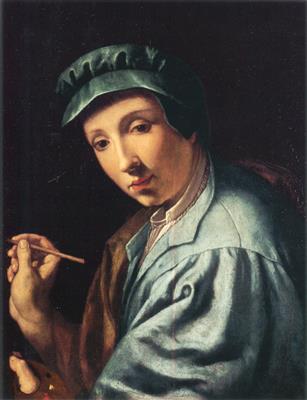
Florentine Mannerist painter trained by Bronzino, known for Pearl Fishing and his four panels in the Studiolo of Francesco I.
Where to see Alessandro Allori
Ranked by works you can see in person.
-
13 works
Uffizi Gallery
Florence, Italy
Also here (6)
-
4 works
Gemäldegalerie Berlin
Berlin, Germany


-
3 works
Kunsthistorisches Museum
Vienna, Austria
-
3 works
Hermitage Museum
Saint Petersburg, Russia
-
3 works
Musée Fabre
Montpellier, France
-
2 works
Louvre
Paris, France
-
2 works
Condé Museum
Chantilly, France
-
2 works
Museo del Prado
Madrid, Spain
-
2 works
Harvard Art Museums
Cambridge, United States
-
2 works
National Trust
Swindon, United Kingdom


Own a piece of it
Alessandro Allori prints
Hand-finished archival prints from Alessandro Allori's body of work.

View all 41 museums
-
2 works
Santissima Annunziata
Florence, Italy
-
1 works
Courtauld Gallery
London, United Kingdom
-
1 works
Isabella Stewart Gardner Museum
Boston, United States
-
1 works
Royal Museum of Fine Arts Antwerp
Antwerp, Belgium
-
1 works
Basilica of Santa Maria Novella
Florence, Italy
Also here (2)
-
1 works
Städel Museum
Frankfurt, Germany
-
1 works
National Galleries Scotland
Edinburgh, United Kingdom
-
1 works
North Carolina Museum of Art
Raleigh, United States
-
1 works
National Gallery Prague
Prague, Czech Republic
-
1 works
Museum of Fine Arts Boston
Boston, United States
-
1 works
Musée Magnin
Dijon, France
-
1 works
Glasgow Museums Resource Centre
Glasgow, United Kingdom
-
1 works
Princeton Art Museum
Princeton, United States
-
1 works
Museum of Fine Arts Ghent (MSK)
Ghent, Belgium
-
1 works
J. Paul Getty Museum
Los Angeles, United States
-
1 works
Galleria dell'Accademia
Florence, Italy
-
1 works
Museo de la Trinidad
Madrid, Spain
Also here (3)
-
1 works
Ashmolean Museum
Oxford, United Kingdom
-
1 works
National Museum Cardiff
Cardiff, United Kingdom
-
1 works
Art Institute of Chicago
Chicago, United States
-
1 works
Borghese Collection
Paris, France
Also here (4)
-
1 works
Galleria Sabauda
Turin, Italy
-
1 works
Minneapolis Institute of Art
Minneapolis, United States
-
1 works
Los Angeles County Museum of Art
Los Angeles, United States
-
1 works
Fitzwilliam Museum
Cambridge, United Kingdom
-
1 works
Palazzo Vecchio
Florence, Italy
Also here (4)
-
1 works
Wadsworth Atheneum Museum of Art
Hartford, United States
-
1 works
Saint Louis Art Museum
St. Louis, United States
-
0 works
Museum of Fine Arts of Rennes
Rennes, France
-
0 works
National Gallery of Art
Washington D.C., United States
-
0 works
Nationalmuseum
Stockholm, Sweden


Can't travel? Bring Alessandro Allori home.
See all Alessandro Allori prints →Frequently Asked Questions
Where can I see Alessandro Allori's work?
To view paintings by Alessandro Allori[3]-1607[3]/","used_for":"biography"}">[7], visit collections in Europe and the United States. In Italy, Allori's work can be seen at the Galleria Borghese, Galleria Colonna, and Pinacoteca Vaticana, all in Rome. Other Italian cities with works by Allori include Florence (Settignano, Vannella Chapel), Siena (Palazzo Chigi Saracini), and Piacenza (Pinacoteca Civica). Previously, Allori's paintings were displayed in Volterra (Villa dello Spedaletto) and Pisa (Cathedral). Outside of Italy, Allori's art can be found in Strasbourg (Musee des Beaux-Arts), Vienna (Akademie der bildenden Kunste), and Zurich (Abegg Stockar Collection). In the United States, notable locations include the National Gallery of Art in Washington, the Sterling Clark Museum in Williamstown, and the Museum of Art in Raleigh, North Carolina. Previously, Allori's works were held in collections in Santa Monica, California.What should I know about Alessandro Allori's prints?
Alessandro Allori[3]-1607[3]/","used_for":"biography"}">[7] (1535[3]-1607[3]) was a Florentine painter, and studies of his portraits include Simona Lecchini Giovannoni's 'Alcune proposte per l’attivita ritrattistica di Alessandro Allori,' which appeared in *Antichita viva* in 1968. Luciano Bellosi's 'II ritratto fiorentino del Cinquecento,' in *Firenze e la Toscana dei Medici nell’Europa del Cinquecento: Il primato del disegno* (1980), also discusses Allori. For information on portraits of Francesco I de’ Medici, see Karla Langedijk, *The Portraits of the Medici: 15th-18th Centuries* (1983). Gabrielle Langdon's 'A Reattribution: Alessandro Allori’s Lady with a Cameo,' *Zeitschrift fiir Kunstgeschichte* (1989) analyses Allori's *Portrait of a Young Collector* (1561) in the Ashmolean Museum, Oxford. A *Portrait of a Young Man* (1560), attributed to Allori, was shown at the Walpole Gallery's *The Cinquecento* exhibition in London (1991).Why are Alessandro Allori's works important today?
Alessandro Allori[3]-1607[3]/","used_for":"biography"}">[7] (1535[3]-1607[3]) was a Florentine painter of the late Mannerist style. He trained with Agnolo Bronzino, who was also his uncle. Allori's importance now rests on his accomplished portraiture and the connections his work had to important scientific figures. Allori's portraits are known for their detailed depictions of costume and the sitter's features. Examples include his portraits of Francesco I de' Medici. His work shows a move away from earlier Mannerist tendencies. Later in life, Allori's paintings moved toward early Baroque ideals. Cristofano Allori, Alessandro[9]'s son, also became a painter. Allori was a contemporary of Galileo Galilei; both were friends with the painter Cigoli. Galileo shared Allori's artistic preferences for naturalism. Allori's painting Judith with the Head of Holofernes is thought to contain a self-portrait as Holofernes, with Judith modelled on Allori's lover. The painting is celebrated for its realism, particularly in the textures of the fabrics.What techniques or materials did Alessandro Allori use?
Alessandro Allori[3]-1607[3]/","used_for":"biography"}">[7]'s painting techniques involved careful consideration of materials, and conservators have noted the importance of understanding the individual 'character' of each painting. This includes its fabric, ground preparation, pigments, and reactions to time. There is no single method or material appropriate for every picture; the painting itself dictates the choice of methods and materials. Allori's approach would involve preliminary study to understand deeply the materials, techniques, and present condition of a painting to define customised treatments for conservation. This means considering a wide range of possibilities and employing different materials in different ways. For example, conservators at the Laboratorio degli Angeli in Bologna restored a large canvas painting by Allori for the exhibition *Ferdinando I de’ Medici: Maiestate tantum* at the Medici Chapels in Florence, using customised methodologies to solve complex problems.Who did Alessandro Allori influence?
Alessandro Allori[3]-1607[3]/","used_for":"biography"}">[7], also known as Bronzino the Younger, came from a family of Florentine artists; his father and grandfather was Agnolo Allori, known as Bronzino. Cristofano Allori trained in the school of his father and grandfather. Cristofano may be regarded as an artist who broke with late Mannerist tendencies. He borrowed certain traits of "Mannerist physiognomy" to heighten the effect of a picture. Cristofano's most famous painting, Judith with the Head of Holofernes, owes much to the Mannerist school in which he trained. Allori is said to have created a portrait of his mistress Mazzafirra in the figure of Judith and her mother in the figure of the elderly servant woman. The head of Holofernes may be a self-portrait. Allori's painting of Judith made him famous, because the viewer recognises him in Holofernes and Mazzafirra in Judith. Galileo was a friend of Allori's. Sagredo shared Galileo’s distaste for Mannerism[3], whereas Allori seemed to surpass by far both modern and ancient artists.Who influenced Alessandro Allori?
Alessandro Allori[3]-1607[3]/","used_for":"biography"}">[7], a Florentine painter of the late Renaissance, absorbed a range of influences that shaped his artistic style. Titian's Venetian painting techniques had an impact. Allori's work shows an awareness of Venetian colourism and painterly handling, elements he likely encountered through exposure to Titian's art or the works of his followers. Figures such as Tintoretto and Paolo Veronese also affected Allori's artistic development. Their compositions, use of light and shadow, and dramatic narratives contributed to Allori's artistic vocabulary. These artists, along with others, helped Allori form a synthesis of Florentine and Venetian artistic principles. He combined the emphasis on disegno (drawing) with the Venetian focus on colour and atmosphere.What is Alessandro Allori's most famous work?
Alessandro Allori[3]-1607[3]/","used_for":"biography"}">[7] (1577-1621) was a Florentine mannerist painter, the son of Cristofano Allori and grandson of Agnolo Allori, who was known as Bronzino. Cristofano trained in the style of his father and grandfather. Cristofano is regarded as an artist who broke with late Mannerist tendencies, becoming an early proponent of Baroque reform ideas. However, he continued to borrow certain traits of 'Mannerist physiognomy' to heighten the effect of a picture. Cristofano Allori's most famous painting is Judith with the Head of Holofernes, completed in 1613. It is an oil on canvas, now located in the Galleria Pitti, Florence. Allori is said to have created a portrait of his mistress Mazzafirra in the figure of Judith, and her mother as the elderly servant woman. The head of Holofernes may be a self-portrait. The painting presents the extreme contrast between the dark, bearded head of Holofernes and the angelic face of Judith. The painting's erotic tension emanates from the faces of Judith and Holofernes, and from the sensuality with which Judith is portrayed.What style or movement did Alessandro Allori belong to?
Alessandro Allori[3]-1607[3]/","used_for":"biography"}">[7] belonged to the Mannerist movement, which emerged in Italy during the 16th century. Mannerism[3] overlapped with the High Renaissance, arising around 1520 and lasting roughly sixty years. Mannerism, derived from the Italian "maniera" (meaning style or manner), is characterised by artifice, complex compositions, and sophisticated elegance. Mannerist artists consciously revealed the constructed nature of their art, unlike High Renaissance artists who sought to create a natural appearance. Allori's teacher Bronzino was a key Mannerist painter in Florence. Bronzino's paintings often featured learned allegories with lascivious undertones, a shift from the High Renaissance's simple forms. His figures were placed around the front plane, blocking the space, with strong contours and smooth surfaces. Mannerist painters considered extremities (heads, hands, and feet) as carriers of grace, demonstrating artistic skill through their depiction.
Sources
Where to See guide aggregates verified holdings of Alessandro Allori's works across the following collections.
- [1] museum Department of Prints and Drawings of the Louvre Used for: museum holdings.
- [2] museum Samuel H. Kress Collection Used for: museum holdings.
- [3] wikipedia Wikipedia: Alessandro Allori Used for: biography.
- [4] book Beard, Lee, 1973- author, Butler, Adam, author; Van Cleave, Claire, author; Fortenberry, Diane, author; Stirling, Susan, author, Beard, Lee, 1973- author, Butler, Adam, author; Van Cleave, Claire, author; Fortenberry, Diane, author; Stirling, Susan, author - The Art Book_ New Edition, Mini Format Used for: biography.
- [5] book Masterpieces of western art : a history of art in 900 individual studies from the Gothic to the present day Used for: biography.
- [6] book Meiss, Millard, The great age of fresco; discoveries, recoveries, and survivals Used for: biography.
- [7] museum Alessandro Allori Used for: biography.
- [8] museum Alessandro Allori :: Biography Used for: biography.
- [9] museum Allori, Alessandro Used for: biography.
- [10] museum Jan van Huysum - Still Life with Fruit - The Metropolitan Museum of Art Used for: notable works.
Editorial overseen by Solis Prints. Sources verified 2026-09-24. Click a source for details, or hover over [N] in the page above to preview.
Editorial standardsMethodologyCorrectionsAI disclosureAbout the editorial team