



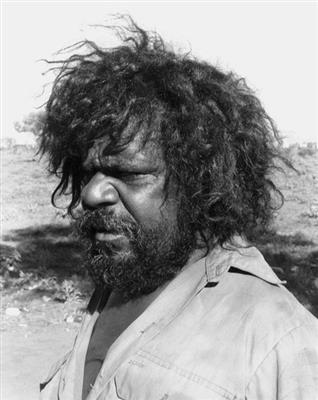
About Clifford Possum Tjapaltjarri
Australian · 1932–2002
4 million in 2007.
Museums3
Countries2
Most worksArt Gallery of South Australia, Adelaide · 6 works
Loading map…
Where to see Clifford Possum Tjapaltjarri
Ranked by works you can see in person.
-
6 works
Art Gallery of South Australia
Adelaide, Australia
-
1 works
National Gallery of Victoria
Melbourne, Australia


-
1 works
Auckland Art Gallery Toi o Tāmaki
Auckland, New Zealand

Frequently Asked Questions
Where can I see Clifford Possum Tjapaltjarri's work?
Clifford Possum Tjapaltjarri's work can be viewed in several locations. In the Northern Territory, the Araluen Arts Centre in Alice Springs holds a significant collection of early Papunya paintings. The Museum and Art Gallery of the Northern Territory (MAGNT) in Darwin also exhibits Indigenous art. Outstation Gallery in Darwin works directly with art centres to promote art from various regions, including the Western Desert. In Queensland, FireWorks Gallery and the Queensland Art Gallery, both in Brisbane, have displayed Indigenous art. The National Gallery of Victoria in Melbourne has examples of his work; they jointly curated an exhibition with Museum Victoria titled *Tjukurrtjanu: Origins of Western Desert Painting*. This exhibition later travelled to the Musée du quai Branly in Paris. These institutions offer opportunities to see Tjapaltjarri's paintings and learn about the Western Desert art movement.What should I know about Clifford Possum Tjapaltjarri's prints?
Clifford Possum Tjapaltjarri (circa 1932[1]-2002[1]) was an Australian[1] artist of the Anmatyerre people, known for his paintings that depict Aboriginal Dreamings. His works raise questions about tradition, authorship, and authenticity, as they translate traditional sand paintings onto canvas for a wider audience. The paintings employ a select group of patterns handed down within tribes. These artworks prompt consideration of whether their altered context affects their meanings and how they relate to Postmodern culture. Some critics suggest that the paintings' shared authorship and self-consciousness align with Postmodern thought. Tjapaltjarri's art invites viewers to consider the complexities of cultural representation and the market for Aboriginal art. His paintings are held in collections from Sydney to New York to Paris. One example is *Love Story*, 1981[1], acrylic on canvas.Why are Clifford Possum Tjapaltjarri's works important today?
Clifford Possum Tjapaltjarri's paintings hold importance because they engage with complex issues of Aboriginal identity, cultural exchange, and the intersection of tradition and modernity. His work emerged during a period of increasing recognition of Aboriginal rights and a growing international interest in multiculturalism. Tjapaltjarri, along with other Indigenous Australian[1] painters, gained attention in the contemporary art world during the 1980s. His paintings, transferred to canvas from traditional sand paintings, raise questions about authenticity, authorship, and the interpretation of cultural symbols. Some critics view these works as simulacra, while others see them as a form of self-conscious expression that challenges Western notions of individuality. Tjapaltjarri's art exists in a "contact zone" where cultures meet and grapple with asymmetrical power dynamics. His paintings contribute to a broader discourse about cultural translation, hybridity, and the reconfiguring of identity in a postcolonial context. By engaging with the art market, Tjapaltjarri and his contemporaries maintain cultural visibility and pursue economic independence. His paintings offer a platform for imagining alternative ways of thinking and acting creatively between cultures.What techniques or materials did Clifford Possum Tjapaltjarri use?
Clifford Possum Tjapaltjarri, an Indigenous Australian[1] artist, employed techniques and materials that reflected both his cultural background and individual artistic choices. He is best known for his paintings that depict stories from the Dreamtime, a central element of Aboriginal spirituality and culture. Tjapaltjarri primarily used acrylic paints on canvas. This choice allowed for quicker drying times, which suited his style of layering and building up complex compositions. His application involved the use of fine brushes to create detailed patterns and symbolic representations of the Australian desert. A key element of his technique was the use of dots, a common feature in Western Desert art. These dots were applied in varying colours and densities to create texture, depth, and movement within his paintings. He also incorporated lines and circles to represent paths, waterholes, and other significant elements of the natural world and Dreamtime narratives.Who did Clifford Possum Tjapaltjarri influence?
Clifford Possum Tjapaltjarri's influence is complex. The Papunya painting movement, which he helped originate, gained traction in the 1980s. It aligned with contemporary art discourses, aided by a shift from ethnographic to fine-art contexts. Some see echoes of Western abstraction in Indigenous painting, allowing it to engage with modernism while asserting Aboriginal identity. This "doubling" is a feature in the reception of other Indigenous painters in Australia, such as Rover Thomas and Emily Kame Kngwarreye. However, some critics suggest that the intercultural character of key practices is easily construed as a threat to the artist’s cultural autonomy and political agency. The role of figures like Tony Oliver is seen by some as merely a "facilitator" rather than a "collaborator". Others see this collaboration as a conscious means for Indigenous artists to engage the artworld and to open a distinct alternative to the modes of representation already available to them.Who influenced Clifford Possum Tjapaltjarri?
Clifford Possum Tjapaltjarri collaborated with Tim Johnson and Michael Nelson Tjakamarra. Johnson, a post-conceptual artist, had Tjapaltjarri and Tjakamarra give him canvases with their painted "stories", or designs; Johnson would then complete the works with dots and other motifs. This process was later reversed, with Johnson painting figures, clouds, and flowers for Tjapaltjarri to add dots. This dotting technique recalls the multi-coloured concentric rings of Aboriginal art, but also the benday-dot technique used by Roy Lichtenstein. Albert Namatjira, an Arrernte artist, met Melbourne watercolourist Rex Battarbee in 1934[1]. This meeting is recognised as changing cultural paradigms and acknowledging Aboriginal art's modernity. Geoffrey Bardon, an art teacher, encouraged Aboriginal men to translate sacred narratives onto boards for a wider audience. These figures facilitated cross-cultural exchange and influenced the development of Aboriginal art.What is Clifford Possum Tjapaltjarri's most famous work?
Clifford Possum Tjapaltjarri, a celebrated artist, is known for his paintings rooted in Aboriginal traditions. While pinpointing a single "most famous" work is difficult, several pieces have received considerable attention. *Love Story*, from 1981[1], is held in the collection of Tim and Vivien Johnson, Sydney. He also collaborated with artist friends such as Michael Nelson Tjakamarra and Tim Johnson. Tjapaltjarri would provide the dots for Johnson's works. Sometimes these roles were reversed. Another significant work, created in collaboration with Tim Leura Tjapaltjarri, is *Spirit Dreaming through Napperby Country*, 1980. This large-scale painting (207.7 x 670.8 cm) is in the collection of the National Gallery of Victoria, Melbourne. Vivien Johnson, a commentator and theorist on Aboriginal art, wrote the first full-scale monograph on a contemporary Aboriginal artist, *The Art of Clifford Possum Tjapaltjarri* (1994).What style or movement did Clifford Possum Tjapaltjarri belong to?
Clifford Possum Tjapaltjarri is associated with the Papunya Tula art movement. This artistic style emerged from the community of Papunya, north-west of Alice Springs, in the early 1970s. It involved transferring traditional Aboriginal designs onto canvas, often using acrylic paints. These paintings, made for an outside audience, raise questions about authenticity and the relationship between tradition and modernity. The artists selectively employed patterns handed down within their tribes, adapting them to a new medium and context. The use of dots is a characteristic feature, and while it invokes Aboriginal precedents, it also bears a resemblance to the benday-dot technique used by artists such as Roy Lichtenstein. Tjapaltjarri's work, along with that of other Aboriginal artists, has gained international attention, raising complex issues of cultural appropriation and the representation of Aboriginal identity within Australian[1] culture. His paintings can be seen as part of a broader Postmodern dialogue, reflecting shared authorship, market awareness, and a departure from Modernist ideals of individual creation.
Sources
Where to See guide aggregates verified holdings of Clifford Possum Tjapaltjarri's works across the following collections.
- [1] wikipedia Wikipedia: Clifford Possum Tjapaltjarri Used for: biography.
- [2] book Charlotte Mullins, A Little History of Art Used for: biography, stylistic analysis.
- [3] book McLean, Ian; , Double Desire Used for: biography, stylistic analysis.
- [4] book guggenheim-antipod00benj Used for: biography, stylistic analysis.
Editorial overseen by Solis Prints. Sources verified 2026-09-24. Click a source for details, or hover over [N] in the page above to preview.
Editorial standardsMethodologyCorrectionsAI disclosureAbout the editorial team