



About Alexandre Antigna
French · 1817–1878
- French Realism
French[2] Second Empire Realist who painted working-class poverty and urban disaster with a directness that earned state patronage and comparison with Courbet.
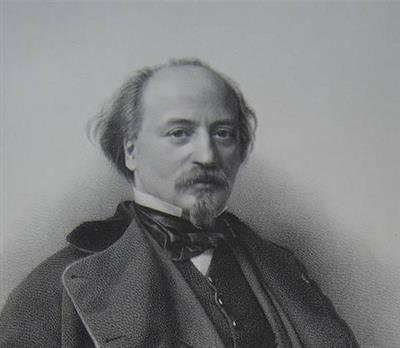
Museums6
Countries3
Most worksMusée des Beaux-Arts d'Orléans, Orléans · 2 works
Loading map…
Where to see Alexandre Antigna
Ranked by works you can see in person.
-
2 works
Musée des Beaux-Arts d'Orléans
Orléans, France
-
2 works
Musée d'Orsay
Paris, France


-
2 works
Musée des Augustins
Toulouse, France
-
1 works
Museum of Fine Arts Ghent (MSK)
Ghent, Belgium
-
 1 works
Musée des Beaux-Arts de Bordeaux
Bordeaux, France
-
1 works
Museo de Arte de Worcester
Worcester, United States


Frequently Asked Questions
Where can I see Alexandre Antigna's work?
Alexandre Antigna's work can be viewed in a number of museums, primarily in France. These include the Musée des Beaux-Arts in Nancy, located at 3 Place Stanislas, 54000 Nancy; the Musée des Beaux-Arts in Rouen; the Musée des Beaux-Arts in Lille; and the Musée des Beaux-Arts in Dijon. In Paris, Antigna's art can be found at the Musée des Arts Décoratifs, 107 Rue de Rivoli, 75001 Paris; Musée d’Orsay; Musée du Louvre; Musée Gustave Moreau; Musée du Petit Palais; and Musée National d’Art Moderne, Centre Georges Pompidou. Other locations include the Musée de la Chartreuse in Douai, Musée Crozatier in Le Puy, Musée des Augustins in Toulouse, Musée d’Art et d’Industrie in Saint Etienne, and Musée des Beaux-Arts Jules Cheret in Nice. In Belgium, the Brangwyn Museum in Bruges may also hold his works.What should I know about Alexandre Antigna's prints?
When considering Alexandre Antigna's prints, it is helpful to understand some basic print terminology. A 'vintage print' is one made around the time the negative was taken. A 'period print' is one made within roughly 10 to 15 years after. Anything printed later is termed an 'old print' or 'modern print'. An 'original print' is one the artist made or directly supervised. A 'facsimile' is a reproduction that attempts to duplicate the materials of a vintage print. The terminology is not fixed, however. Historically, handmade prints served as a way to produce multiple images before photography. As photography became more common in the mid-19th century, prints gradually became recognised as a major artistic medium. Artists began signing prints to distinguish originals from reproductions. Numbering prints also became a way to control quality and edition sizes. The Professional Art Dealers Association of Canada defines an original print as an image conceived and executed solely as a print, usually in a numbered edition, and signed by the artist.Why are Alexandre Antigna's works important today?
Alexandre Antigna (1818[2]-1878[2]) was a French[2] artist who depicted the lives of poor and working-class people. He is regarded as an important, if somewhat overlooked, figure in French Realist painting. Antigna's focus on everyday existence, particularly the hardships faced by ordinary people, offers valuable social commentary on 19th-century French society. His paintings provide insight into the lives of those often ignored in more conventional art. His work can be seen in relation to contemporaneous Realist painters such as Gustave Courbet and Jean-François Millet, who similarly sought to represent the world around them without idealisation. Antigna's paintings are not merely historical documents; they also raise questions about social inequality and the human condition that remain relevant today. As such, his paintings are studied by art historians interested in Realism, genre painting, and social history.What techniques or materials did Alexandre Antigna use?
Information on Alexandre Antigna's specific techniques or materials is scarce. However, we can discuss the general practices of nineteenth-century painting, which would apply to his work. Oil paint was a common medium, allowing artists to build up layers and create a range of textures. The preparation of the canvas itself was significant. Neoclassical painters, reacting against the darker grounds of the Rococo period, often used pale preparations to ensure luminosity. Ingres, a contemporary, favoured strong, coarse canvas, unlike many Neoclassical painters who preferred finely woven canvas. Drawing was also a fundamental skill. Artists would use lead pencil, charcoal, or chalk for preparatory sketches and studies. The choice of drawing material influenced the final effect, as each has unique properties. The artist's touch, or "hand," also affected the material qualities of a line. The selection of materials was closely linked to the artist's intended effect, with the formal qualities of a work closely tied to the techniques used.Who did Alexandre Antigna influence?
Information regarding Alexandre Antigna's direct influence on other artists is limited in the provided texts. However, the passages do offer some context about artistic influence in 19th-century France. Artists associated with the Salon exhibitions, such as Jules Adler, depicted the labouring classes. Adler's work has been compared to Zola's naturalist novels because of the artist's impartial representation of his subjects. The texts also mention Jean-Auguste-Dominique Ingres's influence on artists of the Restauration period and the Second Empire, including Joseph-Désiré Court, Thomas Couture, Adolphe-William Bouguereau, and Paul Baudry. Ingres's Neoclassical style, his focus on beauty, and his interest in Orientalism affected a number of later artists. Edgar Degas, Chaim Soutine, Pierre-Auguste Renoir, and Pablo Picasso admired Ingres.Who influenced Alexandre Antigna?
Alexandre Antigna, like other artists, acquired skills through studying masters at the Louvre. The museum functioned as a second school, providing a wide selection of works. Studying earlier artists allowed them to develop skills and techniques applicable to their own painting. The Venetian masters of the sixteenth century, as well as Peter Paul Rubens, provided lessons in the use of colour. Antoine Watteau also attracted attention with his broken strokes of bright colour. Watteau's ability to render shimmering effects of nature using a nuanced palette made an important contribution. Honoré Fragonard's expressive handling similarly influenced artists. These painters distanced themselves from a lacquer-smooth paint surface in the eighteenth century. They demonstrated that brushwork could be used to render movement and the changing effects of nature.What is Alexandre Antigna's most famous work?
It is difficult to name Alexandre Antigna's single most famous work, as different sources may emphasise different paintings. However, some of his noted pieces include works that engage with social themes, reflecting the lives of the poor and working class in 19th-century France. Without specific titles mentioned in the provided texts, it's challenging to pinpoint one definitive piece that overshadows all others in terms of recognition. Further research into catalogues or critical reviews of Antigna's work would provide a more precise answer regarding his most recognised painting. Examining museum collections and exhibition records might also reveal which works have received the most attention over time. It is worth considering that fame and recognition can fluctuate, depending on art historical trends and curatorial choices.What style or movement did Alexandre Antigna belong to?
Alexandre Antigna was a French[2] painter who belonged to the Realism movement, which developed in France during the mid-19th century. Realism emerged partly as a reaction against both Romanticism and Neoclassicism. Realist artists rejected emotionalism, and instead emphasised "truth to nature". They believed that ordinary people and their activities were worthy subjects for art, and that the styles of Neoclassicism and Romanticism were too contrived. Gustave Courbet is considered the leading figure of the Realism movement. He believed that painters should depict only their own time and place. Other Realist painters include Honoré Daumier and Édouard Manet. Realism manifested itself in various ways, in different places and at different times. From about 1800 to 1899 in France, Realists painted the modern life they saw around them objectively, without embellishment or personal bias.
Sources
Where to See guide aggregates verified holdings of Alexandre Antigna's works across the following collections.
- [1] museum Musée des Beaux-Arts de Bordeaux Used for: museum holdings.
- [2] wikipedia Wikipedia: Alexandre Antigna Used for: biography.
- [3] book Harding, James, Artistes pompiers : French academic art in the 19th century Used for: biography.
- [4] book Post-impressionism : cross-currents in European painting Used for: biography.
- [5] book Post-impressionism : cross-currents in European painting Used for: biography.
Editorial overseen by Solis Prints. Sources verified 2026-09-19. Click a source for details, or hover over [N] in the page above to preview.
Editorial standardsMethodologyCorrectionsAI disclosureAbout the editorial team