

About André Lhote
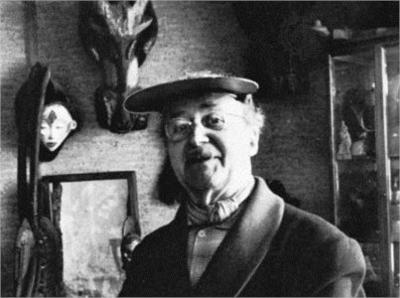
- portrait
French[2] Cubist painter and theorist whose Paris academy trained Tamara de Lempicka, Henri Cartier-Bresson, and Dora Maar.
Where to see André Lhote
Ranked by works you can see in person.
-
32 works
Musée des Beaux-Arts de Bordeaux
Bordeaux, France
-
9 works
Musée d'art moderne de Paris
Paris, France
Also here (6)


-
4 works
Musée National d'Art Moderne
Paris, France
-
3 works
Art Institute of Chicago
Chicago, United States
-
 2 works
Victoria and Albert Museum
London, United Kingdom
-
2 works
São Paulo Museum of Art
São Paulo, Brazil
-
2 works
Seattle Art Museum
Seattle, United States
-
2 works
Kelvingrove Art Gallery and Museum
Glasgow, United Kingdom
-
1 works
Hungarian National Gallery
Budapest, Hungary
Also here (6)
Bertalan SzekelyVilmos Aba-NovakEndre BalintAladar Korosfoi-KrieschEgry JózsefAugust von Pettenkofen -
1 works
Ulster Museum
Belfast, United Kingdom


View all 42 museums
-
1 works
Musée des Beaux-Arts et d'Archéologie de Besançon
Besançon, France
-
1 works
National Gallery Prague
Prague, Czech Republic
-
1 works
Artizon Museum
Tokyo, Japan
-
1 works
Glasgow Museums Resource Centre
Glasgow, United Kingdom
-
1 works
Moderna Museet
Stockholm, Sweden
-
1 works
John and Mable Ringling Museum of Art
Sarasota, United States
-
1 works
National Gallery
London, United Kingdom
-
1 works
Finnish National Gallery
Helsinki, Finland
Also here (6)
-
1 works
The Nelson-Atkins Museum of Art
Kansas City, United States
-
1 works
Nantes Museum of Arts
Nantes, France
-
1 works
Musée d'Art moderne de Troyes
Troyes, France
-
1 works
Museo Nacional Centro de Arte Reina Sofía
Madrid, Spain
-
1 works
Musée des Beaux-Arts de Caen
Caen, France
-
1 works
David Owsley Museum of Art Ball State University
Muncie, United States
Also here (2)
-
1 works
Art Gallery of South Australia
Adelaide, Australia
-
1 works
Hermitage Museum
Saint Petersburg, Russia
-
1 works
Harvard Art Museums
Cambridge, United States
-
1 works
RISD Museum
Providence, United States
-
1 works
Leicester Museum & Art Gallery
Leicester, United Kingdom
-
1 works
Annonciade Museum
Saint-Tropez, France
-
1 works
Centre national des arts plastiques
Paris, France
-
1 works
National Gallery of Victoria
Melbourne, Australia
-
1 works
Musée d'art moderne (Saint-Étienne)
Saint-Étienne, France
-
1 works
National Gallery of Athens
Athens, Greece
-
1 works
Gothenburg Museum of Art
Gothenburg, Sweden
-
1 works
National Museum of Art, Architecture and Design
Oslo, Norway
-
1 works
Tate
London, United Kingdom
-
1 works
Thiel Gallery
Stockholm, Sweden
-
1 works
Philadelphia Museum of Art
Philadelphia, United States
-
0 works
Museum of Fine Arts Ghent (MSK)
Ghent, Belgium
-
0 works
National Gallery of Art
Washington D.C., United States


Frequently Asked Questions
Where can I see André Lhote's work?
Paintings by André Lhote can be seen in a number of European museums and galleries. Many are in France, including the Musée des Beaux-Arts in Nantes, Musée des Beaux-Arts in Rouen, and Musée des Beaux-Arts in Dijon. Several museums in Paris hold his works; these include the Musée du Louvre, Musée d’Orsay, Musée National d’Art Moderne (Centre Georges Pompidou), and Musée des Arts Decoratifs. Other French[2] museums that hold his work are the Musée des Beaux-Arts in Reims, Musée des Beaux-Arts in Grenoble, Musée des Augustins in Toulouse, and Musée Crozatier in Le Puy. Outside France, Lhote's paintings can be seen at the Musées Royaux des Beaux-Arts de Belgique in Brussels, and the Kunsthistorisches Museum in Vienna.What should I know about André Lhote's prints?
André Lhote (1885[2]-1962[2]) was a French[2] painter, sculptor, and writer, who is also known for his prints. While specific details about Lhote's prints are scarce in the provided texts, some general observations about prints and printmaking can be made. Printmaking includes various techniques, such as engraving, etching, woodcut, and lithography. These methods allow for the creation of multiple original impressions of an image. Some sources touch on the graphic work of other artists, such as Picasso, Matisse and Kandinsky, and offer insight into the printmaking processes and the appreciation of prints as a distinct art form. For instance, it is noted that in Matisse's prints, the absence of colour allows the viewer to focus on the artist's intelligence and will. To gain a deeper understanding of Lhote's prints, further research into catalogues raisonnés, museum collections, and specialised texts on 20th-century printmaking is advisable.Why are André Lhote's works important today?
André Lhote (1885[2]-1962[2]) was a French[2] Cubist painter, theorist, and teacher. Although Lhote's work shares features with that of Picasso, Braque, and Gris, he remained independent from the core Cubist circle. Some critics consider his handling of Cubist devices less strong than that of other Cubists. Lhote's independent approach means his paintings cannot be judged according to the same criteria as orthodox Cubist works. He developed Cubist-like techniques independently, through studying Cézanne's work; he became acquainted with it in 1907[2] at the Salon d’Automne. By 1908 or 1909, as his painting *Le pont* shows, Lhote was using similar methods to Braque and Picasso. In fact, he was one of the few other painters in Paris doing so at that time. Lhote's legacy extends through his teaching. He opened his own art school in Paris in 1922, and he taught in other academies, such as the Académie Ranson. He travelled widely, lecturing in France and abroad, including in Brazil and Egypt. His students included many artists of note, such as Tamara de Lempicka and Henri Cartier-Bresson.What techniques or materials did André Lhote use?
André Lhote explored various techniques and materials throughout his career. Like many artists, he was interested in the techniques of past masters. Lhote's own practice involved a range of approaches. Some painters, such as Utrillo, incorporated real plaster into their paintings, instead of relying solely on traditional pigments. Dubuffet combined materials like cement, tar, gravel, leaves, silver foil, dust, and butterfly wings with paint. He believed that art should originate from the materials themselves, with each material dictating its own language. Dubuffet's method included laying a canvas flat and covering it with a thick layer of light-coloured oil paint. He then sprinkled ashes, sand, and coal dust over the surface. Colour was added as a thin mixture of yellow ochre, white, and crimson. The surface was then covered with black paint, applied with a palette knife. The image was created by incising contours through the paint, sometimes revealing the canvas texture. A thin mixture of paint and turpentine was brushed over the surface, and the lines were enhanced with colours like crimson, yellow ochre, black, and white.Who did André Lhote influence?
André Lhote's influence is documented in various publications and exhibition catalogues. Jean Cocteau wrote a monograph titled 'André Lhote' in 1920[2]. The critic Pierre Courthion also published a study, 'André Lhote', in 1926. Courthion discussed Lhote's teaching in 'Ateliers et Academies', published in 'Nouvelles Litteraires' in 1932. Lhote was not alone in influencing artists. Paul Cézanne's work, with its juxtapositions of planes and adjustments of forms, had a significant impact on younger painters in the early 20th century. A Cézanne retrospective at the Salon d'Automne in 1907 exposed artists such as Picasso and Braque to his methods. Cézanne's emphasis on structure allowed painters to see a painting as a tangible reality, separate from the objects it represented. Cézanne's statement, encouraging artists to "see in nature the cylinder, the sphere, the cone", became a guiding principle.What is André Lhote's most famous work?
It is difficult to name one single work as André Lhote's 'most famous'. He produced a varied body of work, and is perhaps better known as a teacher and theorist. However, some of his notable paintings include works that demonstrate his theories of Cubism, and the incorporation of geometric forms. Lhote's artistic output included figure paintings, nudes, and still lifes, as well as scenes with bathers. He also created illustrations and wrote theoretical essays. He moved through various styles, including Fauvism before embracing Cubism. He was part of the Section d’Or group, exhibiting with them in 1912[2]. He wrote books on painting, and taught at his own academy in Paris. Lhote's influence as an instructor was considerable; he taught many students who went on to have successful careers.What style or movement did André Lhote belong to?
André Lhote is associated with Cubism, an early 20th-century avant-garde movement that significantly influenced the course of modern art. Cubism, in its essence, involved the fragmentation of objects and figures into geometric forms; these shapes were then rearranged on the canvas to present multiple viewpoints simultaneously. Lhote, along with other artists of the School of Paris, engaged with Cubism, integrating its principles into their own artistic styles. This approach often resulted in works that, while influenced by Cubist ideals, also retained elements of other movements such as Fauvism. These artists explored the expressive potential of colour and form, often depicting subjects, such as portraits, in a manner that emphasised geometric shapes.What was André Lhote known for?
André Lhote (1885[2]-1962[2]) was a French[2] painter, sculptor, and art theorist, best known for his contributions to Cubism and his art instruction. Initially, Lhote worked as a wood sculptor and decorator. Later, he began to paint, and he exhibited with the Salon d’Automne in 1907[2] and the Salon des Indépendants in 1910. His early work showed the influence of Paul Gauguin and Paul Cézanne. However, by 1912, Lhote had embraced Cubism and joined the Section d’Or group. After serving in the military during World War I, Lhote opened an art school in Paris in 1922. He taught many students, including Henri Cartier-Bresson and Tamara de Lempicka. Lhote also lectured extensively on art theory, promoting his own synthesis of Cubism with classical traditions. His writings were widely published, and he advocated for a structured approach to painting that combined observation with geometric principles. Throughout his career, Lhote sought to reconcile modernism with the lessons of the Old Masters.
Sources
Where to See guide aggregates verified holdings of André Lhote's works across the following collections.
- [1] museum Victoria and Albert Museum Used for: museum holdings.
- [2] wikipedia Wikipedia: André Lhote Used for: biography.
- [3] book John Golding, Cubism_ A History and an Analysis, 1907-1914, Third edition Used for: biography, stylistic analysis.
- [4] book guggenheim-guhe00solo Used for: biography, stylistic analysis.
- [5] book guggenheim-masterp00solo Used for: biography.
- [6] book guggenheim-solomonrguggenhe00gugg Used for: biography.
- [7] book Masterpieces of western art : a history of art in 900 individual studies from the Gothic to the present day Used for: biography.
- [8] book Amy Lyford, Surrealist masculinities _ gender anxiety and the aesthetics of post-World War I reconstruction in France Used for: stylistic analysis.
Editorial overseen by Solis Prints. Sources verified 2026-09-24. Click a source for details, or hover over [N] in the page above to preview.
Editorial standardsMethodologyCorrectionsAI disclosureAbout the editorial team