



About Felicien Rops
1833–1898
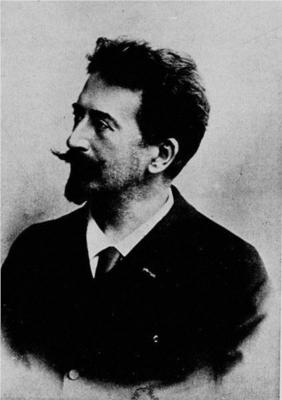
Belgian Symbolist printmaker who illustrated Baudelaire and Mallarmé, producing some of the most provocative erotic-allegorical imagery of the fin de siècle.
Museums13
Countries5
Most worksRoyal Museum of Fine Arts Antwerp, Antwerp · 5 works
Loading map…
Where to see Felicien Rops
Ranked by works you can see in person.
-
5 works
Royal Museum of Fine Arts Antwerp
Antwerp, Belgium
-
3 works
Royal Museums of Fine Arts of Belgium
Brussels, Belgium


-
1 works
National Museum of Fine Arts, Argentina
Buenos Aires, Argentina
Also here (6)
-
1 works
Museum of Fine Arts Ghent (MSK)
Ghent, Belgium
-
1 works
Musée d'Orsay
Paris, France
-
1 works
King Baudouin Foundation
Brussels, Belgium
-
1 works
Kröller-Müller Museum
Otterlo, Netherlands
-
0 works
National Gallery of Art
Washington D.C., United States
-
0 works
Rijksmuseum
Amsterdam, Netherlands


View all 13 museums
-
0 works
Royal Library of Belgium
Brussels, Belgium
-
0 works
Los Angeles County Museum of Art
Los Angeles, United States
-
0 works
Mu.ZEE - Kunstmuseum aan Zee
Ostend, Belgium


Frequently Asked Questions
Where can I see Felicien Rops's work?
While information about specific collections of Rops's work is scarce, several museums across Europe feature art from the same period or movement. These institutions may occasionally display his pieces. In Belgium, the Musées Royaux des Beaux-Arts de Belgique in Brussels could be a potential location. Other options include the Brangwyn Museum in Bruges and the Clockarium Museum in Brussels (Schaerbeek). In France, one might explore the Musée d’Art et d’Industrie in Roubaix, the Musée de l’Ecole de Nancy, the Musée des Arts Décoratifs in Paris, or the Musée des Beaux-Arts in Nancy. These museums offer a broader view of the artistic trends of Rops's time. Checking their online catalogues or contacting them directly would be wise to confirm if they currently have any of his works on display.What should I know about Felicien Rops's prints?
Felicien Rops (1833[1]-1898[1]) was a Belgian artist known for his prints, which often explored themes of decadence, eroticism, and the macabre. He worked in various printmaking techniques, including etching, aquatint, and drypoint, sometimes combining them to achieve particular effects. Rops's prints often feature strong lines and tonal contrasts, contributing to their dramatic impact. He frequently depicted female figures, sometimes idealised, sometimes satirical, and often imbued with symbolic meaning. His work engaged with contemporary social and cultural issues, reflecting the anxieties and fascinations of the late 19th century. Some of his prints were created as illustrations for books and periodicals, while others were produced as independent works of art. He collaborated with several writers, including Charles Baudelaire, and his images often complemented literary themes. Rops's prints circulated widely, contributing to his international reputation and influencing other artists of his time.Why are Felicien Rops's works important today?
Félicien Rops's art retains importance due to its subject matter and technical skill. Born in Namur, Belgium, in 1833[1], Rops became known for symbolist and decadent prints and drawings. He explored themes of death, sexuality, and satanism, often with a satirical edge. Rops's work provides insight into the cultural anxieties of the late 19th century. His images reflected societal tensions around gender roles, class divisions, and religious hypocrisy. For example, his illustrations for Les Diaboliques by Jules Barbey d'Aurevilly engaged with ideas about female sexuality and transgression. Similarly, his frontispiece for Péchés de la Jeunesse (Sins of Youth) presents a bleak view of innocence corrupted. His technical abilities also contribute to his continuing appeal. Rops was a skilled printmaker, experimenting with techniques such as aquatint, drypoint, and soft-ground etching. He combined these methods to create complex tonal effects and textures. Collectors and curators still value his prints for their artistic qualities, as well as their historical context. Rops died in 1898[1], leaving behind a body of work that continues to provoke discussion.What techniques or materials did Felicien Rops use?
Félicien Rops was a printmaker, draughtsman, and painter. He is best known for his prints, especially those using the process of aquatint. Aquatint is a printmaking technique related to etching. It creates tonal effects of light and shadow. Rops manipulated the aquatint process to produce a range of effects, from soft washes to areas of deep shadow. He often combined aquatint with other printmaking methods, such as etching and drypoint, to add fine lines and details to his compositions. Rops explored soft-ground etching, a process that allows the artist to create textured or grainy areas in the print. He also used techniques such as roulette, a tool for creating dotted effects, and sulphur tint, which produces a grainy surface. Beyond printmaking, Rops also worked in other media. He produced drawings in pencil, charcoal, and watercolour. His paintings are less well known than his prints, but they demonstrate his skill as a colourist.Who did Felicien Rops influence?
Félicien Rops's art and persona influenced a number of artists and writers associated with the Symbolist and Decadent movements. His cynical, often shocking, imagery proved attractive to those seeking to challenge bourgeois norms. Among those who admired Rops was the writer Joris-Karl Huysmans. Huysmans's novel *À rebours* (1884[1]) mentions Rops, and its protagonist, Des Esseintes, collects his prints. The book helped to create interest in Rops's work among a wider audience. The Symbolist artists Gustave Moreau and Edvard Munch both knew Rops's art. Moreau shared with Rops an interest in mythical and religious subjects, treated with a strong dose of eroticism. Munch's depictions of female figures, often presented as dangerous or destructive, show a similar sensibility to that found in Rops. Later artists influenced by Rops include Alfred Kubin and Max Klinger. These artists adopted Rops's themes of sexual obsession and the macabre. They also developed his printmaking techniques, particularly etching and aquatint.What was Felicien Rops known for?
Felicien Rops (1833[1]-1898[1]) was a Belgian artist, known for his prints and illustrations, particularly those with Symbolist and often explicitly sexual themes. He worked across media, including etching, drypoint, and aquatint. Rops began his career contributing to periodicals such as *Uylenspiegel*. He created frontispieces for this and other publications. These early works show his developing satirical style. From the 1860s, he gained recognition for his collaborations with writers, illustrating works by Charles Baudelaire, Théophile Gautier, Joséphin Péladan, and Stéphane Mallarmé. His illustrations for Baudelaire's *Les Épaves* (1866[1]) are among his most recognised. His art often explored themes of eroticism, death, and the occult, reflecting the Decadent movement of the late 19th century. Some critics consider his work misogynistic, while others view it as a commentary on societal hypocrisy. Rops's technical skill as a printmaker, combined with his provocative subject matter, made him a significant figure in late 19th-century European art. He influenced later artists interested in exploring similar themes.What was Felicien Rops's art style?
His imagery moved between erotic allegory, anti-clerical satire, and genuine metaphysical unease. Rops's work placed him at the intersection of Symbolism and the Decadent movement.What is Felicien Rops known for?
Félicien Rops is known for his work as an illustrator, producing frontispieces and illustrations for writers such as Baudelaire, Mallarmé, and Verlaine. He is also known for his technical innovations in printmaking, such as the "Ropsenfosse" soft-ground varnish developed with Armand Rassenfosse.
Sources
Where to See guide aggregates verified holdings of Felicien Rops's works across the following collections.
- [1] wikipedia Wikipedia: Felicien Rops Used for: biography.
- [2] book Jean Lahor, Art Nouveau Used for: biography.
- [3] book Brodskaya Nathalia, Brodskaya Nathalia - Symbolism Used for: biography.
- [4] book Post-impressionism : cross-currents in European painting Used for: biography.
Editorial overseen by Solis Prints. Sources verified 2026-09-24. Click a source for details, or hover over [N] in the page above to preview.
Editorial standardsMethodologyCorrectionsAI disclosureAbout the editorial team