



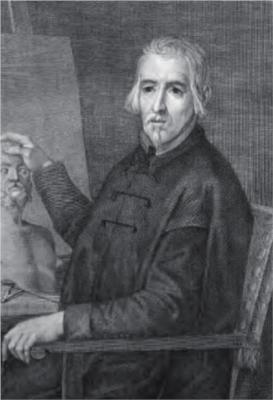
About Alonzo Cano
Where to see Alonzo Cano
Ranked by works you can see in person.
-
18 works
Museo del Prado
Madrid, Spain
-
5 works
Hermitage Museum
Saint Petersburg, Russia


-
4 works
Museo de la Trinidad
Madrid, Spain
Also here (3)
-
4 works
Royal Academy of Fine Arts of San Fernando
Madrid, Spain
-
3 works
Goya Museum
Castres, France
-
2 works
Führermuseum
Linz, Austria
Also here (6)
-
2 works
Munich Central Collecting Point
Munich, Germany
Also here (6)
-
2 works
Louvre
Paris, France
-
2 works
Gemäldegalerie Berlin
Berlin, Germany
-
2 works
John and Mable Ringling Museum of Art
Sarasota, United States


Own a piece of it
Alonzo Cano prints
Hand-finished archival prints from Alonzo Cano's body of work.

View all 26 museums
-
2 works
Cincinnati Art Museum
Cincinnati, United States
-
2 works
National Trust
Swindon, United Kingdom
-
1 works
Hispanic Society of America
New York City, United States
-
1 works
Museu de Belles Arts de València
Valencia, Spain
-
1 works
Museo de Bellas Artes de Sevilla
Seville, Spain
-
1 works
Staatliche Kunstsammlungen Dresden
Dresden, Germany
-
1 works
Pollok House
Glasgow, United Kingdom
-
1 works
Museo de Arte de Worcester
Worcester, United States
-
1 works
Wallace Collection
London, United Kingdom
-
1 works
Musei di Strada Nuova
Genoa, Italy
-
1 works
Hessen Kassel Heritage
Kassel, Germany
-
1 works
Walters Art Museum
Baltimore, United States
-
1 works
Detroit Institute of Arts
Detroit, United States
-
1 works
Los Angeles County Museum of Art
Los Angeles, United States
-
1 works
Durham University
Durham, United Kingdom
Also here (2)
-
0 works
Museu Nacional d'Art de Catalunya
Barcelona, Spain


Can't travel? Bring Alonzo Cano home.
See all Alonzo Cano prints →Frequently Asked Questions
Where can I see Alonzo Cano's work?
Alonso Cano's paintings and sculptures can be found in several locations. In London, the Wallace Collection holds his painting *Vision of Saint John the Evangelist*. Other European museums with works by Cano include the Alte Pinakothek in Munich (Vision of Saint Anthony of Padua) and the Staatliche Gemäldegalerie in Kassel (Portrait of a Dominican Friar). In Spain, several works are located in Madrid, including at the Museo del Prado (*Miracle of the Well*, *Virgin and Child in a Landscape*), the Academia de San Fernando (*Crucified Christ*), and the Church of San Gines (*Christ in Calvary*). Granada also has a number of Cano's pieces, such as the *Presentation of the Virgin and Annunciation* in the Cathedral, *Holy Family* in the Convent of the Angel Custodio, and *Saint Bernard and Saint John Capistrano* in the Museo de Carlos V. The Immaculate Conception can be found in the Cathedral, Oratory of the Sacristy, also in Granada. Beyond Europe, the Los Angeles County Museum of Art has Cano's *Christ in Limbo*, and the Hispanic Society of America in New York City has his *Portrait of an Ecclesiastic*.What should I know about Alonzo Cano's prints?
Alonzo Cano (1601[1]-1667[1]) was a Spanish[1] artist from Granada, active as a painter, sculptor, and architect. He received his artistic education in Seville in the workshop of Francisco Pacheco, where he overlapped with Velázquez. Cano's paintings often show an awareness of printmaking. Literary sources suggest he frequently used prints in his work. His painting, *Virgin and Child in a Landscape*, dating from about 1646[1]-48, borrows directly from an engraving by Dürer from 1520. While Cano retained the general scheme of Dürer's print, he transformed the model into his own style. He translated the severe, linear language of the German print into a more tender and painterly manner. Cano's early works, which established his reputation, were primarily sculptural. His paintings include *Miracle of the Well* (Museo del Prado, Madrid), and *Saint Bernard and Saint John Capistrano* (Museo de Carlos V, Granada).Why are Alonzo Cano's works important today?
Alonzo Cano (1601[1]-1667[1]) was a versatile Spanish[1] artist; he worked as a painter, sculptor, and architect. Cano's importance stems from his synthesis of diverse artistic influences and his impact on later Spanish art. Born in Granada, Cano received his early training in Seville. He entered Francisco Pacheco's workshop in 1616[1], where he encountered Velázquez. This early contact with Velázquez influenced Cano's naturalistic style, evident in his first known work, the 1624 painting *Saint Francis Borgia*. Cano also trained with Juan Martinez Montañés, a sculptor whose refined style shaped Cano's sculptural work. Cano designed the retable for the church of Santa Maria de la Oliva in Lebrija (1629-31), which established his reputation. Cano's paintings of Christ, particularly *Christ Supported by an Angel*, show the influence of Anthony van Dyck, whose works Cano knew through the royal collection and engravings. Cano's elegant and smooth treatment of Christ's body, also visible in his many crucifixions, recalls the polychromed sculptures of Martinez Montañés. The structure of the body, the head's inclination, and the *contrapposto* pose are similar to Montañés's *Christ of Clemency*. Despite his artistic success, Cano died in poverty, a common fate for Spanish painters of the period.What techniques or materials did Alonzo Cano use?
Alonso Cano was a versatile artist, working as a painter, sculptor, and architect. Born in Granada in 1601[1], he received architectural training from his father, Miguel Cano Pacheco. In 1614[1], he moved to Seville, where he studied sculpture with Juan Martinez Montañés and painting with Francisco Pacheco (also Diego Velázquez’s teacher). Cano's early paintings, such as the 1624 *Saint Francis Borgia*, display a tenebrist and naturalistic style, with strongly modelled forms and concealed brushwork, similar to Velázquez's Sevillian works. His time in Madrid, starting in 1638, allowed him to study the royal art collection, leading to a softening of his brushwork, influenced by Venetian art. *Christ and the Samaritan Woman* (1640) shows this change, with a softer application of paint and more subdued colours, compared to his earlier works, which featured large blocks of colour and clearly delineated contours. Cano designed the retable for the church of Santa Maria de la Oliva, in Lebrija, and executed its polychromed figures (1629-31). His paintings of the crucified Christ often feature an elegance and smoothness reminiscent of Van Dyck.Who did Alonzo Cano influence?
Alonzo Cano (1601[1]-1667[1]) was a painter, sculptor, and architect. He was born in Granada, but his family relocated to Seville in 1614[1]. There, Cano received his artistic training as a painter. Around 1616, Cano entered the workshop of Francisco Pacheco, where he encountered Velázquez. Although their close contact lasted only a few months, it proved significant for Cano's art. His earliest known work, the 1624 Saint Francis Borgia, shares traits with Velázquez's Sevillian paintings, such as strongly modelled forms and self-concealing brushwork. In the early 1620s, Cano also worked in the workshop of Juan Martinez Montañés, a Sevillian sculptor. Montañés' refined style influenced Cano's sculpture, especially his early pieces. Although Cano joined the painters' guild in 1626, his early reputation rested primarily on his sculptures. His design for the retable of the church of Santa Maria de la Oliva, in Lebrija (1629-31), was his most conspicuous early commission. Cano's paintings, such as Christ Supported by an Angel (c. 1645-1652[1]), show the influence of Anthony van Dyck. Cano's paintings of the crucified Christ also show the influence of Montañés' sculptures, particularly Christ of Clemency in Seville Cathedral. Cano was a forerunner of later painters of the Madrid school.Who influenced Alonzo Cano?
Alonso Cano's artistic development was shaped by several figures. He received architectural training from his father, Miguel Cano Pacheco. In Seville, from 1614[1], he studied sculpture with Juan Martinez Montañés and painting with Francisco Pacheco; Diego Velázquez was also a student of Pacheco. Cano's early work, such as the Saint Francis Borgia (1624), shares tenebrist and naturalistic qualities with Velázquez's paintings from Seville. This resulted from a brief, but significant, period of close contact. Montañés' refined style had a decisive impact on Cano's sculpture, particularly his early pieces. Cano's paintings of the crucified Christ resemble Montañés' polychromed sculptures of Christ, including the Christ of Clemency in Seville cathedral. After moving to Madrid in 1638, Cano gained favour with Philip IV, becoming a royal architect and painter. Studying the royal art collection led him to adopt softer brushwork, influenced by Venetian artists. His Christ and the Samaritan Woman (1640) shows this change. Cano also admired the work of Van Dyck, whose sensibility he shared, as seen in Christ Supported by an Angel (1645-1652[1]).What is Alonzo Cano's most famous work?
Alonzo Cano (1601[1]-1667[1]) was active as a painter, sculptor, and architect. He received his artistic education in Seville, where his family relocated in 1614[1]. Cano entered Francisco Pacheco's workshop in 1616, where he met Velázquez. Cano's first known work, the full-length *Saint Francis Borgia* (1624, Seville, Museo Provincial de Bellas Artes), shares traits with Velázquez's Sevillian paintings. During the early 1620s, Cano likely joined the workshop of Juan Martinez Montañés (1568-1649[1]), a sculptor whose refined style influenced Cano's sculpture. Cano passed the painters' guild examinations in 1626, but he gained his early reputation primarily through sculpture. His most significant commission from his time in Seville was the design and execution of polychromed figures for the great retable of the church of Santa Maria de la Oliva, in Lebrija (1629-31). Later in his career, from 1645 to 1652, Cano focused on painting. Contemporary accounts suggest that his painting *Miracle of the Well* (c. 1646-48, Madrid, Museo del Prado) was the most admired of his paintings in the city. It was part of the high altar retable of the church of Santa Maria de la Almudena. The painting depicts Saint Isidro Labrador, the patron saint of Madrid, performing a miracle.What style or movement did Alonzo Cano belong to?
Alonso Cano (1601[1]-1667[1]) was active during the Baroque[1] period. He was a multifaceted artist, working as a painter, sculptor, and architect in Spain. Cano's early painting style, exemplified by his 1624[1] work *Saint Francis Borgia*, displays tenebrism and naturalism. These traits are shared with the Sevillian paintings of Velázquez, with whom Cano apprenticed briefly. Cano's time in Madrid allowed him to study the royal art collection; this exposure led him to adopt a softer style, reminiscent of Venetian art. *Christ and the Samaritan Woman* (1640) demonstrates this shift, with its more subdued colours and gentler application of paint compared to his earlier works, which featured large blocks of colour and clear outlines. His paintings of the crucified Christ show an idealised figure with aristocratic elegance. The light brushwork and soft contours in works such as *Christ Supported by an Angel* are similar to those of Van Dyck, whose work Cano knew and admired. The sculpturesque modelling in these paintings may reflect the influence of Juan Martinez Montañés, a sculptor with whom Cano studied.
Sources
Where to See guide aggregates verified holdings of Alonzo Cano's works across the following collections.
- [1] wikipedia Wikipedia: Alonzo Cano Used for: biography.
- [2] book Nina A. Mallory, El Greco to Murillo Used for: biography, stylistic analysis.
- [3] book Lilian H. Zirpolo, Historical Dictionary of Baroque Art and Architecture Used for: biography, stylistic analysis.
Editorial overseen by Solis Prints. Sources verified 2026-09-24. Click a source for details, or hover over [N] in the page above to preview.
Editorial standardsMethodologyCorrectionsAI disclosureAbout the editorial team