



About Amalia Lindegren
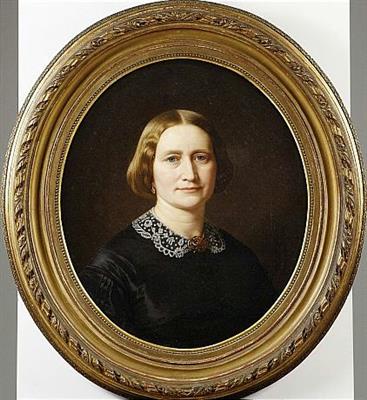
Museums4
Countries2
Most worksNationalmuseum, Stockholm · 19 works
Loading map…
Where to see Amalia Lindegren
Ranked by works you can see in person.
-
19 works
Nationalmuseum
Stockholm, Sweden
-
5 works
National Portrait Gallery of Sweden
Mariefred, Sweden


-
3 works
National Museum of Art, Architecture and Design
Oslo, Norway
-
2 works
Gothenburg Museum of Art
Gothenburg, Sweden


Frequently Asked Questions
Where can I see Amalia Lindegren's work?
Amalia Lindegren (1814[1]-1891[1]) was a Swedish[1] artist known for genre painting and portraits. To find her works, it is best to consult museum websites and collection catalogues. Many museums have increased their online presence through social media, or virtual exhibitions on their websites. Some museums are temporarily closed; others are open with timed entry ticketing to limit the number of visitors at one time. All require masks. It is always best to check the websites for hours and restrictions. For example, the Cincinnati Art Museum showed the exhibition *Frank Duveneck: American Master* through March 2021. The Reynolda House Museum of American Art, in Winston-Salem, North Carolina, has assembled an exhibition, *Girlhood in American Art*, which was on view through March 2021. The Baltimore Museum of Art showed Joan Mitchell (March to July 2021).What should I know about Amalia Lindegren's prints?
Amalia Lindegren (1814[1]-1891[1]) was a Swedish[1] artist, primarily a painter. She is known for genre scenes and portraits. While Lindegren was a painter and not a photographer, prints of her paintings were made and sold during her lifetime, a common practice at the time. Prints of paintings allowed wider distribution of an artist's work, making it accessible to a broader audience beyond those who could view or afford the original artworks. These prints were often produced using techniques such as engraving or lithography. It is important to note that photographic prints, like those produced by Julia Margaret Cameron, became increasingly popular during the same period. Cameron sold her photographs through dealers such as Colnaghi and William Spooner. These prints came in various formats, including cartes-de-visite and larger mounted prints. Some prints even had signatures lithographed onto the mount to increase their value. If you are considering purchasing a print associated with Amalia Lindegren, ensure that you research the printmaking process used and its provenance. Understanding these aspects will help you assess the print's authenticity and value.Why are Amalia Lindegren's works important today?
Amalia Lindegren (1814[1]-1891[1]) was a Swedish[1] artist who challenged the male-dominated art world of the 19th century. Her work provides insight into the social and political issues experienced by women artists. Lindegren explored themes of identity, rejection, and the expression of personal issues in political terms. Her paintings offer a glimpse into the struggles and triumphs of women seeking recognition and agency within a patriarchal society. Lindegren's art contributes to discussions about gender, representation, and the importance of diverse voices in art history. Lindegren's willingness to confront societal norms and express personal experiences through her art makes her work relevant to contemporary audiences. Her art invites viewers to reflect on the ongoing dialogues surrounding gender equality, representation, and the importance of creating space for marginalised voices within the art world.What techniques or materials did Amalia Lindegren use?
Information about Amalia Lindegren's specific techniques and materials is scarce in the provided texts. However, the passages do offer some general context about artistic techniques during the periods before and contemporary to her. Artists of the time, like El Greco, prepared canvases with animal-skin size and a ground of red ochre and gesso tempered with linseed oil. El Greco sketched compositions with black oil paint, possibly charcoal black tempered with linseed oil. He blocked in light areas with white or pale grey oil paint and modified underpainting with oil glaze applied with a bristle brush. Brice Marden primed canvases with turps-thinned Flake White, sanding the surface when dry. He mixed standard artist's oil colour with a medium of wax and turpentine, applying it with a brush and working it over with a spatula and knife. These examples show the range of materials and methods available to artists. Understanding these techniques helps in analysing the aesthetic decisions made by artists and how they engage with their chosen medium.Who did Amalia Lindegren influence?
It is difficult to identify specific individuals who were directly influenced by Amalia Lindegren. Information about Swedish[1] art suggests a general openness to international trends, with Swedish artists integrating into the global context relatively quickly. The Swedish art scene exhibits eclecticism, with artists adopting a relativistic attitude, changing expressions and views freely. Geographic factors play a role, with Stockholm holding a dominant position, although regional centres like Gothenburg and Malmo counterbalance it to some extent. Young artists in Sweden experiment in many directions, with German neo-expressionism having a major impact. However, some teachers note that these artists sometimes lack a historical awareness, which affects their work. There is also a growing interest among young artists in developments in neighbouring Scandinavian countries.Who influenced Amalia Lindegren?
Amalia Lindegren's artistic development occurred during a period of significant change in European art. Initially, Lindegren adhered to realism, a style that aimed to depict subjects objectively and truthfully. Later in her career, around 1890[1], she came under the influence of Impressionism. This movement, which originated in France, emphasised capturing the fleeting impressions of light and colour. Max Liebermann, a German painter and printmaker, also transitioned from realism to Impressionism around the same time. Like Lindegren, Liebermann began his career with realistic depictions before embracing the looser brushwork and emphasis on light that characterise Impressionism. He studied at the Weimar Academy from 1868 to 1872. He was inspired by Mihaly von Munkácsy, and he spent time in Paris, where he followed the work of Courbet, Millet, and Ribot.What is Amalia Lindegren's most famous work?
Amalia Lindegren (1814[1]-1891[1]) was a Swedish[1] artist known for her genre scenes and portraits. Although she produced a substantial body of work, her most recognised painting is generally considered to be "The Little Match Girl" ("Flickan med svavelstickorna"). Completed in 1855[1], "The Little Match Girl" depicts a young girl in a state of poverty. The subject is drawn from Hans Christian Andersen's story of the same name, published in 1845. Lindegren's choice of subject matter reflects an interest in social realism, a common theme in European art during the mid-19th century. Lindegren's painting is admired for its sensitive portrayal of the child's vulnerability. The artist uses a muted colour palette, which adds to the overall melancholy mood of the piece. "The Little Match Girl" is part of the collection of the Nationalmuseum in Stockholm, and it continues to be one of Lindegren's most reproduced and discussed works.What style or movement did Amalia Lindegren belong to?
Amalia Lindegren (1814[1]-1891[1]) was a Swedish[1] artist. Although it is difficult to assign her to one specific movement, she is generally associated with the Düsseldorf school of painting. This school refers to a group of artists who studied at or were influenced by the Düsseldorf Academy in Germany. It was active mainly from the 1830s to the 1860s. The Düsseldorf school is known for its emphasis on detailed realism, often with sentimental or anecdotal subject matter. Artists associated with the school produced paintings that were technically skilled and aimed to evoke emotional responses in the viewer. Many artists from the Nordic countries, including Sweden, were drawn to the Düsseldorf Academy. Lindegren's style incorporates elements of realism and genre painting, fitting within the broader scope of 19th-century European art movements.
Sources
Where to See guide aggregates verified holdings of Amalia Lindegren's works across the following collections.
- [1] wikipedia Wikipedia: Amalia Lindegren Used for: biography.
- [2] book Dorling Kindersley, Artists: Inspiring Stories of the World's Most Creative Minds Used for: biography.
- [3] book Masterpieces of western art : a history of art in 900 individual studies from the Gothic to the present day Used for: biography.
- [4] book Erwin Panofsky, The Codex Huygens And Leonardo Da Vinci's Art Theory Used for: biography.
Editorial overseen by Solis Prints. Sources verified 2026-09-24. Click a source for details, or hover over [N] in the page above to preview.
Editorial standardsMethodologyCorrectionsAI disclosureAbout the editorial team