

About Bernard Buffet
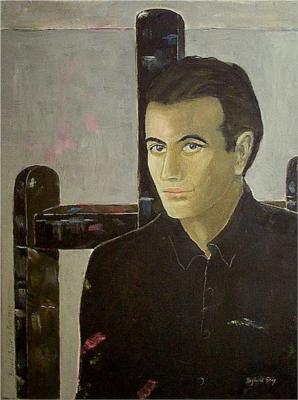
Hailed as a prodigy at twenty, Buffet's stark black-lined canvases made him France's most celebrated painter before critical opinion turned sharply against him.
Where to see Bernard Buffet
Ranked by works you can see in person.
-
17 works
Musée d'art moderne de Paris
Paris, France
Also here (6)
-
15 works
Fukuoka Art Museum
Fukuoka, Japan
Also here (3)


-
3 works
Musée d'Art Moderne de Fontevraud
Fontevraud, France
-
2 works
Musée d'Art moderne de Troyes
Troyes, France
-
2 works
Hermitage Museum
Saint Petersburg, Russia
-
2 works
LaM (Lille Métropole musée d'art moderne, d'art contemporain et d'art brut)
Villeneuve-d'Ascq, France
Also here (2)
-
2 works
National Gallery of Victoria
Melbourne, Australia
-
1 works
Kunsthalle Mannheim
Mannheim, Germany
-
1 works
Neue Nationalgalerie
Berlin, Germany
-
1 works
Musée Cantini
Marseille, France


View all 25 museums
-
1 works
Carnegie Museum of Art
Pittsburgh, United States
-
1 works
National Museum of Western Art
Tokyo, Japan
-
1 works
Museo de Arte de Worcester
Worcester, United States
-
1 works
Museum of Modern Art
New York City, United States
-
1 works
Palais des Beaux-Arts de Lille
Lille, France
-
1 works
Harvard Art Museums
Cambridge, United States
-
1 works
RISD Museum
Providence, United States
-
1 works
Seattle Art Museum
Seattle, United States
-
1 works
Centre national des arts plastiques
Paris, France
-
1 works
Morohashi Museum of Modern Art
Kitashiobara, Japan
-
1 works
Musée National d'Art Moderne
Paris, France
-
1 works
Tate
London, United Kingdom
-
1 works
Museum of Fine Arts, Houston
Houston, United States
-
1 works
Menard Art Museum
Komaki, Japan
Also here (4)
-
0 works
National Gallery of Art
Washington D.C., United States


Frequently Asked Questions
Where can I see Bernard Buffet's work?
Bernard Buffet's paintings and prints are held in many public collections. These include museums in France, other parts of Europe, and North America. In France, the Musée d'Art Moderne in Paris holds several paintings. The Musée Bernard Buffet in Surugadaira, Japan, is dedicated to his work; it holds a large collection of paintings, watercolours, prints, and documents relating to his life and career. Other museums with works by Buffet include The Museum of Modern Art in New York, which has prints in its collection. The Tate Gallery in London also holds a lithograph. These and other institutions occasionally display Buffet's work as part of temporary exhibitions or within their permanent collection displays. Prospective viewers should check museum websites for current information about which works are on view. Major auction houses, such as Sotheby's and Christie's, also handle Buffet's work regularly.What should I know about Bernard Buffet's prints?
Bernard Buffet (1928[1]-1999[1]) was a French[1] painter and printmaker associated with anti-abstract art. Buffet gained early recognition; by his late twenties, he already had a significant reputation. Buffet's prints often share stylistic and thematic connections with his paintings. He favoured drypoint, lithography, and etching. These prints allowed for wider distribution of his artistic vision. Common subjects include clowns, religious scenes, and still lifes. His style is characterised by angularity and starkness; he used black lines to define forms. The overall effect can be emotionally intense. Collectors should be aware of the wide range in print quality and edition sizes. Some Buffet prints were produced in very large numbers, while others are relatively scarce. Authentication can be a concern, so provenance is important. Buffet's printmaking output is substantial, offering options for both new and experienced collectors. His work provides insight into post-war French figurative art.Why are Bernard Buffet's works important today?
Bernard Buffet was a prolific French[1] painter, draughtsman, and printmaker. He is associated with anti-abstract expressionism, which rejected non-figurative painting. Buffet aimed to create art accessible to a wide audience, and his work gained considerable commercial success. Buffet's paintings often feature angular figures and stark compositions. His subjects include portraits, still lifes, and religious scenes. He developed a distinctive style characterised by thin, black lines and muted colours. Although art critics were often dismissive, the public embraced Buffet's accessible style. His popularity peaked in the 1950s. Later in his career, Buffet continued to produce a large number of works, although tastes had shifted away from his aesthetic. Today, there is renewed interest in his art, particularly his graphic work. His prints offer a more affordable way to collect his art. They allow a wider audience to engage with his artistic vision.What techniques or materials did Bernard Buffet use?
Bernard Buffet's practice involved diverse materials and techniques. He often combined oil paint with other substances to create unusual textures. In his earlier work, he incorporated materials such as cement, tar, gravel, sand, dust, and even butterfly wings. He thickened paint with sand and glue, creating a gritty paste. Dubuffet also used unconventional tools and supports, believing that this stimulated creativity. For his portraits, Dubuffet would lay the canvas flat and cover it with a thick layer of light-coloured oil paint, applied with a spatula. He then sprinkled ashes, sand, and coal dust over the surface. Colour was added as a thin wash. The image was created by incising lines into this surface with a palette knife, revealing the canvas texture. A thin mixture of paint and turpentine was brushed over the face, staining the lines. Later, in the Hourloupe cycle, he restricted his palette to red, white, blue, and black. He moved away from natural materials, using colour to project abstract ideas.Who did Bernard Buffet influence?
Bernard Buffet's artistic influence is not well documented. However, Henri Matisse influenced a number of artists. Several critics, art historians, and artists responded to the Matisse retrospective exhibition at the Museum of Modern Art. Ellsworth Kelly, Francis M. Naumann, Jeff Perrone, Richard Hennessey, and Robert Kushner responded positively. Nancy Spero, Jo Anna Isaak, and Kenneth Silver were politically critical. Jennifer Bartlett, Lynne Tillman, and Gary Indiana offered impressionistic responses, while Robert Rosenblum, Peter Schjeldahl, and Charles Stuckey gave sober art-historical analyses. Matisse's impact extended to American artists from the 1940s through the 1970s, including Hans Hofmann and Sean Scully. His use of the window motif is comparable to that of Robert Motherwell, especially in *Open Window, Collioure*. Hard-edged painters such as Youngerman, Kelly, and Zox, certain colourists (Frankenthaler, Motherwell, Stella), and figurative artists (Avery, Wesselman) also felt his influence. Roy Lichtenstein created pastiches of Matisse and Diebenkorn. Serge Fauchier, a member of the “Support/surface” group, was influenced by Matisse and American colour-field painters.What is Bernard Buffet's most famous work?
Bernard Buffet is best known for his paintings of clowns and religious subjects, as well as still lifes and portraits. However, pinpointing a single "most famous" work is difficult, as his popularity has fluctuated and varies by region. One contender for his most recognised painting is "Clown Violinist" (1955[1]), which typifies his angular style and recurring clown motif. The subject's gaunt features and melancholic expression are characteristic of Buffet's post-war aesthetic. This piece is part of a series of clown paintings that cemented his popular appeal. Another potential candidate is "The Christ" (1951), reflecting Buffet's engagement with religious themes. This stark, linear depiction of Christ departs from traditional representations, aligning with the existential mood of the era. Ultimately, the "most famous" work is subjective and dependent on individual interpretation and exposure. Both "Clown Violinist" and "The Christ", among others, remain significant examples of his contribution to 20th-century art.What style or movement did Bernard Buffet belong to?
Bernard Buffet (1928[1]-1999[1]) was a French[1] painter associated with anti-abstract art movements after the Second World War. Buffet gained recognition in the late 1940s as part of the "misérabilisme" tendency; this style expressed post-war anxieties through bleak figurative works. His paintings often feature elongated figures, angular forms, and a restricted colour palette, creating a sense of melancholy. Buffet's subjects included portraits, still lifes, and religious scenes. Although he achieved early success, his popularity declined as abstract art became more dominant. Despite this, Buffet continued to develop his distinctive style. He remained committed to representational painting throughout his career. Later in life, his work experienced renewed interest. Buffet's artistic output offers a view into the anxieties of his time. His work provides an alternative to the dominant trends in post-war art.What was Bernard Buffet known for?
Bernard Buffet (1928[1]-1999[1]) was a French[1] painter and printmaker associated with post-war Expressionism[1]. Buffet gained recognition for his distinctive figurative style. His works often feature elongated, angular figures rendered with dark, heavy outlines, and a muted palette. Buffet's subjects included portraits, still lifes, religious scenes, and cityscapes. During the 1950s, Buffet achieved considerable commercial success and critical attention. However, his popularity declined in later decades, as his style was viewed by some as repetitive. Despite shifts in critical opinion, Buffet remained a prolific artist, producing a substantial body of work throughout his career. He is known for his contributions to the Figurative movement, and his art provides a view into post-war anxieties and alienation.
Sources
Where to See guide aggregates verified holdings of Bernard Buffet's works across the following collections.
- [1] wikipedia Wikipedia: Bernard Buffet Used for: biography.
- [2] book guggenheim-guhe00solo Used for: stylistic analysis.
- [3] book guggenheim-jeandubuffetretr00dubu Used for: biography.
- [4] book guggenheim-jeandubuffetretr00newy Used for: biography.
- [5] book guggenheim-onehundredpainti00thom Used for: biography.
- [6] book guggenheim-picassow00nash Used for: biography.
- [7] book Masterpieces of western art : a history of art in 900 individual studies from the Gothic to the present day Used for: biography, stylistic analysis.
- [8] book Robert Hughes, The Shock of the New, 1980 Used for: stylistic analysis.
Editorial overseen by Solis Prints. Sources verified 2026-09-19. Click a source for details, or hover over [N] in the page above to preview.
Editorial standardsMethodologyCorrectionsAI disclosureAbout the editorial team