



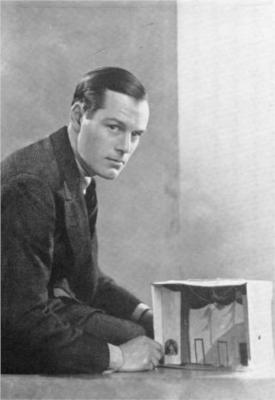
About Christopher Wood
Where to see Christopher Wood
Collection holdings are reported here; current display varies. Check with each museum before visiting.
-
13 recorded works
Kettle's Yard
Cambridge, United Kingdom
-
6 recorded works
Tate
London, United Kingdom


-
5 recorded works
Leeds Art Gallery
Leeds, United Kingdom
-
4 recorded works
Manchester Art Gallery
Manchester, United Kingdom
-
3 recorded works
National Galleries Scotland
Edinburgh, United Kingdom
-
3 recorded works
Aberdeen Archives, Gallery and Museums collections
Aberdeen, United Kingdom
-
2 recorded works
Mercer Art Gallery
Harrogate, United Kingdom
-
2 recorded works
Government Art Collection
London, United Kingdom
-
2 recorded works
Ulster Museum
Belfast, United Kingdom
-
2 recorded works
Walker Art Gallery
Liverpool, United Kingdom


Own a piece of it
Christopher Wood prints
Hand-finished archival prints from Christopher Wood's body of work.
 Landscape at Vence - Christopher Wood
From £28.00
Landscape at Vence - Christopher Wood
From £28.00
 Zebra and Parachute - Christopher Wood
From £28.00
Zebra and Parachute - Christopher Wood
From £28.00
 The Bather - Christopher Wood
From £37.00
The Bather - Christopher Wood
From £37.00
 Ulysses and the Sirens - Christopher Wood
From £28.00
Ulysses and the Sirens - Christopher Wood
From £28.00
 Constant Lambert - Christopher Wood
From £28.00
Constant Lambert - Christopher Wood
From £28.00
 Girl and Lamp in a Cornish Window - Christopher Wood
From £28.00
Girl and Lamp in a Cornish Window - Christopher Wood
From £28.00
 A Fishing Boat in Dieppe Harbour - Christopher Wood
From £28.00
A Fishing Boat in Dieppe Harbour - Christopher Wood
From £28.00
 Cumberland Landscape (Northrigg Hill) - Christopher Wood
From £28.00
Cumberland Landscape (Northrigg Hill) - Christopher Wood
From £28.00
View all 31 museums
-
2 recorded works
Brighton Museum & Art Gallery
Brighton and Hove, United Kingdom
-
2 recorded works
Bristol City Museum & Art Gallery
Bristol, United Kingdom
-
2 recorded works
National Museum Cardiff
Cardiff, United Kingdom
-
1 recorded work
Buffalo AKG Art Museum
Buffalo, United States
-
1 recorded work
Bradford Museums and Galleries
Bradford, United Kingdom
-
1 recorded work
Newport Museum and Art Gallery
Newport, United Kingdom
-
1 recorded work
Museum & Art Swindon
Swindon, United Kingdom
-
1 recorded work
Laing Art Gallery
Newcastle upon Tyne, United Kingdom
-
1 recorded work
Whitworth Art Gallery
Manchester, United Kingdom
-
1 recorded work
Colchester and Ipswich Museums Service
Colchester, United Kingdom
-
1 recorded work
Glasgow Museums Resource Centre
Glasgow, United Kingdom
-
1 recorded work
National Gallery
London, United Kingdom
-
1 recorded work
Tate Britain
London, United Kingdom
-
1 recorded work
Royal Cornwall Museum
Truro, United Kingdom
-
1 recorded work
The Phillips Collection
Washington D.C., United States
-
1 recorded work
Leicester Museum & Art Gallery
Leicester, United Kingdom
-
1 recorded work
Fitzwilliam Museum
Cambridge, United Kingdom
-
1 recorded work
Kirklees Museums and Galleries
Huddersfield, United Kingdom
-
1 recorded work
Auckland Art Gallery Toi o Tāmaki
Auckland, New Zealand
-
1 recorded work
National Gallery of Canada
Ottawa, Canada
-
1 recorded work
National Portrait Gallery
London, United Kingdom


Can't travel? Bring Christopher Wood home.
See all Christopher Wood prints →Frequently Asked Questions
Where can I see Christopher Wood's work?
It is difficult to give a comprehensive list of where to view the work of Christopher Wood. However, many galleries and museums hold collections of Art Deco objects and paintings, and these may include works by Wood. In the United Kingdom, you might try the Brighton Museum & Art Gallery; Manchester Art Gallery; the National Museums of Scotland, Royal Museum in Edinburgh; or the Victoria & Albert Museum in London. The Ashmolean Museum at the University of Oxford also has a collection of early Chinese ceramics and paintings. In the United States, museums with relevant collections include the Charles Hosmer Morse Museum of American Art (Winter Park, Florida); the Los Angeles County Museum of Art; the Metropolitan Museum of Art (New York); the Minneapolis Institute of Arts; the Museum of Modern Art (New York); the Royal Ontario Museum (Toronto); the Virginia Museum of Fine Arts (Richmond); and the Wolfsonian at Florida International University (Miami Beach).What should I know about Christopher Wood's prints?
Christopher Wood did not produce a large number of prints during his career; paintings and drawings were his primary focus. When considering Wood's prints, it is important to understand the distinction between an original print and a reproduction. An original print is conceived and executed by the artist as a print, often in a limited, numbered, and signed edition. Each print is created individually from a matrix, such as a plate or block. A reproduction, on the other hand, is a copy of a work originally created in another medium, such as a painting, and is often produced using photomechanical means. The market plays a role in determining the worth of art. The Professional Art Dealers Association of Canada defines an original print as an image conceived by the artist as a print and executed solely as a print, usually in a numbered edition, and signed by the artist. Each print in the edition is an original, printed from a plate, stone, screen, block or other matrix created for that purpose.Why are Christopher Wood's works important today?
Christopher Wood (1901[1]-1930[1]) was a British[1] painter associated with the artistic community in Cornwall. His works maintain importance due to their contribution to British modernism and their unique blend of influences. Wood's style incorporated elements of Post-Impressionism[1], particularly inspired by artists like Cézanne and Picasso, whom he met in Paris. He combined these continental influences with a distinctly British sensibility, drawing inspiration from Cornish folk art and the naive style of Alfred Wallis. This fusion resulted in paintings characterised by simplified forms, flattened perspectives, and a strong sense of colour. His association with the avant-garde Group of Seven and his friendships with figures such as Ben Nicholson and Winifred Nicholson further cemented his position within the British art scene. Although his career was tragically cut short by his early death, Wood's paintings continue to be admired for their lyrical quality, their evocation of place, and their contribution to the development of a modern British aesthetic. They offer a window into a specific moment in British art history, when artists were grappling with international trends while also seeking to define a national identity.Who did Christopher Wood influence?
Christopher Wood's career, though short, left its mark on British[1] art. While direct influence is difficult to measure, some artists show stylistic similarities or acknowledged his impact. Winifred Nicholson, for example, shared Wood's interest in naive and primitive styles. Both artists spent time in St Ives, Cornwall, and their paintings sometimes display similar colour palettes and simplified forms. However, Nicholson had already developed her personal style before meeting Wood. Another artist linked to Wood is Ben Nicholson (Winifred's husband). Wood, Nicholson, and the sculptor Barbara Hepworth worked together in the early 1930s. This creative exchange likely affected Nicholson's move towards abstraction. Some scholars suggest Wood's flattened perspective and simplified shapes contributed to Nicholson's developing aesthetic. It is worth noting that Wood himself drew inspiration from various sources, including Alfred Wallis, a self-taught Cornish painter. Wood's engagement with Wallis's art demonstrates a reciprocal relationship between established and outsider artists.Who influenced Christopher Wood?
Christopher Wood was influenced by various artists and movements during his career. As a student, he was drawn to Surrealism, and he also admired artists such as Francis Bacon and Hieronymus Bosch. Wood held Pablo Picasso in high regard, fascinated by his ability to assimilate and personalise the work of others. Wood made a deliberate effort to reference other artists, building on their achievements and integrating them into his own work. He cited Robert Rauschenberg, Jasper Johns, Cy Twombly, and Joseph Beuys as contemporary influences. Rauschenberg's handling of materials, and the relationship between illusion and reality, particularly appealed to him. Wood also looked closely at earlier abstract European art, such as Cubism, Piet Mondrian, and Paul Klee. He appreciated Klee's ability to engage with art, reality, and symbolism on different levels, incorporating a literary element. Wood sought to create a personal art that could refer to the art of the past on his own terms.What is Christopher Wood's most famous work?
Christopher Wood is best known for his paintings from the 1920s. He developed a style that combined influences from British[1] modernism, French painting, and his own personal experiences. Although it is difficult to name one single "most famous" work, Wood's Cornish paintings are among his most recognised. These paintings often depict harbour scenes, fishing boats, and coastal views around St Ives, Cornwall. Examples include *Zennor Churchtown, Cornwall* (1926[1]) and *PZ. Newlyn* (circa 1928). These works display his simplified forms, bright colours, and a sense of naive charm. Wood's association with the artists Ben and Winifred Nicholson in the 1920s was important to his artistic development. He also knew artists of the Parisian avant-garde, such as Picasso and Cocteau. His career was short; he died in 1930[1] at the age of 29.What style or movement did Christopher Wood belong to?
Christopher Wood is generally associated with Post-Impressionism[1], a term that emerged around 1910[1]. The name was coined by the English critic Roger Fry to describe artists working after Impressionism, but who were dissatisfied with its focus on fleeting moments. Post-Impressionism is largely confined to the English-speaking world, mainly Britain. The Post-Impressionists, active roughly from 1880 to 1905, sought to move beyond the earlier movement's emphasis on capturing transient effects of light and colour. Instead, they aimed for something more substantial, with art that expressed feelings rather than merely portraying a subject. Key figures linked to Post-Impressionism include Paul Cézanne, Paul Gauguin, Vincent van Gogh, and Henri de Toulouse-Lautrec. These artists, while diverse in their individual approaches, shared a desire to explore new forms of artistic expression and place greater emphasis on subject matter. Their work paved the way for various 20th-century art movements, such as Cubism and Surrealism.What was Christopher Wood known for?
Christopher Wood, also known as Kit Wood, was a British[1] painter associated with several early twentieth-century art movements. He is best known for his modernist, almost naive, style and the Cornish landscapes he painted later in his short life. Born in 1901[1], Wood studied briefly at the Académie Julian in Paris in 1921[1]. There, he met Picasso and Jean Cocteau, who became an early patron. He travelled extensively in Europe, coming under the influence of various artists and styles. His early work shows the influence of French modernism, particularly Picasso and the School of Paris. Later, Wood developed a simplified style, partly inspired by the naive paintings of Alfred Wallis, a fisherman and artist he met in St Ives. From 1928, he spent increasing amounts of time in Cornwall, painting scenes of the coast and harbours. These Cornish pictures are among his most recognisable works. Wood's career was cut short by his death in 1930[1], at the age of 29. Despite his short life, he produced a substantial body of work that places him as an important figure in British modernism.
Sources
Where to See guide aggregates verified holdings of Christopher Wood's works across the following collections.
- [1] wikipedia Wikipedia: Christopher Wood Used for: biography.
- [2] book marooned2, August 21 2020 Used for: stylistic analysis.
- [3] book guggenheim-artoftomorrowfif1939gugg Used for: biography.
- [4] book guggenheim-paintingsfromare00solo Used for: biography.
- [5] book guggenheim-secondenlargedca1937gugg Used for: biography.
- [6] book Masterpieces of western art : a history of art in 900 individual studies from the Gothic to the present day Used for: biography.
- [7] book Beckett, Wendy, Sister Wendy's odyssey : a journey of artistic discovery Used for: biography.
Editorial overseen by Solis Prints. Sources verified 2026-09-30. Click a source for details, or hover over [N] in the page above to preview.
Editorial standardsMethodologyCorrectionsAI disclosureAbout the editorial team