



About Bertalan Szekely
Austrian · 1835–1910
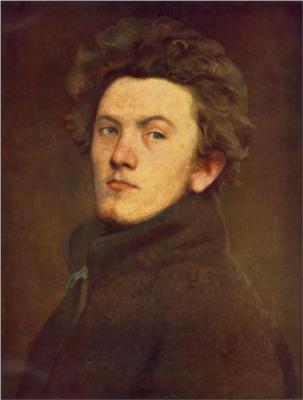
- portrait
Hungary's leading 19th-century history painter, whose canvases depicting national disasters and battles became canonical images in Hungarian cultural memory.
Museums1
Countries1
Largest reported holdingHungarian National Gallery, Budapest · 46 recorded works
Loading map…
Where to see Bertalan Szekely
Collection holdings are reported here; current display varies. Check with each museum before visiting.
-
46 recorded works
Hungarian National Gallery
Budapest, Hungary
Also here (6)

Frequently Asked Questions
Where can I see Bertalan Szekely's work?
Bertalan Szekely (1835[1]-1910[1]) was a Hungarian painter, associated with Hungarian Romanticism and academic styles. His works are primarily held in Hungarian public collections. The Hungarian National Gallery holds a number of his history paintings, such as "The Flight of King Bela IV after the Battle of Mohi" (1860[1]) and "Ladislaus Hunyadi's Farewell" (1859), as well as portraits and studies. The Szekely Bertalan Museum in Szada, Hungary, is dedicated to his life and work. This museum provides a more focused view of his artistic output. Smaller selections of his paintings may occasionally appear in temporary exhibitions at other museums in Hungary or in central Europe. However, the Hungarian National Gallery and the Szekely Bertalan Museum offer the most comprehensive access to his art. Catalogues of the Hungarian National Gallery's collection are available for further research.What should I know about Bertalan Szekely's prints?
Bertalan Szekely (1835[1]-1910[1]) was a Hungarian painter whose work included portraits and history paintings. If you are considering purchasing a print, bear in mind that the term 'print' has a specific meaning in the art world, and it is important to distinguish between an original print and a reproduction. An original print is conceived and executed by the artist as a print, often in a numbered edition, and signed. Each print is created from a plate, stone, or screen made for that purpose, making each one a 'multi-original'. The artist decides the number of prints in the edition, and each is individually numbered (e.g., 12/25). Early prints were not always numbered or signed; sometimes the artist signed the plate itself. A reproduction, however, is a copy of a work initially created in another medium, such as painting or watercolour, often produced using photomechanical means. Numbering and signing a reproduction does not make it an original print.Why are Bertalan Szekely's works important today?
Bertalan Szekely (1835[1]-1910[1]) was a Hungarian history painter whose work is relevant to discussions about art history's relationship to national identity. Szekely's career coincided with a period of increasing national consciousness in many parts of the world. Art from outside western Europe was often excluded from the established canon, and Szekely's work contributes to a broader understanding of 19th-century art beyond the traditional centres. His paintings offer insight into the artistic and cultural values of Hungary during a time of significant social and political change. By studying Szekely, we gain a deeper appreciation for the diverse range of artistic expressions that emerged during this era. His focus on historical subjects and his engagement with national themes provide a valuable perspective on the construction of Hungarian identity through art. Szekely's art encourages a more inclusive and nuanced understanding of art history.What techniques or materials did Bertalan Szekely use?
Without specific passages detailing Bertalan Szekely's methods, a comprehensive answer is difficult. However, some general observations about artistic techniques can be made. Artists consider both technique and material when creating work. Technique encompasses resourcefulness, anticipation of effects, and a sense of harmony. It involves the artist's thinking and how they approach the chosen material. The material itself can be anything "constant and organically unchanging" that the artist can manipulate. The relationship between technique and material is complex. Works of art can be created using simple techniques, or conversely, advanced techniques may not always produce successful art. Technique is a tool for achieving artistic expression. Artists adapt materials by applying their spirit and skill, modifying them according to new principles rather than natural laws.Who did Bertalan Szekely influence?
Bertalan Szekely (1835[1]-1910[1]) was a Hungarian history painter and art educator. His impact is most apparent in the generation of Hungarian artists who studied with him at the Mintarajziskola (Model Drawing School) and the Academy of Fine Arts in Budapest. Although Szekely's own artistic style was rooted in romanticism and academic painting, he encouraged his students to explore new directions. Among his pupils were Jozsef Rippl-Ronai, Janos Vaszary, and Istvan Csok. Rippl-Ronai absorbed impressionistic and post-impressionistic ideas during his time in France, and he became a leading figure in Hungarian modernism. Vaszary's work moved from academic realism to art nouveau and expressionism. Csok became known for his plein-air paintings and his adaptations of French impressionism. Szekely's emphasis on historical subjects and his technical skill provided a solid foundation for his students. His open-minded approach to teaching allowed them to develop their individual styles and to contribute to the development of modern Hungarian art.Who influenced Bertalan Szekely?
Bertalan Szekely (1835[1]-1910[1]) was a Hungarian history painter and art instructor. His early artistic education occurred at the Academy of Fine Arts in Vienna, where he studied with Karl Rahl. Rahl, a history painter himself, promoted a style rooted in academic tradition. Szekely's later work moved beyond straightforward academic painting. He travelled to Munich, where he encountered the work of Carl von Piloty. Piloty's dramatic, narrative history paintings had a considerable impact on Szekely's developing style. This influence is visible in Szekely's movement toward more dynamic compositions and heightened emotional expression. Szekely's exposure to French Romanticism, particularly the work of Eugène Delacroix, further shaped his artistic direction. Delacroix's emphasis on colour and expressive brushwork appealed to Szekely. These influences helped him to create a distinctive approach to history painting, blending academic training with Romantic sensibilities.What is Bertalan Szekely's most famous work?
Bertalan Szekely (1835[1]-1910[1]) was a Hungarian painter, whose most well-known work is likely *The Discovery of the Corpse of Louis II* (1859[1]). This painting depicts the aftermath of the Battle of Mohács in 1526. Louis II, King of Hungary and Bohemia, died fleeing the battle against the Ottoman Empire. Szekely's painting captures the moment when the king's body was found some weeks later. The artwork is noted for its dramatic composition and use of colour to convey the tragedy of the event. It reflects a broader interest in Hungarian history and national identity that was common among artists of the time. Szekely created other history paintings, but *The Discovery of the Corpse of Louis II* remains his most recognised and reproduced work.What style or movement did Bertalan Szekely belong to?
Without reference to specific paintings, it is difficult to place Bertalan Szekely within a single style. However, some context can be provided regarding artistic movements of the period. Between 1580 and 1610, portraiture in Holland grappled with depicting physical movement and relating figures within the picture plane. Some artists followed the Italian model, controlling movement and line. Others explored the human body's potential for movement to express interior states of feeling in physical terms. Cornelis Ketel introduced diagonals and depictions of emotional states to group portraiture. Earlier group portraits featured stiffly lined-up figures, but Ketel's work incorporated diagonals created by weapons, poses, and tilted heads. These diagonals created an impression of artificial movement. Mannerism, which began in Italy with Michelangelo, spread to Holland, especially in the work of Maerten van Heemskerck and Cornelis Cornelisz. It specialised in figures in extreme positions, as though torn by inner conflict.
Sources
Where to See guide aggregates verified holdings of Bertalan Szekely's works across the following collections.
- [1] wikipedia Wikipedia: Bertalan Szekely Used for: biography.
- [2] book By Jeffrey Taylor, In Search of the Budapest Secession: The Artist Proletariat and the Modernism’s rise in the Hungarian Art Market, 1800-1914 Used for: biography.
- [3] book 1892-1968, Panofsky, Erwin,, Tomb sculpture: four lectures on its changing aspects from ancient Egypt to Bernini Used for: biography, stylistic analysis.
Editorial overseen by Solis Prints. Sources verified 2026-09-30. Click a source for details, or hover over [N] in the page above to preview.
Editorial standardsMethodologyCorrectionsAI disclosureAbout the editorial team