



About Ary Scheffer
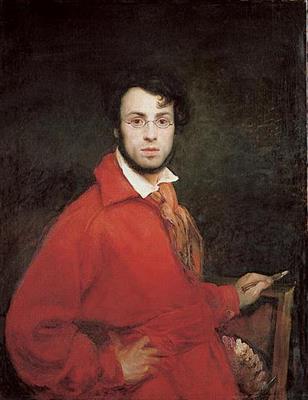
Where to see Ary Scheffer
Ranked by works you can see in person.
-
 15 works
Louvre
Paris, France
-
9 works
National Museum in Warsaw
Warsaw, Poland

-
8 works
Museum of the History of France
Versailles, France
-
5 works
Condé Museum
Chantilly, France
-
5 works
Amsterdam Museum
Amsterdam, Netherlands
-
5 works
Wallace Collection
London, United Kingdom
-
4 works
Museum Boijmans Van Beuningen
Rotterdam, Netherlands
-
4 works
Musée des Beaux-Arts d'Angers
Angers, France
-
3 works
Museum of Grenoble
Grenoble, France
-
3 works
Palace of Versailles
Versailles, France


View all 51 museums
-
3 works
Hermitage Museum
Saint Petersburg, Russia
-
3 works
National Gallery of Victoria
Melbourne, Australia
-
3 works
Musée des Beaux-Arts de la ville de Paris
Paris, France
-
3 works
Centraal Museum
Utrecht, Netherlands
-
2 works
Stedelijk Museum Amsterdam
Amsterdam, Netherlands
-
2 works
National Gallery
London, United Kingdom
-
 2 works
Museum of Fine Arts of Reims
Reims, France
-
2 works
Musée des Beaux-Arts de Caen
Caen, France
-
2 works
Hamburger Kunsthalle
Hamburg, Germany
-
2 works
Los Angeles County Museum of Art
Los Angeles, United States
-
2 works
Musée Carnavalet
Paris, France
-
1 works
Munich Central Collecting Point
Munich, Germany
Also here (6)
-
1 works
Musée des Beaux-Arts et d'Archéologie de Besançon
Besançon, France
-
1 works
Musée Cantini
Marseille, France
-
1 works
Museum of Fine Arts Boston
Boston, United States
-
1 works
Carnegie Museum of Art
Pittsburgh, United States
-
1 works
Wallraf–Richartz Museum
Cologne, Germany
-
1 works
Musée Magnin
Dijon, France
-
1 works
Walker Art Gallery
Liverpool, United Kingdom
-
1 works
Klassik Stiftung Weimar
Weimar, Germany
Also here (3)
-
1 works
National Museum of Western Art
Tokyo, Japan
-
1 works
Musée des Beaux-Arts de Bordeaux
Bordeaux, France
-
1 works
Nantes Museum of Arts
Nantes, France
-
1 works
Manchester Art Gallery
Manchester, United Kingdom
-
 1 works
Musée des beaux-arts de Marseille
Marseille, France
-
1 works
Rijksmuseum
Amsterdam, Netherlands
-
1 works
Sudley House
Liverpool, United Kingdom
-
1 works
Palais des Beaux-Arts de Lille
Lille, France
-
1 works
Harvard Art Museums
Cambridge, United States
-
1 works
Fries Museum
Leeuwarden, Netherlands
-
1 works
Art Institute of Chicago
Chicago, United States
-
1 works
Victoria and Albert Museum
London, United Kingdom
-
1 works
RISD Museum
Providence, United States
-
 1 works
Musée départemental de l'Oise
Beauvais, France
-
1 works
National Trust
Swindon, United Kingdom
-
1 works
Detroit Institute of Arts
Detroit, United States
-
1 works
Minneapolis Institute of Art
Minneapolis, United States
-
1 works
National Gallery of Ireland
Dublin, Ireland
Also here (6)
-
1 works
Yale University Art Gallery
New Haven, United States
-
1 works
National Portrait Gallery
London, United Kingdom


1 more museum holds works by Ary Scheffer with smaller collections, not listed here.
Frequently Asked Questions
Where can I see Ary Scheffer's work?
It is difficult to say with certainty where specific works by Ary Scheffer[9] are located. However, museum directories may provide some guidance. For example, the Musées Royaux des Beaux-Arts de Belgique, located in Brussels, has works by J-L David and Vuillard. The Musée Condé, in Chantilly, France, holds works by Limbourg and De Troy. The Musée d’Orsay, in Paris, includes paintings by Bazille, Boudin, Cassatt, Van Gogh, Manet, Millet, Morisot, Orpen, Pissarro, Renoir, Signac, and Sisley. The Museo Nacional del Prado, in Madrid, has paintings by Baldung, Bassano, Domenichino, Dürer, Gaddi, Giordano, Murillo, Ribera, Velazquez, Veronese, Vouet, and Van der Weyden. The National Gallery of Scotland, in Edinburgh, has works by Bellotto, Elsheimer, Massys, Raeburn, Ramsay, Titian, and Wilkie.What should I know about Ary Scheffer's prints?
Ary Scheffer[9]'s paintings were often reproduced as prints, a common practice in the Victorian era that increased artists' visibility and broadened their audience. The printsellers of the period offer some information about the types of prints produced. Artist Proofs, for example, did not include an engraved title. Instead, they had an Association stamp on the lower left margin, with the publication line written minutely above or below the work. These were sometimes signed in pencil by both the artist and engraver. Lettered Proofs had the title of the work lightly engraved, in a manner that allowed it to be erased when the title was finalised. Presentation Proofs, of which a maximum of twenty-five could be printed, were given to the painter and engraver. Proofs before letters lacked an engraved title, but included the names of the artist and engraver printed near the bottom, along with the Association stamp on the lower right margin. Remarque Artist Proofs usually featured a device in the margin.Why are Ary Scheffer's works important today?
Ary Scheffer[9]'s paintings are historically significant because they reflect a nineteenth-century shift away from traditional history painting. During this period, some critics felt art was abandoning elevated subjects from history and religion. One such critic, Clément de Ris, suggested this change reflected contemporary tastes that found less pleasure in contemplating such subjects. This perspective suggests a transition towards what he termed the more humble subjects of naturalist painting. Scheffer's work, therefore, provides insight into the artistic values and cultural anxieties of his time. His art allows us to analyse the changing attitudes toward subject matter and the role of art in society during the nineteenth century. His paintings offer a window into a period when the established hierarchy of genres was being questioned, and new artistic directions were emerging.What techniques or materials did Ary Scheffer use?
Ary Scheffer[9]'s training involved a structured sequence. Students typically began around ages 15 to 18, with training lasting at least five years. The day started early, sometimes as early as 7am for drawing classes in ateliers, with the newest student arriving even earlier to prepare the studio. Afternoons were often spent at the Louvre, copying Old Masters to learn techniques and emulate compositional ideas. Students also copied engravings and lithographs. Advanced students could attend drawing classes at the École des Beaux-Arts, working from casts or live models. In summer, outdoor work was encouraged to develop observational skills. Instruction began with drawing from sculptures, usually white plaster casts of antique works, to learn form and monochrome gradations. Only after proficiency in drawing was achieved were students permitted to use colour. Masters introduced painting materials, after which students copied painted heads; Venetian or Flemish artists were often chosen for their handling and colour. Students then worked from live heads before attempting the nude model. The first stage in painting involved thinly painted lines and half-tones, called the ebauche, which had to be 'leaner' (less oily) than the final reworking to prevent cracking.Who did Ary Scheffer influence?
Ary Scheffer[9]'s artistic impact is noted in nineteenth-century sentimentalism. Artists such as Jean-Auguste-Dominique Ingres also had an impact, with pupils and followers orienting to his examples. Hippolyte Flandrin, for example, followed Ingres in his Christian cycles. Ingres influenced younger artists of the Restauration period and the Second Empire under Napoleon III. Joseph-Désiré Court, Thomas Couture, Adolphe-William Bouguereau, and Paul Baudry are among those influenced. Ingres's scenes of harems and seraglios influenced the Orientalists, such as Horace Vernet, Alexandre Cabanel, and Paul Delaroche. Gustave Courbet also proved an inspiration for modern painters. Paul Cézanne and de Kooning both identified Courbet as a source of inspiration. Cézanne's Bridge at Maincy invokes Courbet's Shaded Stream. Courbet's influence can be observed visually, especially with artists working in an abstract mode.Who influenced Ary Scheffer?
Identifying specific influences on Ary Scheffer[9] is difficult. Claims of artistic originality became more common in the 19th century. Some theorists argued that great artists were self-generated; they were "the sons of no one". However, other approaches suggest influence is unavoidable. An aspiring novelist in Honoré de Balzac's *Lost Illusions* is told that if he does not want to ape Walter Scott, he must develop an individual style. Some atelier masters who remained outside the Academy structure still promoted original talent. Charles Gleyre (whose pupils included Monet, Renoir, Sisley and Bazille) encouraged outdoor studies. Thomas Couture (whose pupil was Manet) promoted unconventional attitudes to light and shade. Couture encouraged his students to work rapidly and simply, and to retain the first vivid impression. Another influential figure was Eugène Delacroix, regarded as an independent artist. He founded no school of followers, but his example was important to many younger independent artists, particularly the Impressionists.What is Ary Scheffer's most famous work?
It is difficult to identify one single work as Ary Scheffer[9]'s most famous, but several paintings are often cited. Scheffer enjoyed considerable success during his lifetime, particularly for his sentimental and religious subjects. He produced many portraits of notable figures, including Queen Marie Amélie; these added to his public profile. Two paintings that recur in discussions of his work are *The Mignons Regret* (1836[4]), inspired by Goethe's *Wilhelm Meister's Apprenticeship*, and *Christus Consolator* (1837). These paintings typify Scheffer's style, which combined Romantic themes with a polished, academic technique. They also reflect the religious and literary tastes of the period. Other significant works include his depictions of Francesca da Rimini and his many versions of Christ and Saint Augustine. The popularity of Scheffer's paintings fluctuated after his death, but his work remains an interesting example of 19th-century academic art.
Sources
Where to See guide aggregates verified holdings of Ary Scheffer's works across the following collections.
- [1] museum Museum of Fine Arts of Reims Used for: museum holdings.
- [2] museum Musée des beaux-arts de Marseille Used for: museum holdings.
- [3] museum Musée départemental de l'Oise Used for: museum holdings.
- [4] wikipedia Wikipedia: Ary Scheffer Used for: biography.
- [5] book Allison Lee Palmer, Historical Dictionary of Neoclassical Art and Architecture Used for: biography, stylistic analysis.
- [6] book Palmer, Allison Lee, Historical Dictionary of Neoclassical Art and Architecture Used for: biography, stylistic analysis.
- [7] book Jean-Honoré Fragonard, Masters of Art - Jean-Honoré Fragonard Used for: stylistic analysis.
- [8] book Neoclassicism and romanticism : architecture, sculpture, painting, drawings, 1750-1848 Used for: biography.
- [9] museum Ary Scheffer Used for: biography.
- [10] museum Ary Scheffer (1795 - 1858) Used for: biography.
- [11] museum Self-portrait at the age of 43 Used for: museum holdings.
- [12] museum Witch of Endor Used for: museum holdings.
Editorial overseen by Solis Prints. Sources verified 2026-09-24. Click a source for details, or hover over [N] in the page above to preview.
Editorial standardsMethodologyCorrectionsAI disclosureAbout the editorial team