

About Albert Bitran
French · 1931–2018
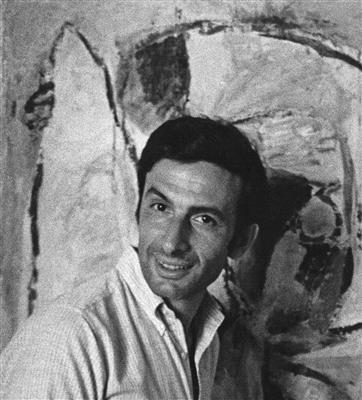
Istanbul-born French[1] abstract painter of the postwar School of Paris, known for fusing geometric rigour with lyrical colour.
Museums6
Countries4
Largest reported holdingKing Baudouin Foundation, Brussels · 3 recorded works
Loading map…
Where to see Albert Bitran
Collection holdings are reported here; current display varies. Check with each museum before visiting.
-
3 recorded works
King Baudouin Foundation
Brussels, Belgium
-
1 recorded work
Musée d'art moderne de Paris
Paris, France
Also here (6)


-
1 recorded work
Museum de Fundatie
Heino, Netherlands
-
1 recorded work
Musée National d'Art Moderne
Paris, France
-
1 recorded work
Centraal Museum
Utrecht, Netherlands
-
1 recorded work
Statens Museum for Kunst
Copenhagen, Denmark


Frequently Asked Questions
What should I know about Albert Bitran's prints?
Albert Bitran created prints as part of his wider artistic practice. When considering Bitran's prints, it is useful to understand some basic principles of printmaking. An original print is conceived as a print and made solely as a print. Each one in a limited edition is considered an original, made from a plate or screen created by the artist. The artist, or someone working under their direction, inks and pulls each print individually. The number of prints is decided by the artist, and each is numbered sequentially (for example, 12/25 means it is the 12th print in an edition of 25). The artist's signature indicates their approval of the finished print. A reproduction, on the other hand, is a copy of a work originally created in another medium, such as painting, and is usually produced using photomechanical means. The print market operates according to certain conventions, such as numbering and signing, which add value if followed correctly. These conventions are not legally enforced, but are widely respected among printmakers.What techniques or materials did Albert Bitran use?
While information on Albert Bitran's specific techniques is limited, we can discuss some common materials and approaches used by artists in general. Oil paint is a frequently used medium. The artist often starts with a primed cotton duck canvas, sometimes adding gesso for texture. They may stretch their own canvases or buy them ready-made. Oil sticks, combining oil paint and pastel properties, can be applied directly or diluted with a medium. For shading, artists use techniques such as hatching (parallel strokes), crosshatching (layered strokes at angles), and blending to smooth transitions. Acrylic paint, diluted with water for a flat wash, is another option. These methods allow for a range of textures and effects, from defined lines to soft shading and mottled surfaces.Who did Albert Bitran influence?
It is difficult to say precisely who Albert Bitran influenced. Scholarship has focused more on his own influences, and on his relationships with his contemporaries. Some art historians have observed a tendency for artists to draw inspiration from earlier generations, as with Youngerman's interest in O'Keeffe's organic imagery. Others note the increasing individuation and personalisation of art since the 1960s; this makes it harder to group artists into schools or to identify clear lines of influence. While it is tempting to draw parallels between artists, such comparisons can obscure the nuances of individual expression. As one art historian noted, to understand current art, "we must learn how each artist sees himself and tries to fulfil his own sense of identity". This focus on individual artistic vision makes it challenging to pinpoint specific artists who were directly influenced by Bitran's work.What is Albert Bitran's most famous work?
It is difficult to name Albert Bitran's single "most famous work" definitively. He produced a large body of abstract paintings, prints, and sculptures throughout his career, and his notability rests more on the character of his overall artistic output than on one specific piece. Bitran's art is characterised by its abstract expressionism, often incorporating textured surfaces and muted colour palettes. His work frequently explores themes of memory, history, and cultural identity, drawing inspiration from his personal background and travels. While no individual work has achieved singular, iconic status, examples of his paintings can be found in numerous public and private collections. These include institutions in France, where he spent much of his career, and in his native Turkey. Examining catalogues from major exhibitions that included Bitran's art offers a broader view of his recognised pieces.What style or movement did Albert Bitran belong to?
Albert Bitran (born 1921, Istanbul; died 2018[1], Paris) was associated with the School of Paris, though this is not a formal movement with a manifesto or agreed-upon aesthetic. Instead, the term 'School of Paris' loosely describes the community of artists, many of them émigrés, working in Paris from the 1940s onward. These artists, while working in proximity, did not share a single style. Their work is often figurative, but it can incorporate aspects of abstraction. Many artists associated with the School of Paris engaged with post-Cubist and Surrealist ideas. Bitran's background as an émigré may qualify him as part of this general grouping of artists. He moved from Turkey to Paris in 1949[1] to study at the Académie de la Grande Chaumière and also at the École du Louvre.What is Albert Bitran known for?
Albert Bitran is known for his paintings that sought to reconcile geometric rigour with an openly emotional palette. By 1958[1], his work was identified with Lyrical Abstraction and the School of Paris.
Sources
Where to See guide aggregates verified holdings of Albert Bitran's works across the following collections.
- [1] wikipedia Wikipedia: Albert Bitran Used for: biography.
- [2] book guggenheim-guhe00solo Used for: biography.
- [3] book guggenheim-twentycontempora00dotr Used for: biography.
- [4] book Landauer, Susan, The not-so-still life : a century of California painting and sculpture Used for: biography.
Editorial overseen by Solis Prints. Sources verified 2026-09-30. Click a source for details, or hover over [N] in the page above to preview.
Editorial standardsMethodologyCorrectionsAI disclosureAbout the editorial team