



About Abbott Handerson Thayer
- landscape painting
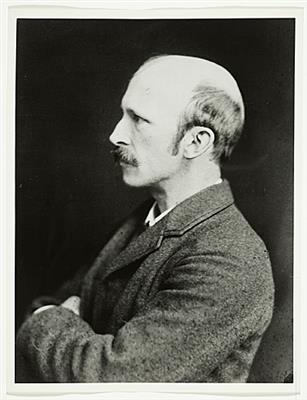
American[1] Gilded Age painter celebrated for his angel series, and the originator of the countershading camouflage theory that bears his name.
Where to see Abbott Handerson Thayer
Collection holdings are reported here; current display varies. Check with each museum before visiting.
-
44 recorded works
Smithsonian American Art Museum
Washington D.C., United States
-
5 recorded works
Brooklyn Museum
New York City, United States


-
5 recorded works
Museum of Fine Arts Boston
Boston, United States
-
3 recorded works
Harvard Art Museums
Cambridge, United States
-
3 recorded works
Metropolitan Museum of Art
New York City, United States
-
3 recorded works
Vanderbilt Museum of Art
Nashville, United States
-
2 recorded works
New Britain Museum of American Art
New Britain, United States
-
2 recorded works
Cleveland Museum of Art
Cleveland, United States
-
2 recorded works
National Gallery of Art
Washington D.C., United States
-
2 recorded works
Indianapolis Museum of Art
Indianapolis, United States


View all 20 museums
-
2 recorded works
RISD Museum
Providence, United States
-
1 recorded work
Milwaukee Art Museum
Milwaukee, United States
-
1 recorded work
Toledo Museum of Art
Toledo, United States
-
1 recorded work
Buffalo AKG Art Museum
Buffalo, United States
-
1 recorded work
Freer Gallery of Art
Washington D.C., United States
-
1 recorded work
Princeton Art Museum
Princeton, United States
-
1 recorded work
Museo de Arte de Worcester
Worcester, United States
-
1 recorded work
Art Institute of Chicago
Chicago, United States
-
1 recorded work
Detroit Institute of Arts
Detroit, United States
-
1 recorded work
Los Angeles County Museum of Art
Los Angeles, United States


Frequently Asked Questions
Where can I see Abbott Handerson Thayer's work?
Abbott Handerson Thayer's work can be viewed in several locations. In the United States, these include the Metropolitan Museum of Art in New York; the Los Angeles County Museum of Art (LACMA); the Minneapolis Institute of Arts; the Museum of Modern Art, also in New York; the Virginia Museum of Fine Arts in Richmond; the Hirshhorn Museum and Sculpture Garden in Washington, DC; the National Gallery of Art, also in Washington; the National Museum of American[1] Art, again in Washington; the Philadelphia Museum of Art; the Yale University Art Gallery in New Haven, CT; and the Charles Hosmer Morse Museum of American Art in Winter Park, Florida. Outside the United States, Thayer's art may be viewed at the Royal Ontario Museum in Toronto.What should I know about Abbott Handerson Thayer's prints?
Abbott Handerson Thayer is best known for his paintings, particularly his idealised figures of women and children and his innovative depictions of protective camouflage in nature. Prints after his works, while not as numerous as his paintings, offer a more accessible way to engage with his artistic vision. Many of Thayer's prints are photogravures, a process that captures the subtle tonal variations of his paintings. These prints often feature his most popular subjects: angelic women, often with wings, and children in classical poses. They reflect his interest in beauty, spirituality, and the idealised form. It is worth noting that Thayer was very particular about the reproduction of his art. He closely supervised the printing process to ensure the prints accurately represented the colours and details of his original works. This makes them desirable to collectors. When examining Thayer's prints, look for the quality of the printing, the clarity of the image, and any signs of fading or damage.Why are Abbott Handerson Thayer's works important today?
The importance of artists like Abbott Handerson Thayer can be understood by examining the cultural shifts that have occurred since his time. A century ago, occultism and esoteric traditions were supported by the upper classes; figures such as Sir William Crookes, Victor Hugo, and Sir Arthur Conan Doyle were among the fervent subscribers to these beliefs. Today, however, occultists are often disparaged by the upper classes, including art critics and historians. Since World War I, the cultural prestige once enjoyed by occultism has been largely forgotten, along with its effects on the arts. This shift in cultural values means that we must be cautious about imposing postmodernist expectations on early modernist values. By understanding the historical context in which Thayer worked, we can gain a deeper appreciation for his artistic choices and the cultural forces that shaped his work.Who influenced Abbott Handerson Thayer?
Abbott Handerson Thayer's artistic development involved influences from several sources. As a student in Paris during the 1870s, he was exposed to academic training. He studied at the École des Beaux-Arts, where he learned the established techniques of figure drawing and painting. Thayer admired the Old Masters, particularly Diego Velázquez. Velázquez's approach to realism and his subtle handling of colour had an impact on Thayer's portrait style. Thayer also appreciated the work of painters like Jean-Auguste-Dominique Ingres. In the United States, Thayer was part of the artistic circle that included painters such as George de Forest Brush and Dennis Miller Bunker. These artists shared an interest in classical ideals and figure painting. They encouraged one another's artistic explorations. The American[1] Pre-Raphaelites, with their attention to detail and naturalism, also resonated with Thayer's aesthetic sensibilities. His exposure to these different styles contributed to the formation of his own distinctive artistic vision.What is Abbott Handerson Thayer's most famous work?
Abbott Handerson Thayer is best known for his paintings of winged figures, often young women or children. These ethereal works blend classical idealism with a sentimental, American[1] aesthetic. His most recognised painting is probably *Angel* (1889[1]), also known as *Angel Holding a Lily*. It depicts Thayer's daughter, Mary, posed as an angel in a white gown and large wings. The work is part of the Smithsonian American Art Museum's collection. Thayer created several versions of this subject, and these paintings established his reputation for portraying idealised womanhood. Thayer's interest in angelic figures stemmed from his broader artistic concerns. These included exploring themes of innocence, purity, and spiritual beauty. He aimed to elevate the everyday, imbuing his subjects with a sense of timeless grace. While he produced portraits, figure studies, and some paintings of animals, his angelic figures remain his most popular and frequently reproduced works. They cemented his place in late 19th- and early 20th-century American art.What style or movement did Abbott Handerson Thayer belong to?
Abbott Handerson Thayer's artistic affiliations are complex, as his work incorporates elements of both the late Academic tradition and the emerging Aesthetic movement. He is best known for his paintings of idealized figures, often women with wings, set within atmospheric outdoor settings. These works display a preoccupation with beauty and symbolism that aligns with Aestheticism. However, Thayer also maintained connections to academic art through his emphasis on classical ideals and his meticulous technique. His approach to the natural world, while not strictly Impressionistic, shared an interest in capturing light and atmosphere. He was interested in simplification, or the translation of nature's complexity into readable shapes and patterns. Though he defied easy categorisation, Thayer's art represents a blend of traditional skill and modern aesthetic sensibilities.What was Abbott Handerson Thayer known for?
Abbott Handerson Thayer (1849[1]-1921[1]) was an American[1] painter. He is known for his paintings of women, often depicted with wings, blurring the lines between portraiture and allegorical figures. Thayer grew up during a period when American art was moving away from earlier styles. Some artists painted local subject material, while others, like Albert Bierstadt, created grand panoramic scenes. Thayer's work diverged from both these trends. He developed a unique style, often painting figures in a soft, ethereal manner. These paintings often evoke a sense of idealism and beauty. Although he achieved success in his lifetime, he also faced periods of financial struggle. His work can be seen as a reflection of his interest in the decorative aspects of painting, and he explored themes of femininity and nature.What is Abbott Handerson Thayer known for?
Abbott Handerson Thayer is known for painting women with wings. He also developed Thayer's Law, the countershading principle of camouflage, and co-authored Concealing-Coloration in the Animal Kingdom in 1909[1].
Sources
Where to See guide aggregates verified holdings of Abbott Handerson Thayer's works across the following collections.
- [1] wikipedia Wikipedia: Abbott Handerson Thayer Used for: biography.
- [2] book Beard, Lee, 1973- author, Butler, Adam, author; Van Cleave, Claire, author; Fortenberry, Diane, author; Stirling, Susan, author, Beard, Lee, 1973- author, Butler, Adam, author; Van Cleave, Claire, author; Fortenberry, Diane, author; Stirling, Susan, author - The Art Book_ New Edition, Mini Format Used for: biography.
- [3] book Penelope J.E. Davies, Walter B. Denny, Frima Fox Hofrichter, Joseph Jacobs, Ann S. Roberts, David L. Simon, Janson's History of Art_ The Western Tradition (8th Edition) Used for: biography.
- [4] book Masterpieces of western art : a history of art in 900 individual studies from the Gothic to the present day Used for: biography.
Editorial overseen by Solis Prints. Sources verified 2026-09-30. Click a source for details, or hover over [N] in the page above to preview.
Editorial standardsMethodologyCorrectionsAI disclosureAbout the editorial team