



About Barent Fabritius
Younger brother of Carel Fabritius and likely Rembrandt pupil, noted for emotionally direct Biblical and mythological scenes in Amsterdam.
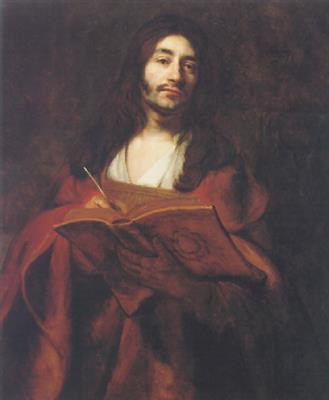
Where to see Barent Fabritius
Collection holdings are reported here; current display varies. Check with each museum before visiting.
-
5 recorded works
Rijksmuseum
Amsterdam, Netherlands
-
2 recorded works
Städel Museum
Frankfurt, Germany


-
2 recorded works
Louvre
Paris, France
-
2 recorded works
Museum Boijmans Van Beuningen
Rotterdam, Netherlands
-
2 recorded works
National Gallery
London, United Kingdom
-
2 recorded works
Hermitage Museum
Saint Petersburg, Russia
-
1 recorded work
Musée des Beaux-Arts de Rouen
Rouen, France
-
1 recorded work
Museum of Fine Arts Boston
Boston, United States
-
1 recorded work
Gemäldegalerie Berlin
Berlin, Germany
-
1 recorded work
Museum of John Paul II Collection
Warsaw, Poland


View all 16 museums
-
1 recorded work
Hessen Kassel Heritage
Kassel, Germany
-
1 recorded work
Landesmuseum Hannover
Hanover, Germany
-
1 recorded work
Galleria Sabauda
Turin, Italy
-
1 recorded work
Metropolitan Museum of Art
New York City, United States
-
1 recorded work
Fine Arts Museums of San Francisco
San Francisco, United States
-
1 recorded work
National Museum in Warsaw
Warsaw, Poland


Frequently Asked Questions
Where can I see Barent Fabritius's work?
Barent Fabritius's paintings can be found in various collections. These include the Mauritshuis and the Rijksmuseum in Amsterdam, as well as the Museum Bredius in The Hague. Other locations include the Hamburger Kunsthalle, the Sinebrychoff Art Museum in Helsinki, and the Hermitage Museum in Leningrad. A number of works are held at the Staatliche Kunstsammlungen in Kassel. Several works are held in private collections. In the United States, his paintings can be viewed at the Detroit Institute of Arts, the Cincinnati Art Museum, the Cleveland Museum of Art, and the Nelson Gallery-Atkins Museum in Kansas City. Other US locations include the Art Institute of Chicago, the Wadsworth Atheneum in Hartford, the Worcester Art Museum, and the Toledo Museum of Art.What should I know about Barent Fabritius's prints?
Barent Fabritius did not produce a large number of prints; his painted oeuvre is better known. However, he did work in the print medium, favouring etching and engraving. Fabritius was active during a period when printmaking was undergoing significant changes. Artists like Rembrandt van Rijn, a contemporary, explored etching as a primary form of artistic expression, rather than simply a reproductive method. Rembrandt's approach involved a creative process with many states or corrections, demonstrating a high level of care and energy. While it is not certain whether Fabritius adopted a similar method, it is known that Rembrandt owned prints by artists such as Dürer and Lucas van Leyden. These purchases reflected his artistic interests and his activities as an art dealer. Rembrandt also bought multiple impressions of some prints, possibly for resale. This demonstrates the market for prints in the Netherlands during the 17th century.Why are Barent Fabritius's works important today?
Carel Fabritius (1622-1654[1]) was a Dutch[1] painter with a short but influential career. He trained in Amsterdam in Rembrandt's studio around 1641[1]-1643. Later, he moved to Delft and joined the Guild of St Luke in 1652. His life and work were cut short by an explosion at the Delft arsenal in 1654, which destroyed much of the city and his studio. Only a few of his paintings survived. Fabritius's importance lies in his artistic originality and his impact on other painters. His paintings show the influence of Rembrandt, particularly in the use of rhetorical gestures and chiaroscuro. However, he departed from Rembrandt's style by placing his subjects against light backgrounds, as seen in his 1648 *Portrait of a Man*. Fabritius is known to have created perspective murals, now lost, that were considered innovative. He influenced Delft painters such as Pieter de Hooch, Emanuel de Witte, and Johannes Vermeer, who owned at least three paintings by Fabritius. Fabritius's use of cool daylight, perspective, and ability to create monumentality in small compositions had a significant impact on these artists.What techniques or materials did Barent Fabritius use?
Barent Fabritius's techniques are not widely documented, but analysis of his contemporaries and artistic context provides some insight. Like other Baroque painters, Fabritius likely employed a limited palette for each stage of a work. This approach involved applying colours within carefully marked areas, following a set layering or underpainting technique. Rembrandt, a key influence, systematically completed paintings from background to foreground, using a monochromatic underpainting. He built up pictures from back to front with delicate glazes, allowing light to permeate the backgrounds. Body colours were then generously applied to mimic solid forms. Jan van Scorel, another artist of the period, often painted wet-in-wet, using natural ultramarine and a blue-over-rose structure, possibly influenced by Italian methods. Maarten van Heemskerck, Scorel's assistant, initially followed Scorel's practice, using a thin lead white layer over the ground, with black chalk underdrawing on top. These techniques aimed for tonal unity, requiring careful colour management to create spatial coherence.Who did Barent Fabritius influence?
Barent Fabritius (1624[1]-1673[1]) was a Dutch[1] Golden Age painter. He is thought to have influenced his younger brother, Johannes Fabritius, also a painter. Nicolaes Maes may also have been influenced by Fabritius. Barent Fabritius's style is related to that of Rembrandt. Some scholars believe he studied with Rembrandt in the 1640s, but there is no firm documentary evidence for this apprenticeship. His paintings share certain characteristics with Rembrandt's work, such as dramatic lighting and an interest in portraying human emotions. However, Fabritius developed his own individual approach. His influence is most apparent in the work of artists who adopted similar subject matter, such as biblical scenes and genre paintings depicting everyday life. These paintings often feature figures in domestic settings, rendered with a sensitivity to detail and an emphasis on naturalism. He was particularly skilled at capturing the textures of fabrics and the play of light on surfaces. His impact can be seen in the work of painters who followed in this tradition, creating intimate and engaging portrayals of the world around them.What is Barent Fabritius's most famous work?
Carel Fabritius, a Dutch[1] artist born in Middenbeemster in 1622, is considered one of Rembrandt's most gifted pupils. Fabritius reversed Rembrandt's technique, painting dark objects against light backgrounds. He also focused on visual accuracy. Fabritius had an impact on Delft painters such as Pieter de Hooch, Emanuel de Witte, and Johannes Vermeer. Among the small number of his surviving works, The Goldfinch (1654[1]; The Hague, Mauritshuis) is perhaps his best-known painting. It depicts a goldfinch perched on a green stand, set against a creamy background. It may have been a shop sign or furniture insert. Fabritius died in 1654, in an explosion that destroyed a portion of Delft. At the time, he was reportedly working on a portrait.What style or movement did Barent Fabritius belong to?
Barent Fabritius (1624[1]-1673[1]) was a Dutch[1] Golden Age painter. He was the younger brother of Carel Fabritius, who was a student of Rembrandt in Amsterdam. Barent Fabritius also adopted some of Rembrandt's artistic characteristics. Carel entered Rembrandt’s studio around 1641[1], remaining there until about 1643. His earliest known painting, Raising of Lazarus (1643), shows the influence of Rembrandt through its rhetorical gestures and marked chiaroscuro. The painting is based on Rembrandt’s etching of the same subject (1642). Age, profession, and even character could be interpreted from one’s movement. Individuality was related to a figure’s distinctive activity. Fabritius's Portrait of a Man (1648) is thought to be a self-representation. He wears work clothes in the painting as a reference to the name Fabritius; the Latin word 'faber' means smith or craftsman.What was Barent Fabritius known for?
Carel Fabritius (1622-1654[1]) was a Dutch[1] painter. Born in Midden-Beemster, he apprenticed in Amsterdam in Rembrandt’s studio around 1641[1]-1643. He then moved to Delft, joining the Guild of St Luke in 1652. His life was cut short in 1654, when an explosion at the Delft arsenal destroyed much of the city. Many of his paintings were lost at that time; only a small number survive. Fabritius is known for reversing Rembrandt’s technique of painting light against dark. Instead, Fabritius painted dark objects against a light background. His attention to visual accuracy may have influenced Jan Vermeer, thought to be his student. Surviving works include 'The Raising of Lazarus' (1643), 'Portrait of a Man' (1648), 'View of Delft' (1652), and 'The Goldfinch' (1654). 'View of Delft' may have been created using a camera obscura, which explains its distortions. Samuel van Hoogstraten, a fellow student from Rembrandt’s studio, noted that Fabritius painted murals that displayed a mastery of perspective.
Sources
Where to See guide aggregates verified holdings of Barent Fabritius's works across the following collections.
- [1] wikipedia Wikipedia: Barent Fabritius Used for: biography.
- [2] book Beard, Lee, 1973- author, Butler, Adam, author; Van Cleave, Claire, author; Fortenberry, Diane, author; Stirling, Susan, author, Beard, Lee, 1973- author, Butler, Adam, author; Van Cleave, Claire, author; Fortenberry, Diane, author; Stirling, Susan, author - The Art Book_ New Edition, Mini Format Used for: biography, stylistic analysis.
- [3] book Lilian H. Zirpolo, Historical Dictionary of Baroque Art and Architecture Used for: biography, stylistic analysis.
- [4] book John Michael Montias, Vermeer and His Milieu _ A Web of Social History Used for: biography.
- [5] book John Michael Montias, Vermeer and His Milieu _ A Web of Social History Used for: biography, stylistic analysis.
Editorial overseen by Solis Prints. Sources verified 2026-09-30. Click a source for details, or hover over [N] in the page above to preview.
Editorial standardsMethodologyCorrectionsAI disclosureAbout the editorial team