



About Adolphe Joseph Thomas Monticelli
Marseille painter whose lavish impasto and incandescent colour palette directly inspired Van Gogh, who considered himself Monticelli's artistic heir.
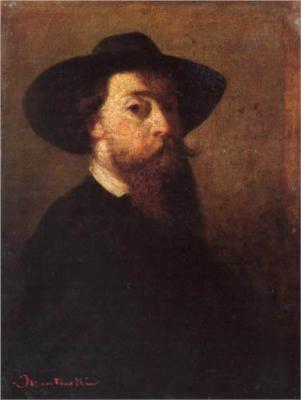
Where to see Adolphe Joseph Thomas Monticelli
Collection holdings are reported here; current display varies. Check with each museum before visiting.
-
14 recorded works
Burrell Collection
Glasgow, United Kingdom
-
13 recorded works
National Gallery
London, United Kingdom


-
 10 recorded works
Musée des beaux-arts de Marseille
Marseille, France
-
10 recorded works
Musée d'Orsay
Paris, France
-
8 recorded works
National Galleries Scotland
Edinburgh, United Kingdom
-
8 recorded works
Art Institute of Chicago
Chicago, United States
-
8 recorded works
The Phillips Collection
Washington D.C., United States
-
7 recorded works
Rijksmuseum
Amsterdam, Netherlands
-
6 recorded works
Museum Boijmans Van Beuningen
Rotterdam, Netherlands
-
6 recorded works
National Gallery of Art
Washington D.C., United States


View all 96 museums
-
6 recorded works
Centraal Museum
Utrecht, Netherlands
-
5 recorded works
Stedelijk Museum Amsterdam
Amsterdam, Netherlands
-
5 recorded works
Cleveland Museum of Art
Cleveland, United States
-
5 recorded works
Museum of Fine Arts Boston
Boston, United States
-
5 recorded works
Walker Art Gallery
Liverpool, United Kingdom
-
5 recorded works
Glasgow Museums Resource Centre
Glasgow, United Kingdom
-
5 recorded works
Portland Art Museum
Portland, United States
-
5 recorded works
Nationalmuseum
Stockholm, Sweden
-
5 recorded works
Kröller-Müller Museum
Otterlo, Netherlands
-
5 recorded works
Frans Buffa & sons
Amsterdam, Netherlands
Also here (3)
-
5 recorded works
Fine Arts Museums of San Francisco
San Francisco, United States
-
4 recorded works
Louvre
Paris, France
-
4 recorded works
Musée des Beaux-Arts de la ville de Paris
Paris, France
-
3 recorded works
Royal Museum of Fine Arts Antwerp
Antwerp, Belgium
-
3 recorded works
Allen Memorial Art Museum
Oberlin, United States
-
3 recorded works
Norton Simon Museum
Pasadena, United States
-
3 recorded works
Princeton Art Museum
Princeton, United States
-
3 recorded works
Musée des Beaux-Arts de Dijon
Dijon, France
-
3 recorded works
Minneapolis Institute of Art
Minneapolis, United States
-
3 recorded works
Metropolitan Museum of Art
New York City, United States
-
3 recorded works
National Gallery of Athens
Athens, Greece
-
3 recorded works
Philadelphia Museum of Art
Philadelphia, United States
-
2 recorded works
Musée Hyacinthe-Rigaud
Perpignan, France
-
2 recorded works
Städel Museum
Frankfurt, Germany
-
2 recorded works
National Gallery Prague
Prague, Czech Republic
-
2 recorded works
Amgueddfa Cymru – Museum Wales
Cardiff, United Kingdom
-
2 recorded works
Musée Cantini
Marseille, France
-
2 recorded works
Kreeger Museum
Washington D.C., United States
-
2 recorded works
The Mesdag Collection
The Hague, Netherlands
-
2 recorded works
Carnegie Museum of Art
Pittsburgh, United States
-
2 recorded works
National Museum of Western Art
Tokyo, Japan
-
2 recorded works
Paisley Museum
Paisley, United Kingdom
-
2 recorded works
Leeds Art Gallery
Leeds, United Kingdom
-
2 recorded works
Bristol City Museum & Art Gallery
Bristol, United Kingdom
-
2 recorded works
Manchester Art Gallery
Manchester, United Kingdom
-
2 recorded works
Palais des Beaux-Arts de Lille
Lille, France
-
2 recorded works
Harvard Art Museums
Cambridge, United States
-
2 recorded works
RISD Museum
Providence, United States
-
2 recorded works
São Paulo Museum of Art
São Paulo, Brazil
-
2 recorded works
Royal Museums of Fine Arts of Belgium
Brussels, Belgium


46 more museums hold works by Adolphe Joseph Thomas Monticelli with smaller collections, not listed here.
Frequently Asked Questions
Where can I see Adolphe Joseph Thomas Monticelli's work?
Adolphe Joseph Thomas Monticelli's work can be viewed in numerous museums and galleries. These include the Musée d’Orsay, Musée du Louvre, and Musée d’Art Moderne de la Ville de Paris, all located in Paris. Other French[7] museums that hold his works are the Musée des Beaux-Arts in Nantes, Musée Fabre in Montpellier, and Musée d'Art et d'lndustrie in Saint Etienne. Outside France, Monticelli's paintings can be found at the Koninklijk Museum voor Schone Kunsten in Antwerp, Belgium, and the Hermitage Museum in St Petersburg, Russia. Some galleries and collections are the Art Gallery of New South Wales in Sydney, and the Wallraf-Richartz Museum in Cologne. This list is not exhaustive; further research may reveal additional locations.What should I know about Adolphe Joseph Thomas Monticelli's prints?
Information specifically about Monticelli's prints is scarce; however, the context of printmaking during his era (1824[7]-1886[7]) can be outlined. The market for prints reproducing paintings grew in popularity as photo-mechanical prints improved in the 1870s. This accessibility, however, created issues around authenticity and terminology. James McNeill Whistler, a contemporary of Monticelli, sought to redefine the print as an art form, challenging existing ideas about production and marketing. The etching process became fashionable, leading to specialist publications and societies, such as the Royal Society of Painter Etchers, founded in 1880[7]. Publishers sought talented reproductive etchers, sometimes looking to the Continent for more affordable options. By 1880, the Printsellers’ Association did not require declaration of proof impressions for etchings, so edition details are often incomplete. Some artists, such as Edward Burne-Jones, collaborated with engravers to produce fine art prints of their paintings, valuing the potential of engraving and understanding the challenges of translating images into line and tone. To ensure quality and exclusivity, plates were often destroyed after small editions.Why are Adolphe Joseph Thomas Monticelli's works important today?
Adolphe Joseph Thomas Monticelli was a French[7] painter of the mid-19th century. Although not as widely known as some of his contemporaries, his artistic approach has had a subtle but noticeable effect on later art movements. Monticelli's importance lies in his unique style, which prefigured aspects of Impressionism and Expressionism. His impasto technique, involving thick layers of paint, created textured surfaces and a sense of movement. This method influenced artists seeking to break away from academic painting styles. His emphasis on colour and light, while not fully Impressionistic, explored similar themes. The freedom and emotional intensity in his work also connect him to later Expressionist painters. Although slow to gain recognition, by the early 20th century there was increasing awareness of his contribution. While not a central figure, Monticelli's experimentation with technique and his expressive use of paint made him a significant precursor to modern art. His works offer a valuable insight into the transition from Romanticism to the more radical styles that followed.What techniques or materials did Adolphe Joseph Thomas Monticelli use?
Adolphe Joseph Thomas Monticelli was known for a distinctive approach to painting, characterised by a thick application of paint. He often used a palette knife to create textured surfaces, a technique that added a tactile quality to his works. Monticelli's materials included oil paints, which he applied in layers to build up colour and form. His style involved a move away from traditional glazing techniques; instead, he favoured opaque pigments mixed on the palette. This method ensured colour harmony across the painting. Some sources suggest Monticelli may have employed techniques similar to those used in eludoric painting, an 18th-century method involving painting in oil under water. This allowed for easy reworking and prevented the paint surface from becoming too thick. However, evidence for Monticelli's use of this specific method is limited.Who did Adolphe Joseph Thomas Monticelli influence?
Adolphe Joseph Thomas Monticelli's art affected various painters, though not always in obvious ways. Eugène Boudin, Constant Troyon, and Charles-Marie Lhuillier were all part of Claude Monet's artistic development. Monet's early works were initially seen as echoes of Boudin's style. However, Monet consciously sought to differentiate himself from his mentor. He used Boudin's sketches as a kind of social currency to connect with other artists in Paris. Monet also positioned himself between Boudin and Troyon, Boudin's teacher, conveying messages and implicitly critiquing Boudin's level of "finish". Later, Austrian artists also felt Monet's influence. Painters such as Emil Jakob Schindler, Carl Moll, and Tina Blau adopted elements of Monet's style, particularly his brushwork and his focus on capturing fleeting moments. Schindler used swift, suggestive strokes, while Moll adopted Monet's brushwork in his Venetian views. Blau captured people in gardens with bright sunshine and splashes of colour. These artists, among others, demonstrate Monet's impact on the art world, as they integrated his techniques and vision into their own work.What is Adolphe Joseph Thomas Monticelli's most famous work?
It is difficult to identify one single artwork as Adolphe Monticelli's "most famous". His artistic output was large, and his popularity has fluctuated since his death in 1886[7]. Monticelli produced many paintings during his career, often working quickly and selling his pieces for relatively low prices. He favoured oil paint and often depicted scenes from mythology, fêtes galantes (courtship parties), and still life. Some popular examples include "Still Life with Flowers" (circa 1875[7]-1880[7]), demonstrating his characteristically thick impasto, and "The Swing" (date unknown), showing a group of figures in a park. His work gained attention after his death, influencing later artists such as Vincent van Gogh, who admired Monticelli's use of colour and texture. Van Gogh even incorporated elements of Monticelli's style into his own paintings. Although Monticelli did not achieve widespread fame during his lifetime, his paintings are now held in museums and private collections worldwide, and his contribution to 19th-century art is recognised.What style or movement did Adolphe Joseph Thomas Monticelli belong to?
Adolphe Monticelli was a French[7] painter active in the mid-19th century. He developed a highly individual style. He is often associated with the Romantic tradition, given his expressive handling of paint and interest in colour. Some scholars link him to the later development of Impressionism. Others see him as a precursor to Expressionism. Monticelli's artistic output resists easy categorisation. His impasto technique, with thick layers of paint, created textured surfaces. This separated him from the academic painting of his time. His subject matter included fêtes galantes (celebratory outdoor gatherings), portraits, and still lifes. These subjects aligned with established genres. However, his approach to them was distinctive. Monticelli's use of colour was also notable. He employed bold combinations and dramatic contrasts. These choices further distanced him from the more restrained palettes of earlier artists. His influence can be seen in the work of Vincent van Gogh, who admired Monticelli's expressive freedom. Van Gogh collected Monticelli's paintings. He also experimented with similar techniques in his own work.What was Adolphe Joseph Thomas Monticelli known for?
Adolphe Joseph Thomas Monticelli (1824[7]-1886[7]) was a French[7] painter of the generation before the Impressionists. He developed a very personal style, which influenced Vincent van Gogh. Monticelli is known for his thickly painted surfaces and use of colour. He often painted scenes of fêtes galantes (courtly celebrations), parks, and gardens. These paintings evoke a dreamlike, idealised past. He also produced still lifes, portraits, and Orientalist subjects. His paintings often feature jewel-like colours and a sense of movement, achieved through his distinctive impasto technique. Monticelli's unique approach to paint application and subject matter sets him apart from his contemporaries. His work has been admired for its expressive qualities and its anticipation of later developments in modern art.
Sources
Where to See guide aggregates verified holdings of Adolphe Joseph Thomas Monticelli's works across the following collections.
- [1] museum The Mesdag Collection Used for: museum holdings.
- [2] museum Musée Magnin Used for: museum holdings.
- [3] museum Paisley Museum Used for: museum holdings.
- [4] museum Cultural Heritage Agency of the Netherlands Art Collection Used for: museum holdings.
- [5] museum Musée des beaux-arts de Marseille Used for: museum holdings.
- [6] academic The Editors of Encyclopaedia Britannica, Adolphe Monticelli | Impressionist, Post-Impressionist, Marseille Used for: biography.
- [7] wikipedia Wikipedia: Adolphe Joseph Thomas Monticelli Used for: biography.
- [8] book Post-impressionism : cross-currents in European painting Used for: biography.
- [9] book Post-impressionism : cross-currents in European painting Used for: biography.
- [10] book Ross King, The Judgment of Paris Used for: biography.
- [11] museum Adolphe Monticelli (1824 - 1886) | National Gallery, London Used for: biography.
- [12] museum Kate Stonor and Rachel Morrison, Adolphe Monticelli: The Materials and Techniques of an Unfashionable Artist | Technical Bulletin Vol 33 | National Gallery, London Used for: technique.
Editorial overseen by Solis Prints. Sources verified 2026-09-30. Click a source for details, or hover over [N] in the page above to preview.
Editorial standardsMethodologyCorrectionsAI disclosureAbout the editorial team