



About Albert Pinkham Ryder
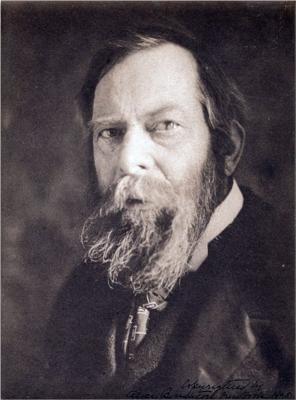
Where to see Albert Pinkham Ryder
Ranked by works you can see in person.
-
23 works
Smithsonian American Art Museum
Washington D.C., United States
-
9 works
The Phillips Collection
Washington D.C., United States


-
8 works
Metropolitan Museum of Art
New York City, United States
-
5 works
Princeton Art Museum
Princeton, United States
-
4 works
Brooklyn Museum
New York City, United States
-
3 works
Museum of Fine Arts Boston
Boston, United States
-
3 works
Museo de Arte de Worcester
Worcester, United States
-
3 works
Art Institute of Chicago
Chicago, United States
-
3 works
Detroit Institute of Arts
Detroit, United States
-
2 works
Carnegie Museum of Art
Pittsburgh, United States


Own a piece of it
Albert Pinkham Ryder prints
Hand-finished archival prints from Albert Pinkham Ryder's body of work.
 The Race Track (Death on a Pale Horse) - Albert Pinkham Ryder
From £28.00
The Race Track (Death on a Pale Horse) - Albert Pinkham Ryder
From £28.00
 Moonlight - Albert Pinkham Ryder
From £37.00
Moonlight - Albert Pinkham Ryder
From £37.00
 Lorelei - Albert Pinkham Ryder
From £28.00
Lorelei - Albert Pinkham Ryder
From £28.00
 The Farmyard - Albert Pinkham Ryder
From £28.00
The Farmyard - Albert Pinkham Ryder
From £28.00
 The Tempest - Albert Pinkham Ryder
From £28.00
The Tempest - Albert Pinkham Ryder
From £28.00
 Mother and Child - Albert Pinkham Ryder
From £28.00
Mother and Child - Albert Pinkham Ryder
From £28.00
 Landscape - Albert Pinkham Ryder
From £28.00
Landscape - Albert Pinkham Ryder
From £28.00
 Pond in Moonlight - Albert Pinkham Ryder
From £28.00
Pond in Moonlight - Albert Pinkham Ryder
From £28.00
View all 22 museums
-
2 works
National Gallery of Art
Washington D.C., United States
-
2 works
Fine Arts Museums of San Francisco
San Francisco, United States
-
1 works
Toledo Museum of Art
Toledo, United States
-
1 works
Buffalo AKG Art Museum
Buffalo, United States
-
1 works
New Britain Museum of American Art
New Britain, United States
-
1 works
Cleveland Museum of Art
Cleveland, United States
-
1 works
Whitney Museum of American Art
New York City, United States
-
1 works
Arizona State University Art Museum
Tempe, United States
-
1 works
Columbus Museum of Art
Columbus, United States
-
1 works
Cincinnati Art Museum
Cincinnati, United States
-
1 works
Los Angeles County Museum of Art
Los Angeles, United States
-
1 works
Crystal Bridges Museum of American Art
Bentonville, United States


Can't travel? Bring Albert Pinkham Ryder home.
See all Albert Pinkham Ryder prints →Frequently Asked Questions
Where can I see Albert Pinkham Ryder's work?
Albert Pinkham Ryder (1847[1]-1917[1]) was born in New Bedford, Massachusetts, and later moved to New York in 1867[1]. He is known for his allegorical paintings and seascapes. To view Ryder's work, several museums house examples of his paintings. These include the Metropolitan Museum of Art, the Museum of Modern Art, and the Solomon R. Guggenheim Museum, all in New York City. Other locations include the Los Angeles County Museum of Art (LACMA), the Minneapolis Institute of Arts, and the Virginia Museum of Fine Arts in Richmond. In 2021, the New Bedford Whaling Museum held a retrospective exhibition, "A Wild Note of Longing: Albert Pinkham Ryder and a Century of American[1] Art". The exhibition included works by modernists who were influenced by Ryder, such as Arthur Dove and Jackson Pollock. A catalogue accompanied the exhibition.What should I know about Albert Pinkham Ryder's prints?
Albert Pinkham Ryder (1847[1]-1917[1]) was an American[1] painter associated with the Symbolist movement. Information about Ryder's prints is scarce; however, some general information about the print market may be useful. Original prints are sold in limited editions, commanding higher prices than posters, which are not numbered. The number of prints is restricted because plates only withstand a certain amount of use. Some publishers set limits to increase a print’s value. These limits may be set as high as 700 to 1,000 impressions; some prints are limited to 250 to 500, making them highly prized by collectors. Before entering the print market, follow the standard method of signing and numbering your editions, which can be observed by visiting galleries and museums and talking to fellow artists. If creating a limited edition, all prints should be numbered, such as 35/100. Some artists hold out ten percent as artist’s proofs and number them separately with AP after the number (e.g., 5/100 AP). Many artists sign and number their prints in pencil.Why are Albert Pinkham Ryder's works important today?
Albert Pinkham Ryder (1847[1]-1917[1]) was born in New Bedford, Massachusetts. He moved to New York in 1867[1] and studied at the National Academy of Arts. Ryder abandoned empirical observation to express his emotions abstractly. Literature inspired him, especially the works of Geoffrey, the medieval English poet. Ryder relied on his imagination for inspiration. He discovered a dream world where mysterious forests are bathed in an unearthly light, and dark boats sail soundlessly on moonlit seas. Ryder's paintings act as a springboard for the imagination. Colour and texture were as important to Ryder as the objects or events he painted. His small pictures were built up carefully over months, even years, until the forms were nearly three-dimensional. His poetic, moody allegorical paintings and seascapes, such as *The Lovers’ Boat* (circa 1881) and *Flying Dutchman* (completed by 1887), demonstrate his style. Ryder embraced experimentation and abandoned tradition. Significant modernists were influenced by Ryder, such as Arthur Dove, Marsden Hartley, Hans Hofmann, and Jackson Pollock.What techniques or materials did Albert Pinkham Ryder use?
Albert Pinkham Ryder's painting techniques involved a distinctive approach to materials. Ryder built up surfaces using layers of paint; these sometimes took a decade or longer to dry fully. He often added varnish or wax to his paints, and he favoured oil paint applied to canvas. Some accounts suggest he used unconventional materials, even household items, in his art. Ryder's grounds were often white, which gave luminosity to his oil paintings. He was less concerned with the careful construction of stretchers. Ryder's methods contrast with those of some contemporaries, such as J.M.W. Turner, who made thousands of sketches and watercolours, some of which became oil paintings. Ryder, however, rarely produced detailed oil sketches. His approach was more intuitive, and he was known to 'drive the colour about' until he achieved his desired effect.Who did Albert Pinkham Ryder influence?
Albert Pinkham Ryder's art had an impact on a number of later artists, particularly those interested in subjective experience and simplified forms. His visionary approach appealed to painters seeking alternatives to realism. Marsden Hartley admired Ryder, sharing his interest in spirituality and the evocative potential of colour. Hartley's expressionistic works, with their bold brushstrokes and symbolic imagery, show a connection to Ryder's aesthetic. Ryder's influence also extended to American[1] modernists such as Arthur Dove and Georgia O'Keeffe. Dove's abstract style, which aimed to capture the essence of nature through simplified shapes and colours, echoes Ryder's pursuit of emotional expression over accurate representation. O'Keeffe, while developing her own distinctive style, similarly explored the symbolic potential of form and colour, a path Ryder helped to open. Later artists, including Jackson Pollock, recognised Ryder's importance. Pollock's all-over compositions and emphasis on process can be seen as a distant echo of Ryder's experimental approach to paint application and his willingness to embrace unconventional techniques.Who influenced Albert Pinkham Ryder?
Albert Pinkham Ryder was a unique artist; he was largely self-taught and operated outside artistic movements. Ryder's influences are difficult to pin down, but some connections can be made. Ryder admired older masters. He was drawn to the work of Rembrandt, and something of Rembrandt's chiaroscuro appears in Ryder's paintings. He also expressed admiration for El Greco and the Venetian painters Titian and Paolo Veronese. More contemporary influences are harder to identify. Ryder's early work was similar to paintings of the Barbizon school. Some scholars suggest William Page, with whom Ryder studied briefly, may have been an influence. Page was known for his interest in spiritualism and the ideas of colour theory developed by Michel Eugène Chevreul; these ideas may have affected Ryder. However, Ryder soon moved away from Page's style. Ryder's mature style is quite individual. His subject matter, often literary or drawn from the sea, and his technique of building up paint layers are his own.What is Albert Pinkham Ryder's most famous work?
Albert Pinkham Ryder (1847[1]-1917[1]) was born in New Bedford, Massachusetts, later moving to New York in 1867[1]. He studied at the National Academy of Arts. Ryder is known for his poetic, moody, allegorical paintings and seascapes, often inspired by literature. His "most iconic works" were included in the 1990 Smithsonian American[1] Art Museum exhibition and a 2021 retrospective at the New Bedford Whaling Museum. These included *The Shepherdess*, an early painting on gilded wood, and *Landscape*, an undated oil on canvas. Ryder's maritime scenes are particularly celebrated. *The Lovers’ Boat* (circa 1881) and *Flying Dutchman* (completed by 1887) display Ryder's style, often featuring a large sun or moon as a central compositional element. Another well-known work is *Jonah*, circa 1885, now in the collection of the National Museum of American Art, Smithsonian Institution, Washington, D.C.What style or movement did Albert Pinkham Ryder belong to?
Albert Pinkham Ryder (1847[1]-1917[1]) is considered an American[1] Symbolist painter. However, some have described him as a Romantic artist. Ryder moved to New York in 1867[1] and studied at the National Academy of Arts. Ryder abandoned empirical observation, instead expressing his emotions abstractly. Literature inspired him; in particular, he favoured works by Geoffrey, the medieval English poet. He is known for subjective seascapes, often featuring moonlight, such as *Toilers of the Sea* or *Moonlight Cove*. Ryder looked to nature for inspiration, closely observing the sea and sky. His paintings intentionally lacked detail, which helped to create a mystical feeling. Ryder's painting *The Race Track* shows a skeleton on horseback. He painted it in memory of a friend who committed suicide after losing his life savings on a horse race. Ryder was one of the most original artists of his day. He lived as a recluse in downtown New York. Ryder's paintings evoke a haunting intensity.
Sources
Where to See guide aggregates verified holdings of Albert Pinkham Ryder's works across the following collections.
- [1] wikipedia Wikipedia: Albert Pinkham Ryder Used for: biography.
- [2] book 20210601artandantiques Used for: biography.
- [3] book Penelope J.E. Davies, Walter B. Denny, Frima Fox Hofrichter, Joseph Jacobs, Ann S. Roberts, David L. Simon, Janson's History of Art_ The Western Tradition (8th Edition) Used for: biography.
- [4] book Carol Strickland and John Boswell, The Annotated Mona Lisa Used for: biography.
Editorial overseen by Solis Prints. Sources verified 2026-09-26. Click a source for details, or hover over [N] in the page above to preview.
Editorial standardsMethodologyCorrectionsAI disclosureAbout the editorial team