



About Arthur Dove
named after two presidential candidates, making the first American abstract paintings at Gallery 291, and having his wife guide the brush when his hands failed
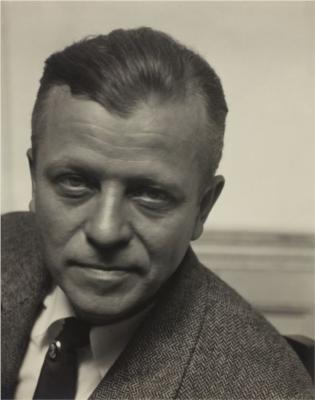
Where to see Arthur Dove
Ranked by works you can see in person.
-
25 works
Museum of Fine Arts Boston
Boston, United States
-
24 works
Metropolitan Museum of Art
New York City, United States


-
10 works
Art Institute of Chicago
Chicago, United States
-
8 works
Smithsonian American Art Museum
Washington D.C., United States
-
 7 works
Crystal Bridges Museum of American Art
Bentonville, United States
-
 3 works
National Gallery of Art
Washington D.C., United States
-
3 works
Museum of Modern Art
New York City, United States
-
3 works
Thyssen-Bornemisza Museum
Madrid, Spain
-
3 works
Yale University Art Gallery
New Haven, United States
-
2 works
Buffalo AKG Art Museum
Buffalo, United States


Own a piece of it
Arthur Dove prints
Hand-finished archival prints from Arthur Dove's body of work.


View all 29 museums
-
2 works
Carnegie Museum of Art
Pittsburgh, United States
-
2 works
Museo de Arte de Worcester
Worcester, United States
-
2 works
Seattle Art Museum
Seattle, United States
-
2 works
Detroit Institute of Arts
Detroit, United States
-
2 works
Fine Arts Museums of San Francisco
San Francisco, United States
-
1 works
Princeton Art Museum
Princeton, United States
-
1 works
Corcoran Gallery of Art
Washington D.C., United States
-
1 works
The Nelson-Atkins Museum of Art
Kansas City, United States
-
1 works
Pennsylvania Academy of the Fine Arts
Philadelphia, United States
-
1 works
Brauer Museum of Art
Valparaiso, United States
-
1 works
Brandywine Museum of Art
Chadds Ford, United States
-
 1 works
Hirshhorn Museum and Sculpture Garden
Washington D.C., United States
-
1 works
Harvard Art Museums
Cambridge, United States
-
1 works
Indianapolis Museum of Art
Indianapolis, United States
-
1 works
Cincinnati Art Museum
Cincinnati, United States
-
1 works
Virginia Museum of Fine Arts
Richmond, United States
-
1 works
Minneapolis Institute of Art
Minneapolis, United States
-
1 works
Saint Louis Art Museum
St. Louis, United States
-
1 works
National Gallery of Canada
Ottawa, Canada


Can't travel? Bring Arthur Dove home.
See all Arthur Dove prints →Frequently Asked Questions
What should I know about Arthur Dove's prints?
Arthur Dove was not primarily a printmaker; he is better known for his paintings and other works. Printmaking has ancient origins, with wood blocks used in China before paper existed in Europe. As paper became more available in Europe around the end of the fourteenth century, printmaking began to flourish. Woodcuts served multiple purposes, including book illustration and religious icons. Prints gained recognition as a major artistic medium during the later nineteenth century. Artists started signing their prints to distinguish originals from reproductions. Edition sizes were limited and numbered to control quality and influence price. Some artists use prints to explore concepts established in other media. The repetitive nature of printmaking suits certain artistic goals. Experimentation with new techniques has led to new dimensions in art. Prints are now accepted as a creative vehicle, as valid as painting or sculpture.Why are Arthur Dove's works important today?
Arthur Dove (1880-1946) holds an important place in art history as one of the first American abstract painters. His early abstract works, around 1910, predate similar explorations by Wassily Kandinsky and others in Europe. Dove's significance lies in his focus on nature as a source for abstraction. Unlike European artists who moved away from nature, Dove combined new ideas about colour and form with his experiences of the American land. He sought to capture the essence of nature, simplifying it into colour, lines, and shapes. His pastels, such as Plant Forms (circa 1912), demonstrate this approach, using organic shapes and colours to evoke the feeling of natural forces. Dove was part of Alfred Stieglitz's circle of artists, known as the 291 group. Stieglitz promoted modern art in America through his gallery and supported Dove's artistic vision. Dove's work offers a distinct perspective on modernism, one that is rooted in the American experience and a spiritual connection to nature.What is special about dove?
Dove's method was what he called extraction; he would pull the essential forms out of a natural scene. He reduced a thunderstorm or a landscape to its structural core.What did Arthur Dove borrow from european modernists?
Arthur Dove came into contact with Cezanne, Matisse and Picasso during an extended stay in Paris between 1907 and 1909. These artists influenced his later work.What techniques or materials did Arthur Dove use?
Arthur Dove's artistic practice involved a range of materials and techniques, as he explored abstraction and aimed to capture the essence of natural forms. Dove is recognised for his early use of collage, combining materials like pressed flowers, shells, and textiles with paint on canvas. This experimentation extended to the creation of what he termed "things", three-dimensional constructions that further blurred the lines between painting and sculpture. He worked with oil, watercolour, and tempera, often applying paint in thin washes to achieve luminosity. Dove also experimented with the materials themselves, at times mixing his own paints and incorporating wax to achieve different surface qualities. His approach was driven by a desire to express the sensation of light and movement, rather than a strict adherence to traditional methods.Who did Arthur Dove influence?
Arthur Dove, an early American modernist, had an impact on subsequent artists through his abstract representations of nature and explorations of spirituality in art. Dove's work, particularly his early abstractions from around 1910, predated similar developments by European artists such as Kandinsky. He combined European modernism with an American sensibility, influencing those interested in capturing the essence of nature through abstraction. Dove was part of Alfred Stieglitz's circle, known as the 291 Group (named after Stieglitz's gallery at 291 Fifth Avenue). This group included Marsden Hartley, John Marin, and Georgia O'Keeffe. Dove's focus on potent natural forces became a major theme for artists within Stieglitz's circle. Later, artists such as Jack Youngerman drew inspiration from Dove's resonant organic forms and nature-based abstraction, alongside influences from Albert Pinkham Ryder, Marsden Hartley, and Georgia O'Keeffe. Dove's pioneering efforts helped pave the way for later American modernist painters.Who influenced Arthur Dove?
Arthur Dove's artistic development involved several influences. During a trip to Europe from 1907 to 1909, Dove encountered the work of the Fauves. The bold colours and simplified forms of artists such as Henri Matisse had an impact on his style. Upon his return to the United States, Dove connected with Alfred Stieglitz, an innovative photographer and promoter of modernism. Stieglitz's gallery, 291, introduced Americans to European avant-garde art, including Pablo Picasso, Henri de Toulouse-Lautrec, Henri Matisse, and Paul Cézanne. Stieglitz exhibited Dove's work, providing him with exposure and support. Dove's art focused on nature, portraying universal forces through abstraction. His move towards abstraction predates similar explorations by Wassily Kandinsky and Robert Delaunay. Dove's connection to nature and his interest in capturing its essence through simplified forms became a defining aspect of his artistic output. Marsden Hartley, another artist in Stieglitz's circle, also influenced Dove.What is Arthur Dove's most famous work?
Arthur Dove produced many notable pieces throughout his career. Among his most recognised works are paintings such as *Male and Female* (1942), held at the Philadelphia Museum of Art, and *Blue (Moby Dick)*, circa 1943, which is part of the collection at the Ohara Museum of Art in Kurashiki, Japan. These works are celebrated for their innovative approach to abstraction and their unique representation of natural forms and literary themes. Dove's artistic output includes a range of styles and subjects, but these particular paintings remain significant examples of his distinctive contribution to American modernism. His exploration of colour, form, and the essence of objects and ideas is apparent in these and other pieces.
Sources
Where to See guide aggregates verified holdings of Arthur Dove's works across the following collections.
- [1] museum Buffalo AKG Art Museum Used for: museum holdings.
- [2] museum Museum of Fine Arts Boston Used for: museum holdings.
- [3] museum Princeton Art Museum Used for: museum holdings.
- [4] museum Corcoran Gallery of Art Used for: museum holdings.
- [5] museum National Gallery of Art Used for: museum holdings.
- [6] museum Hirshhorn Museum and Sculpture Garden Used for: museum holdings.
- [7] book guggenheim-arshi00wald Used for: biography.
- [8] book guggenheim-artoftomorrowfif1939gugg Used for: biography.
- [9] book guggenheim-masterp00solo Used for: biography.
Editorial overseen by Solis Prints. Sources verified 2026-09-26. Click a source for details, or hover over [N] in the page above to preview.
Editorial standardsMethodologyCorrectionsAI disclosureAbout the editorial team