



About Benvenuto Tisi
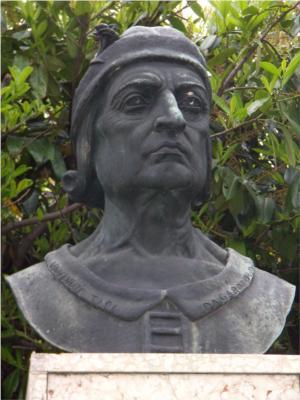
Where to see Benvenuto Tisi
Collection holdings are reported here; current display varies. Check with each museum before visiting.
-
8 recorded works
National Gallery
London, United Kingdom
-
6 recorded works
Hermitage Museum
Saint Petersburg, Russia


-
5 recorded works
Gemäldegalerie Berlin
Berlin, Germany
-
4 recorded works
Louvre
Paris, France
-
3 recorded works
Capitoline Museums
Rome, Italy
-
3 recorded works
Rijksmuseum
Amsterdam, Netherlands
-
2 recorded works
Glasgow Museums Resource Centre
Glasgow, United Kingdom
-
2 recorded works
Kunsthistorisches Museum
Vienna, Austria
-
2 recorded works
Israel Museum
Jerusalem, Israel
-
2 recorded works
National Trust
Swindon, United Kingdom


Own a piece of it
Benvenuto Tisi prints
Hand-finished archival prints from Benvenuto Tisi's body of work.


View all 34 museums
-
2 recorded works
Metropolitan Museum of Art
New York City, United States
-
1 recorded work
Courtauld Gallery
London, United Kingdom
-
1 recorded work
Gemäldegalerie Alte Meister
Dresden, Germany
-
1 recorded work
Städel Museum
Frankfurt, Germany
-
1 recorded work
National Galleries Scotland
Edinburgh, United Kingdom
-
1 recorded work
Wallraf–Richartz Museum
Cologne, Germany
-
1 recorded work
Pinacoteca di Brera
Milan, Italy
-
1 recorded work
Galleria Nazionale d'Arte Antica
Rome, Italy
-
1 recorded work
National Gallery of Art
Washington D.C., United States
-
1 recorded work
Amsterdam Museum
Amsterdam, Netherlands
-
1 recorded work
Art Gallery of South Australia
Adelaide, Australia
-
1 recorded work
Nationalmuseum
Stockholm, Sweden
-
1 recorded work
Musei di Strada Nuova
Genoa, Italy
-
1 recorded work
Northampton Museum and Art Gallery
Northampton, United Kingdom
-
1 recorded work
Czartoryski Museum
Kraków, Poland
-
1 recorded work
Detroit Institute of Arts
Detroit, United States
-
1 recorded work
Los Angeles County Museum of Art
Los Angeles, United States
-
1 recorded work
Fitzwilliam Museum
Cambridge, United Kingdom
-
1 recorded work
Birmingham Museums Trust
Birmingham, United Kingdom
-
1 recorded work
Smithsonian American Art Museum
Washington D.C., United States
-
1 recorded work
Royal Collection
London, United Kingdom
-
 1 recorded work
National Gallery of Armenia
Yerevan, Armenia
Also here (6)
-
1 recorded work
Yale University Art Gallery
New Haven, United States
-
1 recorded work
Musée Fabre
Montpellier, France


Can't travel? Bring Benvenuto Tisi home.
See all Benvenuto Tisi prints →Frequently Asked Questions
Where can I see Benvenuto Tisi's work?
Benvenuto Tisi, also known as Garofalo, has works located in collections throughout Europe and the United States. You can find his pieces in numerous locations. In Germany, his work is held at the Staatliche Kunstsammlungen in Dresden, and the Städelsches Kunstinstitut in Frankfurt a. M. The Niedersächsische Landesgalerie in Hanover also holds examples. In Russia, the Hermitage Museum in Leningrad has paintings by Tisi. Closer to his home, The Signora Fernanda Ojetti Collection in Florence possesses at least one painting. In the United Kingdom, you can find Tisi's work in the National Gallery of Scotland, Edinburgh. The Barber Institute of Fine Arts, University of Birmingham (England), also holds paintings. Outside Europe, museums holding his paintings include The Detroit Institute of Arts, The Baltimore Museum of Art, and the Museum of Fine Arts in Boston. The Fogg Art Museum, Harvard University (Cambridge, Massachusetts), and the Nelson Gallery-Atkins Museum in Kansas City also hold his work.What should I know about Benvenuto Tisi's prints?
Benvenuto Tisi (1481[3]-1559[3]), also known as Il Garofalo, was an Italian painter of the Ferrarese school. He worked primarily in Ferrara and the surrounding region. Tisi's graphic work is less well known than his paintings, but it represents a small, interesting part of his total artistic output. His prints consist mainly of woodcuts, often after his own designs or paintings. These woodcuts frequently served a reproductive purpose, disseminating his compositions to a wider audience. They display a clear, bold style, typical of the period. Tisi's prints are not particularly common, so they are of interest to collectors of old master prints. Key collections of his work can be found in major European print rooms, such as the British Museum and the Albertina in Vienna. When assessing a Tisi print, one should consider its condition, rarity, and the quality of the impression, as these factors greatly influence its value. His prints offer insight into the artistic practices of the Italian Renaissance, specifically the dissemination of artistic ideas through printmaking.Why are Benvenuto Tisi's works important today?
Benvenuto Tisi, also known as Il Garofalo (1481[3]-1559[3]), was an Italian painter active mainly in Ferrara. He provides an interesting example of artistic exchange during the High Renaissance. Tisi's early career shows the influence of local Ferrarese masters, but he later absorbed elements from both the Roman and Venetian schools. His importance lies partly in his synthesis of these diverse influences. Garofalo's paintings often combine the compositional clarity and classical forms associated with Rome (especially Raphael) with the colouristic concerns of Venetian art. This fusion is evident in works such as the altarpiece *The Madonna in Glory with Saints* (circa 1530[3]). Furthermore, Tisi's extensive output gives insight into the artistic tastes of the Ferrarese court and its patrons. He produced numerous paintings for churches and private residences in Ferrara and the surrounding region. His work allows art historians to analyse the artistic culture of Ferrara, a smaller Italian state that nonetheless played a significant role in the broader Renaissance. Although not considered a first-tier figure like Raphael or Titian, Garofalo's art offers a valuable perspective on the artistic developments of his time.What techniques or materials did Benvenuto Tisi use?
Benvenuto Tisi, also known as Il Garofalo, employed a range of techniques and materials typical of Italian Renaissance painting. He is best known for his oil paintings; these often feature bright colours and detailed figures. Tisi's early training was under Lorenzo Costa in Ferrara. He then moved to Cremona, where he worked with Boccaccio Boccaccino. These experiences exposed him to different regional styles and methods. He also spent time in Rome; there, he absorbed influences from contemporary masters like Raphael. His paintings often incorporate preparatory drawings, which helped him plan his compositions. Some of these drawings survive, offering insights into his creative process. He was a prolific artist; his output included altarpieces, frescoes, and smaller-scale works for private patrons. Garofalo's later work shows the impact of mannerism, with elongated figures and complex arrangements. He sometimes collaborated with other artists, such as Dosso Dossi, on larger projects.Who did Benvenuto Tisi influence?
Benvenuto Tisi, also known as Garofalo, was active during a period when Venetian art was undergoing significant change. Although Titian dominated 16th-century Venetian painting and set a high standard for his contemporaries, other artists of talent still created innovative and influential works. Titian's paintings sparked a chain reaction, shaping much of Western painting. Artists such as Annibale Carracci were highly indebted to Titian and his followers. Carracci, along with Caravaggio, helped initiate the Baroque style in Rome. Carracci's Venus Adorned by the Graces displays Titian's influence through its atmospheric setting, subtle play of light, corpulent bodies, facial types, suggestive, feathery, background, and dramatic sky. The sensuous nature of Carracci's depiction finds its origin in Titian's early mythologies. The Carracci workshop, including Annibale, his brother Agostino, and their cousin Ludovico, developed a school in Bologna that became a major force in Italian Baroque painting.Who influenced Benvenuto Tisi?
Benvenuto Tisi, also known as Il Garofalo, was subject to a range of influences. Giorgione and Titian both decorated the exterior of the Fondaco de’ Tedeschi, erected after the original building burned down in 1505[3]. Titian was apparently subordinate to Giorgione. Vasari wrote that Giorgione became angry when complimented on work that was actually by Titian. This led to the end of their connection, but this account is not universally accepted. Titian’s early style was deeply influenced by Giorgione. This is particularly apparent in imaginative subjects, where Titian surrendered himself to Giorgione’s style. However, in sacred works, Titian displayed a majestic placidity and splendour from the start, differing from Giorgione’s tremulous sweetness. Giovanni Bellini also exerted a strong influence on Venetian art during this period. Even artists outside his immediate circle were affected by his style. Andrea Mantegna's engravings, such as "Battle of the Sea Gods", and Roman bas-reliefs also provided inspiration. The "Battle between Giants and Monsters" shows motifs common in Northern art, also seen in Jacopo de’ Barbari’s engraving of a centaur chased by dragons, and Titian’s early painting "Orpheus and Eurydice". The nude figure in the centre of the fresco recalls Antonio Pollaiolo’s engraving of the "Battle of the Nudes".What is Benvenuto Tisi's most famous work?
Determining Benvenuto Tisi's single most famous work is difficult; however, he is well known for his contributions to Mannerism in Ferrara during the early 16th century. He is often associated with the School of Ferrara, which was noted for its distinctive style. Tisi's body of work includes paintings and frescoes, frequently characterised by their elegant figures and sophisticated compositions. While he produced many pieces throughout his career, no single work has achieved indisputable fame. His paintings often display the influence of other artists, such as Raphael and Giulio Romano, which he integrated into his own style. Tisi's paintings contributed to the artistic environment of Ferrara and to the development of Mannerism in the region.What style or movement did Benvenuto Tisi belong to?
Benvenuto Tisi (1481[3]-1559[3]), also known as Garofalo, was active during the High Renaissance in Ferrara and is associated with both the Ferrarese School and Mannerism. The art of Ferrara, where he spent much of his career, combined influences. These included the linearity of Florentine art, the colourism of Venetian painting, and the classicising tendencies of Roman art. Tisi's early work shows the influence of Lorenzo Costa and, especially, of Raphael. His style moved toward Mannerism, characterised by elongated forms, stylised poses, and a complex, artificial composition. Mannerism, as a reaction against the classical ideals of the High Renaissance, sought to express emotion and drama through distortion and exaggeration. Tisi's later paintings reflect these Mannerist tendencies, although he retained elements of his earlier, more classical style.
Sources
Where to See guide aggregates verified holdings of Benvenuto Tisi's works across the following collections.
- [1] museum Samuel H. Kress Collection Used for: museum holdings.
- [2] museum National Gallery of Armenia Used for: museum holdings.
- [3] wikipedia Wikipedia: Benvenuto Tisi Used for: biography.
- [4] book Titian, Delphi. Complete works of Titian - PDFDrive.com Used for: biography, stylistic analysis.
- [5] book Titian, Susanna Biadene, Mary Yakush, Italy) Palazzo Ducale (Venice, National Gallery of Art (U. S.), Terisio Pignatti, Titian, Prince of Painters _ [Palazzo Ducale, Venice, 2 June - 7 October 1990 ; National Gallery of Art, Washington, 28 Octo Used for: biography.
Editorial overseen by Solis Prints. Sources verified 2026-09-30. Click a source for details, or hover over [N] in the page above to preview.
Editorial standardsMethodologyCorrectionsAI disclosureAbout the editorial team