



About Albert Chevallier Tayler
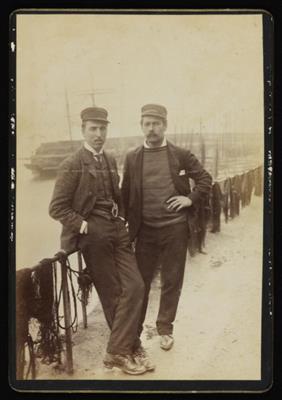
Museums9
Countries2
Largest reported holdingImperial War Museums, London · 3 recorded works
Loading map…
Where to see Albert Chevallier Tayler
Collection holdings are reported here; current display varies. Check with each museum before visiting.
-
3 recorded works
Imperial War Museums
London, United Kingdom
-
2 recorded works
Guildhall Art Gallery
London, United Kingdom


-
1 recorded work
Harris Museum
Preston, United Kingdom
-
1 recorded work
Walker Art Gallery
Liverpool, United Kingdom
-
1 recorded work
Art Gallery of South Australia
Adelaide, Australia
-
1 recorded work
Lady Lever Art Gallery
Port Sunlight, United Kingdom
-
1 recorded work
Williamson Art Gallery and Museum
Birkenhead, United Kingdom
-
1 recorded work
Northampton Museum and Art Gallery
Northampton, United Kingdom
-
1 recorded work
Birmingham Museums Trust
Birmingham, United Kingdom


Frequently Asked Questions
Where can I see Albert Chevallier Tayler's work?
To view works by Albert Chevallier Tayler, you might visit several museums and galleries. In the UK, the Brighton Museum & Art Gallery, Manchester Art Gallery, and the Victoria & Albert Museum in London hold relevant collections. The National Museums of Scotland, Royal Museum in Edinburgh may also be of interest. Outside the UK, institutions such as the Los Angeles County Museum of Art (LACMA), the Metropolitan Museum of Art in New York, and the Minneapolis Institute of Arts have relevant holdings. Other options include the Charles Hosmer Morse Museum of American Art in Winter Park, Florida; the Royal Ontario Museum in Toronto; the Virginia Museum of Fine Arts in Richmond; and the Wolfsonian at Florida International University in Miami Beach. These museums feature collections related to art and design movements from the late 19th and early 20th centuries.What should I know about Albert Chevallier Tayler's prints?
Prints after Albert Chevallier Tayler's paintings were available through print sellers, who often catered to a middle-class market eager for affordable art. These prints allowed a wider audience to own a version of a popular artwork. Print publishers employed various techniques to attract buyers. They selected appealing titles for the prints and recognised the commercial potential of reproducing existing artworks. Size mattered, too; prints were often large, so they could fill wall space and appear as significant artworks when framed. Several methods existed for creating prints, including mezzotint, etching, and photogravure. Wood-engraved blocks were also used, with boxwood being a favoured material. However, by the 1890s, boxwood became scarce and expensive, leading to the use of alternative woods like holly and mahogany. The process of proof-taking, which involves creating a trial impression of a print, was considered an art form.Why are Albert Chevallier Tayler's works important today?
Albert Chevallier Tayler was a painter associated with the Newlyn School, active in the late 19th and early 20th centuries. His works offer insight into the artistic and cultural values of the late Victorian and Edwardian eras. Tayler's association with illustrated periodicals, such as *The Idler*, further connects him to the literary and artistic circles of his time. These magazines played a significant role in shaping public taste and promoting the work of artists and writers. Magazines like *The Century Guild Hobby Horse* (1884[1]-1894[1]) promoted the idea of 'total art' and the integration of artists within society. Tayler's involvement with such publications places him within a movement advocating for the social responsibility of the artist. By studying Tayler's contributions, we gain a better understanding of the relationship between art, literature, and society during a period of significant cultural change.Who did Albert Chevallier Tayler influence?
It is difficult to identify specific individuals who were directly influenced by Albert Chevallier Tayler. During the late 19th century, the academic system of artistic training, particularly at institutions such as the École des Beaux-Arts, placed considerable emphasis on history painting. This approach, which prioritised classical, historical, and biblical subjects, shaped the artistic development of many artists. Successful students often competed for the Prix de Rome, further reinforcing this focus. Painters such as J.-A.-D. Ingres exerted a strong influence on history painting, with his style serving as a starting point for the 'Troubadour' painters, who specialised in Medieval and Renaissance themes. The emphasis on historical subjects was also encouraged by state commissions, with artists documenting military campaigns for posterity. However, by the 1880s, the academic tradition began to decline in popular opinion as Impressionism gained traction among collectors. This shift in taste led to a questioning of academic disciplines and a fading of the old guard, making it challenging to trace direct lines of influence from artists like Tayler to later generations.Who influenced Albert Chevallier Tayler?
Albert Chevallier Tayler's artistic development occurred during a period of change in British[1] art education. The old apprenticeship system was fading, replaced by art academies. This shift meant students received valuable advice, but lacked the close guidance of a master, which had previously nurtured inventive skills. Some artists sought inspiration from nature, moving away from conventional, darker styles. They aimed for daylight effects in their paintings, differentiating themselves from other schools of art. Figures like Haydon encouraged artists to compete for decorating roles and pushed for design schools to improve manufacturing taste. The artist and critic Aymer Vallance noted a decline in craftsmanship due to specialisation. He suggested a remedy: emphasising the unity and interdependence of the arts. This idea connected with the Pre-Raphaelite movement, particularly the principles found in their publication, *The Germ*. This publication promoted direct study of nature and freedom of expression. It also influenced magazines like *The Century Guild Hobby Horse*, which explored art's social responsibility.What is Albert Chevallier Tayler's most famous work?
It is difficult to name Albert Chevallier Tayler's single "most famous work" with certainty. He was a prolific painter of genre scenes, portraits, and historical subjects, and his popularity has varied over time. He is perhaps best known for his paintings depicting cricket matches. These works, such as "Kent and Gloucestershire at the St Lawrence Ground, Canterbury" (1907[1]), capture the atmosphere of the sport and the Edwardian era. They are appreciated for their attention to detail, realistic portrayal of figures, and social commentary. Other notable works by Tayler include "The Last Muster" (1875), depicting the evacuation of a Chelsea Pensioner, and "God Speed!" which portrays a young woman waving goodbye to a departing soldier. These paintings reflect the patriotic sentiments prevalent during his time. Tayler's artistic output also included illustrations for books and magazines, further contributing to his recognition during his career. While pinpointing one definitive "most famous work" remains subjective, his cricket paintings are arguably the most recognisable and celebrated today.What style or movement did Albert Chevallier Tayler belong to?
Albert Chevallier Tayler was active during a period when British[1] art saw various styles emerge and overlap. Though not directly mentioned in the material provided, Tayler's work has associations with Impressionism and the Newlyn School. Impressionism, with its emphasis on capturing fleeting moments and the effects of light, influenced many artists of the late 19th and early 20th centuries. The Newlyn School, a subset of this broader movement, focused on painting scenes of everyday life, often set in rural communities. Tayler's subject matter, which often included genre scenes and historical narratives, aligns with the Newlyn School's interest in depicting ordinary people and their surroundings. His technique, characterised by loose brushwork and an attention to light and atmosphere, also reflects Impressionistic principles. While Tayler may not be strictly confined to one particular movement, these are useful in understanding his artistic approach.What was Albert Chevallier Tayler known for?
Albert Chevallier Tayler was an English artist associated with the Newlyn School, a group of painters working in Cornwall during the late 19th and early 20th centuries. While he experimented with various genres, Tayler gained recognition for his paintings of historical and genre subjects. These often depicted scenes of English country life, cricket matches, and historical events. His style combined elements of realism with a sense of narrative, making his works accessible and popular with a wide audience. Tayler's paintings were exhibited at the Royal Academy, and other major venues. He also worked as an illustrator, contributing to magazines and books. Although not as well known as some of his contemporaries, Tayler's work provides insight into the artistic trends and social interests of his time.
Sources
Where to See guide aggregates verified holdings of Albert Chevallier Tayler's works across the following collections.
- [1] wikipedia Wikipedia: Albert Chevallier Tayler Used for: biography.
- [2] book Beard, Lee, 1973- author, Butler, Adam, author; Van Cleave, Claire, author; Fortenberry, Diane, author; Stirling, Susan, author, Beard, Lee, 1973- author, Butler, Adam, author; Van Cleave, Claire, author; Fortenberry, Diane, author; Stirling, Susan, author - The Art Book_ New Edition, Mini Format Used for: biography.
- [3] book Masterpieces of western art : a history of art in 900 individual studies from the Gothic to the present day Used for: biography.
- [4] book Post-impressionism : cross-currents in European painting Used for: biography.
Editorial overseen by Solis Prints. Sources verified 2026-09-30. Click a source for details, or hover over [N] in the page above to preview.
Editorial standardsMethodologyCorrectionsAI disclosureAbout the editorial team