



About Filippino Lippi
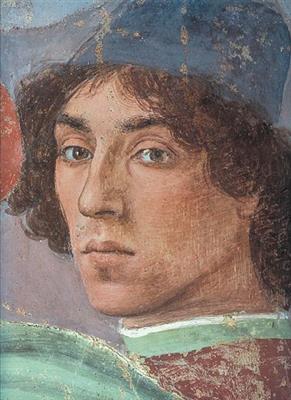
Florentine painter who completed Masaccio's Brancacci Chapel frescoes and brought Roman antiquity's restless energy into late fifteenth-century religious painting.
Where to see Filippino Lippi
Collection holdings are reported here; current display varies. Check with each museum before visiting.
-
7 recorded works
Gemäldegalerie Berlin
Berlin, Germany
-
5 recorded works
Louvre
Paris, France


-
5 recorded works
National Gallery
London, United Kingdom
-
5 recorded works
National Gallery of Art
Washington D.C., United States
-
4 recorded works
Galleria dell'Accademia
Florence, Italy
-
3 recorded works
Metropolitan Museum of Art
New York City, United States
-
2 recorded works
Christ Church Picture Gallery
Oxford, United Kingdom
-
2 recorded works
Hermitage Museum
Saint Petersburg, Russia
-
2 recorded works
National Gallery of Canada
Ottawa, Canada
-
1 recorded work
National Galleries Scotland
Edinburgh, United Kingdom


View all 26 museums
-
1 recorded work
Musée des Beaux-Arts et d'Archéologie de Besançon
Besançon, France
-
1 recorded work
Museo di Capodimonte
Naples, Italy
-
1 recorded work
Condé Museum
Chantilly, France
-
1 recorded work
Norton Simon Museum
Pasadena, United States
-
1 recorded work
Walker Art Gallery
Liverpool, United Kingdom
-
1 recorded work
Denver Art Museum
Denver, United States
-
1 recorded work
Palazzo Pallavicini-Rospigliosi
Rome, Italy
Also here (3)
-
1 recorded work
Rijksmuseum
Amsterdam, Netherlands
-
1 recorded work
Museo Soumaya
Mexico City, Mexico
-
1 recorded work
Galleria Sabauda
Turin, Italy
-
1 recorded work
Musée du Petit Palais
Avignon, France
-
1 recorded work
Musée Thomas-Henry
Cherbourg-Octeville, France
-
1 recorded work
National Gallery of Ireland
Dublin, Ireland
Also here (6)
-
0 recorded works
Nationalmuseum
Stockholm, Sweden
-
0 recorded works
Santissima Annunziata
Florence, Italy
-
0 recorded works
Museum der bildenden Künste
Leipzig, Germany


Frequently Asked Questions
Where can I see Filippino Lippi's work?
Filippino Lippi's paintings are held in collections around the world. In Florence, his *Madonna and Child* and *Portrait of an Old Man* (c. 1485) can be seen in the Uffizi Gallery. Other paintings in Europe include *Adoration in the Wood* at the Staatliche Museen in Berlin-Dahlem; *Madonna and Child with two Angels* at the Musée des Beaux-Arts in Strasbourg; *Venus* at the Galleria Sabauda, Turin; and *Madonna and Child with two Angels* at the Akademie der bildenden Künste in Vienna. In the United States, you can find Lippi's *Virgin and Child* at the Walker Art Gallery in Baltimore; *Holy Family* at the North Carolina Museum of Art in Raleigh; and *Adoration of the Magi*, *Madonna Adoring Christ*, *Madonna and Child*, *Madonna and Child with two Angels*, *Mystic Crucifixion*, and portraits at the National Gallery of Art in Washington, D.C.What should I know about Filippino Lippi's prints?
Filippino Lippi (born in Prato, 1457[1]; died in Florence, 1504[1]) was the son of Fra Filippo Lippi. Orphaned at the age of ten, Filippino was brought up by Sandro Botticelli, who had been a pupil of Lippi senior. His paintings display his father's inclination towards happiness, yet they are tempered by Botticelli's awareness of human fragility. A 'quivering gentleness' marks his work. His first major commission involved completing a Florentine fresco, which had been left unfinished by Masaccio. It was his frescos that established his reputation. After spending years in Rome studying Roman remains, they became a recurring feature in his paintings, regardless of their suitability to the subject matter. One example is his *Portrait of an Old Man* (circa 1485). The plain backdrop brings attention to the man's gentle eyes. The man's personality shines through this portrait, which is painted in the graceful style that characterised Filippino’s work.Why are Filippino Lippi's works important today?
Filippino Lippi (1457[1]-1504[1]) was the son of Fra Filippo Lippi; Botticelli taught him after the elder Lippi's death. Filippino's early paintings so closely resembled Botticelli's that people mistook them. Later, Lippi developed his own style, marked by a certain exasperation of linearism. His importance lies in his frescoes and his graceful, straightforward portraiture. One example is his c.1485 *Portrait of an Old Man*, now in the Uffizi Gallery, Florence. The painting is striking because it is so direct. Although the sitter's identity is unknown, much of his personality shines through. After spending years in Rome, Lippi began incorporating Roman remains into his paintings, whether or not they suited the subject. In 1504[1], he was named to the committee assembled to decide where to place Michelangelo's *David* statue. He suggested the cathedral steps, but others overruled him. By this time, the emerging talents of Michelangelo and Raphael had eclipsed Lippi.What techniques or materials did Filippino Lippi use?
Filippino Lippi (c. 1457[1]-1504[1]) adopted painting techniques common in Florence during the late fifteenth century. He was the son of Fra Filippo Lippi, who trained him in painting and drawing. Lippi's paintings are mostly tempera on wood panel and fresco. He also produced drawings in pen, ink, and metalpoint. His early paintings, such as the *Adoration of the Magi* (c. 1475-80, National Gallery, London), show the influence of his father and of Sandro Botticelli, with whom he trained. These paintings feature delicate lines, bright colours, and elegant figures. After a period in Rome during the 1480s, Lippi's style changed. His later works, such as the frescoes in the Strozzi Chapel in Santa Maria Novella, Florence (c. 1487-1502[1]), show a greater interest in classical antiquity and dramatic narrative. These frescoes are characterised by their complex compositions, realistic figures, and use of perspective. Lippi also experimented with new techniques, such as oil painting, in his later works. This allowed him to achieve a greater range of colours and textures.Who did Filippino Lippi influence?
Filippino Lippi (born circa 1457[1], died 1504[1]) was the son of Fra Filippo Lippi; Filippino was orphaned at the age of ten. Botticelli, who had been a student of Lippi senior, raised the younger Lippi. Filippino's early paintings were similar in style to Botticelli's. Some of these early works have been misattributed. Later, Filippino moved away from his teacher's style, developing a more exaggerated linear style. Filippino's work displays a gentleness, combined with Botticelli's sense of human frailty. His father, Filippo Lippi, was influenced by Donatello and Ghiberti, as well as by Flemish masters. Filippo played a significant part in determining the direction of Florentine painting during the second half of the 15th century.Who influenced Filippino Lippi?
Filippino Lippi's artistic development was shaped by several influences. As the son of Fra Filippo Lippi, from whom Botticelli also learned painting, Filippino had an early connection to the Florentine art scene. After his father's death, Filippino entered Botticelli's workshop. Initially, his style closely mirrored that of his teacher, leading to some early works being mistaken for Botticelli's. However, Filippino later distinguished himself through a certain emphasis of linear elements. His work also shows the impact of Masaccio, from whom his father learned monumentality of form. While in Rome, Filippino studied Roman remains, which became a recurring element in his paintings, whether or not they suited the subject matter. Donatello's influence can be seen in Filippino's use of truncated donor figures, suggesting a scene excerpted from a larger whole. These various influences contributed to Filippino Lippi's graceful, simple style.What is Filippino Lippi's most famous work?
Filippino Lippi is well regarded for his frescoes in the Strozzi Chapel of Santa Maria Novella, Florence. However, no single work is universally considered his "most famous". Lippi received his earliest training from his father, Fra Filippo Lippi. Later, he was a student of Botticelli, whose influence is apparent in his early works. He completed Masaccio's frescoes in the Brancacci Chapel, a project left unfinished when Masaccio died in 1428. Lippi finished the commission some sixty years later, between 1481 and 1485. His other major commissions include work in the church of Santa Maria sopra Minerva in Rome (1488-93) and the Strozzi Chapel in Santa Maria Novella (1487-1502[1]). The Strozzi Chapel frescoes depict scenes from the lives of St John the Evangelist and St Philip. These frescoes are admired for their narrative complexity and use of colour. Lippi's late style moved away from the grace of his earlier paintings, toward a more dramatic and expressive mode. He died in Florence in 1504[1].What style or movement did Filippino Lippi belong to?
Filippino Lippi (circa 1457[1]-1504[1]) is usually categorised as a painter of the Early Renaissance in Florence. His style is complex, since he was influenced by his father, Fra Filippo Lippi, as well as other Florentine masters. Early influences included Sandro Botticelli, under whom he apprenticed. Some scholars see echoes of Andrea del Verrocchio and Leonardo da Vinci in Lippi's work as well. These artists helped to shape his early style. Later in his career, after a period in Rome, Lippi's work moved toward Mannerism. This is evident in the heightened emotion, dynamic compositions, and elongated figures seen in paintings such as the Strozzi Chapel frescoes in Santa Maria Novella, Florence. These late works show a departure from the more restrained style of the Early Renaissance. He blended elements of the earlier Renaissance with newer trends. This makes him a transitional figure.
Sources
Where to See guide aggregates verified holdings of Filippino Lippi's works across the following collections.
- [1] wikipedia Wikipedia: Filippino Lippi Used for: biography.
- [2] book Beard, Lee, 1973- author, Butler, Adam, author; Van Cleave, Claire, author; Fortenberry, Diane, author; Stirling, Susan, author, Beard, Lee, 1973- author, Butler, Adam, author; Van Cleave, Claire, author; Fortenberry, Diane, author; Stirling, Susan, author - The Art Book_ New Edition, Mini Format Used for: biography.
- [3] book Beckett, Wendy, The story of painting Used for: biography.
Editorial overseen by Solis Prints. Sources verified 2026-09-30. Click a source for details, or hover over [N] in the page above to preview.
Editorial standardsMethodologyCorrectionsAI disclosureAbout the editorial team