



Arthur Dove
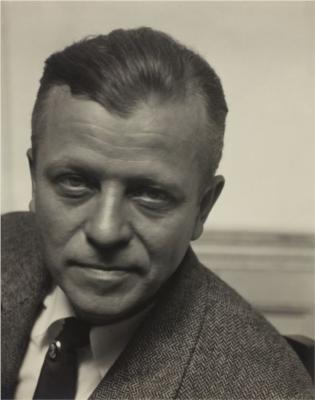
Dove's father named him after two Republican presidential candidates, James Garfield and Chester Arthur, which tells you something about the household. Arthur Garfield Dove grew up in upstate New York, graduated from Cornell in 1903, and spent several years as a magazine illustrator for Scribner's, Collier's and the Saturday Evening Post. He was good at it. He quit anyway.
Biography
An extended stay in Paris between 1907 and 1909 brought him into contact with Cezanne, Matisse and Picasso. He came back to America and began making abstract paintings before almost anyone else in the country. In 1912 Alfred Stieglitz gave him a solo show at Gallery 291: a group of pastels known as The Ten Commandments. It was the first public exhibition of abstract art by an American.
He called his method extraction: pulling the essential forms out of a natural scene, reducing a landscape or a thunderstorm to its structural core. The paintings look organic, warm, and slightly musical, as though the shapes are vibrating. They are based on nature but they do not depict nature. They describe the feeling of being inside it.
He and Stieglitz maintained a friendship for thirty years. Dove was quiet and gentle. Stieglitz was argumentative and shrewd. They agreed that art should embody spiritual values rather than material ones, which is an easier principle to hold when someone else is paying the rent.
In his final years, kidney disease and repeated heart attacks made painting impossible without help. His wife Helen (known as Reds), herself an artist, guided the brush for him. After he died in 1946, she never painted again.
Timeline
- 1880Born
- 1925Painted “Long Island”
- 1929Painted “Silver Tanks”
- 1929Painted “Silver Sun”
- 1935Painted “Reflections”
- 1940Painted “Black and White”
- 1946Died
Notable Works
Tap to view larger.
Where to See Arthur Dove
10 museums worldwide.
-
 24 works
Metropolitan Museum of Art
New York City, United States
Sun–Tue, Thu 10:00–17:00; Fri–Sat 10:00–21:00; closed Wed · Adults $30, students $17 (pay-what-you-wish for NY residents)
-
 35 works
National Gallery of Art
Washington D.C., United States
Mon–Sat 10:00–17:00, Sun 11:00–18:00 · Free
-
25 works
Museum of Fine Arts Boston
Boston, United States
Sun, Mon, Wed, Sat 10:00–17:00, Thu–Fri 10:00–22:00, closed Tuesdays · $30 adults
-
10 works
Art Institute of Chicago
Chicago, United States
Mon 11:00–17:00, Tue closed, Wed 11:00–17:00, Thu 11:00–20:00, Fri–Sun 11:00–17:00 · $32 adults
-
8 works
Smithsonian American Art Museum
Washington D.C., United States
Mon–Sun 11:30–19:00 · Free
-
 7 works
Crystal Bridges Museum of American Art
Bentonville, United States
Mon/Wed 11:00–18:00, Thu/Fri 11:00–20:00, Sat/Sun 10:00–18:00, closed Tuesdays · Free


Next stop
Abstract Expressionism →
Explore the artists and ideas of Abstract Expressionism.
Arthur Dove prints
Hand-finished archival prints from Arthur Dove's body of work.


Related Artists





Take Arthur Dove home.
See all Arthur Dove prints →Frequently Asked Questions
What did arthur dove borrow from european modernists?
Arthur Dove came into contact with Cezanne, Matisse and Picasso during an extended stay in Paris between 1907 and 1909. These artists influenced his later work.What is Arthur Dove's most famous work?
Arthur Dove produced many notable pieces throughout his career. Among his most recognised works are paintings such as *Male and Female* (1942), held at the Philadelphia Museum of Art, and *Blue (Moby Dick)*, circa 1943, which is part of the collection at the Ohara Museum of Art in Kurashiki, Japan. These works are celebrated for their innovative approach to abstraction and their unique representation of natural forms and literary themes. Dove's artistic output includes a range of styles and subjects, but these particular paintings remain significant examples of his distinctive contribution to American modernism. His exploration of colour, form, and the essence of objects and ideas is apparent in these and other pieces.What is special about dove?
Dove's method was what he called extraction; he would pull the essential forms out of a natural scene. He reduced a thunderstorm or a landscape to its structural core.What should I know about Arthur Dove's prints?
Arthur Dove was not primarily a printmaker; he is better known for his paintings and other works. Printmaking has ancient origins, with wood blocks used in China before paper existed in Europe. As paper became more available in Europe around the end of the fourteenth century, printmaking began to flourish. Woodcuts served multiple purposes, including book illustration and religious icons. Prints gained recognition as a major artistic medium during the later nineteenth century. Artists started signing their prints to distinguish originals from reproductions. Edition sizes were limited and numbered to control quality and influence price. Some artists use prints to explore concepts established in other media. The repetitive nature of printmaking suits certain artistic goals. Experimentation with new techniques has led to new dimensions in art. Prints are now accepted as a creative vehicle, as valid as painting or sculpture.What style or movement did Arthur Dove belong to?
Arthur Dove is regarded as one of America's first abstract painters. His exposure to Fauvism in Europe between 1907 and 1909 had a definite impact. Upon his return to the United States, Dove connected with Alfred Stieglitz and became part of the "291" group. Dove's art focused on nature, portraying what he termed the "spiritual essence" of it through "extractions". His method involved simplifying natural forms into colour and lines, drawing a parallel to music's treatment of sound. Examples such as *Plant Forms* (circa 1912) demonstrate his style of abstraction, where natural elements are suggested rather than depicted realistically. While Dove's work shares some visual similarities with movements like Cubism, his primary interest lay in capturing the universal forces and interconnectedness within nature, rather than strict adherence to a particular school. He combined spiritually-inflected styles with an American appreciation for the land.What techniques or materials did Arthur Dove use?
Arthur Dove's artistic practice involved a range of materials and techniques, as he explored abstraction and aimed to capture the essence of natural forms. Dove is recognised for his early use of collage, combining materials like pressed flowers, shells, and textiles with paint on canvas. This experimentation extended to the creation of what he termed "things", three-dimensional constructions that further blurred the lines between painting and sculpture. He worked with oil, watercolour, and tempera, often applying paint in thin washes to achieve luminosity. Dove also experimented with the materials themselves, at times mixing his own paints and incorporating wax to achieve different surface qualities. His approach was driven by a desire to express the sensation of light and movement, rather than a strict adherence to traditional methods.What was Arthur Dove known for?
Arthur Dove (1880-1946) is generally considered one of the first American abstract painters. He is known for his works inspired by nature, but depicted through abstraction, rather than illusionistic representation. Dove spent time in Europe, where he encountered the work of Fauvist artists such as Matisse. Upon his return to the United States, he met Alfred Stieglitz and began exhibiting at Stieglitz's gallery, "291". Stieglitz promoted Dove, along with other artists, in an effort to cultivate American modernism. Dove, Marsden Hartley, John Marin, and Georgia O’Keeffe formed the core of Stieglitz’s circle. Dove sought to capture universal forces in his art. By 1910, he was creating complete abstractions, predating similar work by Kandinsky and Delaunay. One such example is *Plant Forms* (circa 1912), from a series titled *The Ten Commandments*. Dove referred to his abstractions as "extractions" of the spiritual essence of nature. He aimed to simplify natural motifs to their basic colours and lines, drawing a parallel to music's treatment of sound.What was arthur dove's contribution to art history?
Arthur Garfield Dove had the first public exhibition of abstract art by an American. This exhibition, held in 1912 at Gallery 291, was a group of pastels known as The Ten Commandments.When did Arthur Dove live and work?
Arthur Dove was born in Canandaigua, New York, in 1880. In 1908, Dove visited Paris, where he encountered the work of Henri Matisse and the Fauves. Upon his return to New York, he connected with Alfred Stieglitz and began exhibiting his art at Stieglitz's gallery, 291. Dove is recognised as one of the first American modernists. By 1910, Dove was creating complete abstractions, predating similar works by Wassily Kandinsky and Robert Delaunay. One such example is *Plant Forms* (circa 1912), from *The Ten Commandments* series of pastels. Throughout his life, Dove maintained involvement in the New York City art scene, while preferring to live in rural areas of New York State and Connecticut. He even resided on a houseboat off Long Island for several years. Dove’s art centred on nature and the capturing of universal forces, rather than modernity itself. He died in Centerport, New York, in 1946.Where was Arthur Dove from?
Arthur Dove was born in Canandaigua, New York, in 1880. He spent much of his life in New York State, even while participating in the New York City art scene. Dove travelled to Paris in 1908, where he encountered the work of Henri Matisse and the Fauves. Upon his return to the United States, he met Alfred Stieglitz and began exhibiting at Stieglitz’s gallery, 291. Dove lived in rural areas of New York State and Connecticut. For a number of years, he lived on a houseboat moored off Long Island. Dove’s art often focused on nature and the capturing of universal forces. By 1910, Dove was creating complete abstractions. His 1912 work, *Plant Forms*, is from a series titled *The Ten Commandments*.Who did Arthur Dove influence?
Arthur Dove, an early American modernist, had an impact on subsequent artists through his abstract representations of nature and explorations of spirituality in art. Dove's work, particularly his early abstractions from around 1910, predated similar developments by European artists such as Kandinsky. He combined European modernism with an American sensibility, influencing those interested in capturing the essence of nature through abstraction. Dove was part of Alfred Stieglitz's circle, known as the 291 Group (named after Stieglitz's gallery at 291 Fifth Avenue). This group included Marsden Hartley, John Marin, and Georgia O'Keeffe. Dove's focus on potent natural forces became a major theme for artists within Stieglitz's circle. Later, artists such as Jack Youngerman drew inspiration from Dove's resonant organic forms and nature-based abstraction, alongside influences from Albert Pinkham Ryder, Marsden Hartley, and Georgia O'Keeffe. Dove's pioneering efforts helped pave the way for later American modernist painters.Who influenced Arthur Dove?
Arthur Dove's artistic development involved several influences. During a trip to Europe from 1907 to 1909, Dove encountered the work of the Fauves. The bold colours and simplified forms of artists such as Henri Matisse had an impact on his style. Upon his return to the United States, Dove connected with Alfred Stieglitz, an innovative photographer and promoter of modernism. Stieglitz's gallery, 291, introduced Americans to European avant-garde art, including Pablo Picasso, Henri de Toulouse-Lautrec, Henri Matisse, and Paul Cézanne. Stieglitz exhibited Dove's work, providing him with exposure and support. Dove's art focused on nature, portraying universal forces through abstraction. His move towards abstraction predates similar explorations by Wassily Kandinsky and Robert Delaunay. Dove's connection to nature and his interest in capturing its essence through simplified forms became a defining aspect of his artistic output. Marsden Hartley, another artist in Stieglitz's circle, also influenced Dove.
Sources
Editorial draws on the following primary and tertiary references for Arthur Dove.
- [1] museum Buffalo AKG Art Museum Used for: museum holdings.
- [2] museum Museum of Fine Arts Boston Used for: museum holdings.
- [3] museum Princeton Art Museum Used for: museum holdings.
- [4] museum Corcoran Gallery of Art Used for: museum holdings.
- [5] museum National Gallery of Art Used for: museum holdings.
- [6] museum Hirshhorn Museum and Sculpture Garden Used for: museum holdings.
- [7] book guggenheim-arshi00wald Used for: biography.
- [8] book guggenheim-artoftomorrowfif1939gugg Used for: biography.
- [9] book guggenheim-masterp00solo Used for: biography.
Editorial overseen by Solis Prints. Sources verified 2026-09-27. Click a source for details, or hover over [N] in the page above to preview.
Editorial standardsMethodologyCorrectionsAI disclosureAbout the editorial team