



About Pieter Codde
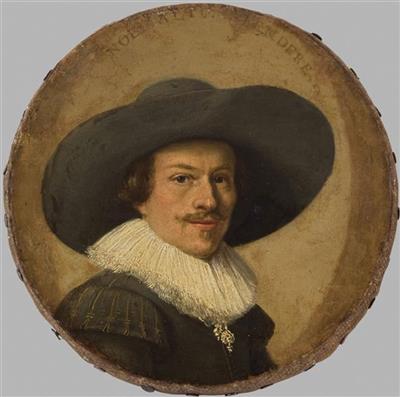
finishing a Frans Hals painting so convincingly that experts still cannot tell where one hand ends and the other begins
Where to see Pieter Codde
Collection holdings are reported here; current display varies. Check with each museum before visiting.
-
5 recorded works
Hermitage Museum
Saint Petersburg, Russia
-
4 recorded works
Rijksmuseum
Amsterdam, Netherlands


-
3 recorded works
Mauritshuis
The Hague, Netherlands
-
3 recorded works
Nationalmuseum
Stockholm, Sweden
-
3 recorded works
Palais des Beaux-Arts de Lille
Lille, France
-
3 recorded works
National Museum in Warsaw
Warsaw, Poland
-
2 recorded works
Louvre
Paris, France
-
2 recorded works
Gemäldegalerie Berlin
Berlin, Germany
-
2 recorded works
Kunstmuseum Basel
Basel, Switzerland
-
2 recorded works
National Gallery
London, United Kingdom


View all 30 museums
-
2 recorded works
Museum of Fine Arts Ghent (MSK)
Ghent, Belgium
-
2 recorded works
Villa Vauban
Luxembourg City, Luxembourg
-
2 recorded works
Amsterdam Museum
Amsterdam, Netherlands
-
1 recorded work
Städel Museum
Frankfurt, Germany
-
1 recorded work
Liechtenstein Museum
Vienna, Austria
-
1 recorded work
National Gallery Prague
Prague, Czech Republic
-
1 recorded work
Leiden Collection
New York City, United States
-
1 recorded work
Museum Boijmans Van Beuningen
Rotterdam, Netherlands
-
1 recorded work
Staatsgalerie Stuttgart
Stuttgart, Germany
-
1 recorded work
Julius Böhler AG
Starnberg, Germany
-
1 recorded work
Charles Sedelmeyer collection
Paris, France
-
1 recorded work
Beecroft Art Gallery
Southend-on-Sea, United Kingdom
-
1 recorded work
Art Institute of Chicago
Chicago, United States
-
1 recorded work
Landesmuseum Hannover
Hanover, Germany
-
1 recorded work
Royal Museums of Fine Arts of Belgium
Brussels, Belgium
-
1 recorded work
Wadsworth Atheneum Museum of Art
Hartford, United States
-
1 recorded work
Musée des Beaux-Arts de la ville de Paris
Paris, France
-
1 recorded work
Museum der bildenden Künste
Leipzig, Germany
-
1 recorded work
National Gallery of Ireland
Dublin, Ireland
Also here (6)
-
1 recorded work
Centraal Museum
Utrecht, Netherlands


Frequently Asked Questions
Where can I see Pieter Codde's work?
Pieter Codde's paintings can be found in various museum collections. Examples are held at the Rijksmuseum, Amsterdam; the Mauritshuis, The Hague; and the Museum Bredius, The Hague. Other locations include the Hamburger Kunsthalle; the Sinebrychoff Art Museum, Helsinki; and the Staatliche Kunstsammlungen, Kassel. Examples are also held at The Hermitage Museum, Leningrad; the Nivaagaards Malerisamlingen, Denmark; and the National Gallery of Canada, Ottawa. In France, Codde's work can be viewed at the Bibliothèque Nationale, the Musée Jacquemart-André, and the Musée du Louvre, all in Paris, and the Musée de Rennes. Other international locations include the Narodni Galerie, Prague; the Walters Art Gallery, Baltimore; and the Staatliche Museen, Berlin. It is worth noting that around half of the 400 paintings attributed to Codde are copies, some of which have been misattributed as originals. These copies were a significant part of the 17th-century Dutch art market.What should I know about Pieter Codde's prints?
Pieter Codde (1599-1678) was a Dutch Golden Age painter, known for small-scale genre works and portraits. He spent his entire career in Amsterdam. Codde's paintings often depict scenes of daily life, with an emphasis on interior settings and interactions between figures. While Codde is primarily known as a painter, prints were made after some of his compositions. These prints offer a way to experience his work in a different medium. It is important to note that Codde himself was not a printmaker. The prints available would have been produced by other artists, who translated his paintings into etched or engraved images. Prints after Codde's paintings would have circulated among a wider audience, increasing his recognition. These prints are not direct reproductions. Printmakers often introduced slight variations or interpretations of the original paintings. When considering a print after Codde, examine its provenance and condition. Check which printmaker created it, and compare it to the original painting, if known. This will give you a better understanding of its historical context and artistic value.Why are Pieter Codde's works important today?
Pieter Codde (1599-1678) was a Dutch Golden Age painter of genre works, and portraits. His paintings offer insights into middle-class life in 17th-century Amsterdam. Codde's importance stems partly from his detailed depictions of daily life. He captured clothing, domestic interiors, and social interactions with accuracy. These details provide valuable information about the period. His skill as a painter is evident in his handling of light and texture. Codde also collaborated with other artists, including Frans Hals. Hals painted figures in Codde's 1637 painting, "A Merry Company". Codde completed works begun by other artists, such as the "Portrait of a Young Man" that may have been started by Frans Hals. Art historians analyse these collaborations to understand workshop practices and artistic relationships in the Dutch Golden Age. His paintings are in major museum collections, such as the Rijksmuseum in Amsterdam, and the Hermitage in Saint Petersburg. These collections ensure his work remains accessible to scholars and the public. Codde's art provides a window into Dutch society during a time of significant economic and cultural change.What techniques or materials did Pieter Codde use?
Pieter Codde (1599-1678) was a Dutch Golden Age painter known for genre scenes and portraits. He worked primarily in oil paint on canvas and panel. Codde's technique involved careful observation and detailed rendering of his subjects. His brushwork is characterised by smooth surfaces, with attention paid to fabrics and textures. He often depicted interior scenes with figures engaged in everyday activities, such as music-making, conversation, or games. Codde's colour palettes tend to be muted, dominated by browns, greys, and blacks, with occasional touches of brighter colours to draw attention to specific details. His paintings often feature a sense of intimacy and quietude. Codde's skill in capturing the effects of light and shadow contributed to the overall atmosphere of his works. He sometimes collaborated with other artists, such as Peter Lely and Jan Miense Molenaer, who added figures to his architectural settings. Codde's artistic approach reflects the broader trends in Dutch painting during the 17th century, which emphasised realism and naturalism.Who did Pieter Codde influence?
Pieter Codde worked in Amsterdam. He is known for his skill with a brush, the lively character of his figures, and genre paintings. Codde's paintings often depicted dance-mad music companies or guardroom scenes, such as his *Preparation for a Carnival*. Codde's paintings lacked the humour of Adriaen van Ostade and Jan Steen. Ostade was a pupil of Frans Hals. Hals's younger brother Dirk also painted scenes of everyday life. Dirk Hals painted merry companies eating, dancing, listening to music, or playing cards. Examples of his work include *Amusing Party in the Open Air* (1621) and *In Merry Company* (1640). Some of Dirk Hals's sons also achieved success with similar social scenes.Who influenced Pieter Codde?
Pieter Codde (1599-1678) was an Amsterdam painter of genre scenes and portraits. He is thought to have been influenced most strongly by Frans Hals and Willem Buytewech. Codde's early works show the influence of Hals's portrait style. Hals was known for his loose brushwork and capturing the vitality of his subjects. Codde adopted a similar approach in some of his portraits, although with a more restrained palette. Willem Buytewech's influence is apparent in Codde's genre scenes, particularly his interest in depicting fashionable society. Buytewech was a master of depicting elegant figures in interior settings. Codde's paintings often feature similar subject matter, with an emphasis on depicting the details of clothing and setting. Codde's interest in perspective and spatial arrangement may also reflect Buytewech's example. Other possible influences include Dirck Hals (younger brother of Frans) and the artist Adriaen Brouwer.What style or movement did Pieter Codde belong to?
Pieter Codde (1599-1678) was a Dutch painter who worked during the Baroque era, a period that began in Italy shortly before 1600 and spread through Europe. However, the Baroque style was resisted in Protestant countries, such as Holland, for as long as possible. The Baroque art that did develop in northern Europe tended to emphasise realism in daily life, moving away from the emotional impact preferred by Catholic countries. Alongside the Baroque, a classical movement grew, finding its particular home in France. There was also a third style: Realism, associated with such artists as Caravaggio and many Dutch painters. All three styles continued, with modifications, into the 18th century. The Baroque style is associated with drama and strong tonal contrasts. It evolved as the Roman Catholic Church made a stand against cultural movements that produced new religious ideas. The new art was intended to be visually and emotionally appealing, to focus clearly on Catholic doctrine in order to influence and educate.What was Pieter Codde known for?
Pieter Codde, a Dutch artist born in 1599 in Amsterdam, is known for genre paintings and portraits. He captured scenes of daily life, often featuring small groups of figures in interior settings. Codde's style has qualities of the Baroque, which succeeded Mannerism around 1600. The Baroque infused emotion and drama with tonal contrasts. It began in Italy, then spread through Europe. The Baroque in Northern Europe tended to emphasise realism in daily life. Codde received artistic training from Frans Hals. His paintings often depict soldiers, musicians, and social gatherings. He had a talent for capturing the textures of fabrics and the details of everyday objects. Codde died in 1678 in Amsterdam.
Sources
Where to See guide aggregates verified holdings of Pieter Codde's works across the following collections.
- [1] museum Beecroft Art Gallery Used for: museum holdings.
- [2] book J. Bruyn, B. Haak, S. H. Levie, P. J. J. van Thiel, E. van de Wetering (auth.), A Corpus of Rembrandt Paintings _ Volume II_ 1631–1634 Used for: stylistic analysis.
- [3] book Tummers, Anna(Editor), Art Market and Connoisseurship : A Closer Look at Paintings by Rembrandt, Rubens and Their Contemporaries Used for: biography.
- [4] book Beard, Lee, 1973- author, Butler, Adam, author; Van Cleave, Claire, author; Fortenberry, Diane, author; Stirling, Susan, author, Beard, Lee, 1973- author, Butler, Adam, author; Van Cleave, Claire, author; Fortenberry, Diane, author; Stirling, Susan, author - The Art Book_ New Edition, Mini Format Used for: biography.
- [5] book Ekkart, Rudolf E. O., author, Dutch portraits : the age of Rembrandt and Frans Hals Used for: stylistic analysis.
- [6] book Author unknown, The Primacy of the Image in Northern European Art, 1400-1700: Essays in Honor of Larry Silver Used for: stylistic analysis.
- [7] book John Michael Montias, Vermeer and His Milieu _ A Web of Social History Used for: biography.
- [8] book John Michael Montias, Vermeer and His Milieu _ A Web of Social History Used for: biography.
- [9] book John Michael Montias, Vermeer and His Milieu _ A Web of Social History Used for: biography.
Editorial overseen by Solis Prints. Sources verified 2026-09-30. Click a source for details, or hover over [N] in the page above to preview.
Editorial standardsMethodologyCorrectionsAI disclosureAbout the editorial team