



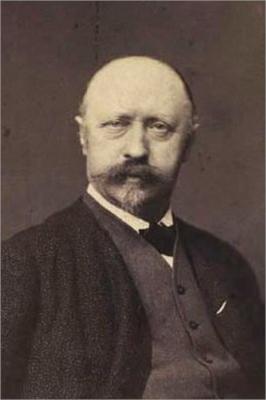
About Anton Melbye
1818–1875
Denmark's leading marine painter who encouraged the teenage Camille Pissarro to pursue art during a chance meeting in Venezuela.
Museums6
Countries5
Largest reported holdingNationalmuseum, Stockholm · 9 recorded works
Loading map…
Where to see Anton Melbye
Collection holdings are reported here; current display varies. Check with each museum before visiting.
-
9 recorded works
Nationalmuseum
Stockholm, Sweden
-
2 recorded works
Hermitage Museum
Saint Petersburg, Russia


-
2 recorded works
Hamburger Kunsthalle
Hamburg, Germany
-
1 recorded work
Finnish National Gallery
Helsinki, Finland
Also here (6)
-
1 recorded work
Alte Nationalgalerie
Berlin, Germany
-
1 recorded work
Beecroft Art Gallery
Southend-on-Sea, United Kingdom


Frequently Asked Questions
Where can I see Anton Melbye's work?
It is difficult to pinpoint exactly where you can view Anton Melbye's work today. Museum catalogues are constantly in flux; works are accessioned, deaccessioned, put in storage, and brought out again. However, museum directories may help you discover institutions that hold his pieces. For example, the Art Gallery of New South Wales (in Sydney, Australia), the Musées Royaux des Beaux-Arts de Belgique (in Brussels), the Kunsthistorisches Museum (in Vienna, Austria), the Koninklijk Museum voor Schone Kunsten (in Antwerp, Belgium), the Art Gallery of Ontario (in Toronto, Canada), and the Nationalmuseum (in Stockholm, Sweden) are all major institutions that may hold work by Melbye. Smaller galleries and regional museums may also hold his work, so check their online catalogues. Art auction houses such as Christie's and Sotheby's are also worth watching, as they occasionally offer paintings by him.What should I know about Anton Melbye's prints?
Anton Melbye (1818[2]-1875[2]) was a Danish artist known for maritime paintings. He travelled extensively, and his prints often depict ships and seascapes from various locations. Melbye trained with his older brother, Fritz, also a marine painter. Initially, Anton considered a career in shipbuilding. However, he pursued art, studying at the Royal Danish Academy of Fine Arts. He gained recognition for his detailed and dramatic depictions of naval scenes. His travels influenced his art. He visited places such as Constantinople, Greece, and Russia, working for Tsar Nicholas I as a marine painter. These experiences provided him with diverse subject matter for his work. Prints of his paintings capture the atmosphere of the sea, with attention to detail in the ships and the effects of light on water. His works are characterised by careful observation and technical skill. They provide insight into 19th-century maritime life and the ships of the time.Why are Anton Melbye's works important today?
Anton Melbye (1816-1875[2]) was a Danish marine painter known for his seascapes and naval scenes. His works offer insights into 19th-century maritime life and ship design. As Romanticism spread across Europe, artists in Scandinavia looked to their own histories for subject matter. Melbye's paintings often depict dramatic weather conditions and historical naval events, reflecting the Romantic interest in nature's power and the sublime. Dutch art was a significant influence on Scandinavian artists. Artists studied Old Masters through prints and works available in royal collections. This emulation allowed them to combine faithfulness to nature with academic conventions. Melbye's detailed depictions of ships and seascapes provide valuable historical documentation. His artistic skill and historical subject matter make his works important for understanding both art and maritime history.Who was Anton Melbye?
Anton Melbye was Denmark's leading marine painter. He briefly influenced Camille Pissarro, encouraging him to pursue painting seriously when they met in Venezuela in the 1850s.Who did Anton Melbye influence?
Anton Melbye's artistic milieu in Copenhagen was one where Dutch art was ascendant. Artists such as Johan Christian Claussen Dahl and Caspar David Friedrich, a student at the Royal Academy of Fine Arts in Copenhagen, both adapted the 'Scandinavian' elements of the Dutch style into their own work and popularised it across Europe. Thomas Fearnley, a leading Norwegian artist, studied works by Dutch masters in Copenhagen in 1821[2]. Prints of works by Dutch artists were widely available, and young artists used them as ready compositional patterns. Copying these works allowed artists to be faithful to nature and inventive. The Danish artists Carl Holsøe and Vilhelm Hammershøi drew inspiration from Holland and Paris. Their paintings combine references to Vermeer, Christoffer Wilhelm Eckersberg and Whistler.Who influenced Anton Melbye?
Anton Melbye was a recognised figure in the Paris art world. Camille Pissarro sought out Melbye, who was the elder brother of his friend Fritz. Melbye exhibited regularly at the Salon, and his seascapes had an official customer base that included the emperor. Melbye greeted Camille kindly, made room for him in his studio, and even employed him to paint his skies when he was short of time. Melbye also bought eleven oils from Pissarro over the next few years. Of more immediate importance to Camille, Melbye introduced him to Corot. The Norwegian artist Johan Christian Claussen Dahl adapted the Scandinavian elements of the Dutch style to his own art and popularised them in Europe; so did Caspar David Friedrich, a student of the Royal Academy of Fine Arts in Copenhagen. The leading Norwegian practitioner Thomas Fearnley studied the works of Bloemaert, Wouwerman, Ruisdael, Both and others in Copenhagen in 1821[2].What is Anton Melbye's most famous work?
It is difficult to name one single work as Anton Melbye's most famous. He was a prolific painter, and his popularity varied during his career and after his death. Melbye (1818[2]-1875[2]) is best known for his marine paintings. He gained recognition for his dramatic seascapes, often depicting ships in stormy conditions. He travelled extensively, painting scenes from different parts of the world, and these works proved popular with collectors and the public. Without specific sales data or contemporary critical acclaim to point to one particular piece, it is more accurate to say that Melbye's fame rests on his collective body of work within the marine painting genre, rather than one specific, universally recognised masterpiece.What style or movement did Anton Melbye belong to?
Anton Melbye (1818[2]-1875[2]) was a Danish artist known for his maritime paintings. He is usually associated with the Romantic movement, which was prominent during the 19th century. Romanticism in painting emphasised emotion, the power of nature, and dramatic subject matter. As a marine painter, Melbye captured the force and beauty of the sea in his works. He often depicted ships in stormy weather, naval battles, and other maritime scenes. His artistic style is characterised by detailed depictions of ships and seascapes, with a focus on light and atmosphere. Melbye's works reflect the Romantic interest in nature's grandeur and the sublime. His paintings often evoke a sense of awe and wonder at the power and scale of the ocean. He was not only a painter but also served as a marine artist for the Danish Navy, further solidifying his connection to maritime themes.
Sources
Where to See guide aggregates verified holdings of Anton Melbye's works across the following collections.
- [1] museum Beecroft Art Gallery Used for: museum holdings.
- [2] wikipedia Wikipedia: Anton Melbye Used for: biography.
- [3] book Beard, Lee, 1973- author, Butler, Adam, author; Van Cleave, Claire, author; Fortenberry, Diane, author; Stirling, Susan, author, Beard, Lee, 1973- author, Butler, Adam, author; Van Cleave, Claire, author; Fortenberry, Diane, author; Stirling, Susan, author - The Art Book_ New Edition, Mini Format Used for: biography.
- [4] book Anka Muhlstein, Camille Pissarro Used for: biography.
- [5] book Masterpieces of western art : a history of art in 900 individual studies from the Gothic to the present day Used for: biography.
Editorial overseen by Solis Prints. Sources verified 2026-09-30. Click a source for details, or hover over [N] in the page above to preview.
Editorial standardsMethodologyCorrectionsAI disclosureAbout the editorial team