



About DESIDERIO
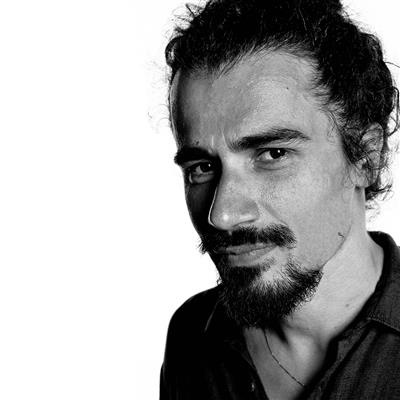
Italian painter and filmmaker based in Terni, known for large-scale installations and his involvement with the Cuban art scene across two decades.
Where to see DESIDERIO
Collection holdings are reported here; current display varies. Check with each museum before visiting.
-
2 recorded works
Nationalmuseum
Stockholm, Sweden
-
2 recorded works
Walters Art Museum
Baltimore, United States


-
1 recorded work
Musée des Beaux-Arts d'Orléans
Orléans, France
-
1 recorded work
Musée des Beaux-Arts et d'Archéologie de Besançon
Besançon, France
-
1 recorded work
Musée des Arts Décoratifs
Paris, France
-
1 recorded work
National Gallery
London, United Kingdom
-
1 recorded work
Pollok House
Glasgow, United Kingdom
-
1 recorded work
Menil Collection
Houston, United States
-
1 recorded work
Hermitage Museum
Saint Petersburg, Russia
-
1 recorded work
Museo Soumaya
Mexico City, Mexico


View all 19 museums
-
1 recorded work
Museum de Fundatie
Heino, Netherlands
-
1 recorded work
Collection Rau for UNICEF
Remagen, Germany
-
1 recorded work
Fitzwilliam Museum
Cambridge, United Kingdom
-
1 recorded work
Thyssen-Bornemisza Museum
Madrid, Spain
-
1 recorded work
Gothenburg Museum of Art
Gothenburg, Sweden
-
1 recorded work
National Museum in Warsaw
Warsaw, Poland
-
1 recorded work
National Museum of Fine Arts of Cuba
Havana, Cuba
-
1 recorded work
Museum of Fine Arts, Houston
Houston, United States
-
1 recorded work
Yale University Art Gallery
New Haven, United States


Frequently Asked Questions
Where can I see DESIDERIO's work?
To view works attributed to DESIDERIO, consider visiting the following museums: In the United States, you can find art at the Charles Hosmer Morse Museum of American Art (Winter Park, Florida), the Los Angeles County Museum of Art, the Metropolitan Museum of Art (New York), the Minneapolis Institute of Arts, the Museum of Modern Art (New York), the Virginia Museum of Fine Arts (Richmond), and the Wolfsonian at Florida International University (Miami Beach). In Canada, the Royal Ontario Museum (Toronto) holds relevant pieces. In the United Kingdom, visit the Bakelite Museum (Williton), the Brighton Museum & Art Gallery, the Geffrye Museum (London), the Manchester Art Gallery, the National Museums of Scotland (Edinburgh), and the Victoria & Albert Museum (London). In Italy, Fondazione Regionale Cristoforo Colombo (Genova), Museo del Bijou di Casalmaggiore, and Museo Richard-Ginori della Manifattura di Doccia (Sesto Fiorentino) may have works on display.What should I know about DESIDERIO's prints?
When considering a DESIDERIO print, bear in mind some key aspects of printmaking. An "original print" is conceived as a print, made solely as a print, and usually part of a numbered, signed edition. Each print in the edition is an original, created from a plate, stone, screen or block. The artist decides the number of prints in the edition. Numbering is a standard convention, with each print assigned a number (e.g. 12/25, meaning the 12th print of 25). Early prints might not be numbered or signed. A reproduction is a copy of artwork from another medium, often made using photomechanical methods. Numbering or signing a reproduction does not make it an original print. Printmaking is an unregulated activity, but edition claims add value if they are truthful. Claims and descriptions are subject to trade description legislation. The edition number is written on the bottom left margin of the print, the title in the middle, and the signature on the right, always in pencil.Why are DESIDERIO's works important today?
DESIDERIO's mixed-media art books, such as *Codex Delilah: From Mexica to Chicana* (1992), remain relevant because they democratise art by freeing it from the elitist aura of rare objects. Her work translates Mesoamerican codices into culturally relevant terms, addressing the colonial encounters and their aftermath for Indigenous and mestiza Latina women in the United States. *Codex Delilah* presents the narrative from the perspective of Six Deer, a fictional Mayatec girl, who journeys from Mexico City to New Mexico. Along the way, Six Deer meets female figures from Mexican and Chicana/o popular culture, learning about the historical processes initiated by European colonisation. The book combines Mesoamerican codex traditions with photonovels, photography, and literary narrative. Its panels incorporate deities, earthly levels, spatial locations, and written narratives, which can be read in multiple directions and languages. Through this combination, DESIDERIO explores identity, multicultural heritage, and survival within a complex historical context.Who did DESIDERIO influence?
It is difficult to say exactly who Desiderio might have influenced. However, considering the stylistic evolution of Diego Velázquez, we can see how artists respond to the styles of other artists. Velázquez's paintings from the Seville period share similarities with Caravaggio's work, particularly in format, composition, pictorial space and lighting. Both artists also depict rustic figures. Caravaggio was a noted specialist in the half-length format, which Velázquez also used in his genre paintings, usually called bodegones. Velázquez’s late work, The Spinners, was largely made to proclaim himself a worthy successor to the tradition established by Titian and continued by Rubens. Velázquez was impressionable late in his career and must have been just as impressionable as a young man. He surely did not develop his distinctive naturalism without artistic models.Who influenced DESIDERIO?
According to period sources, artists of DESIDERIO's era often found inspiration and motivation from their peers. They were also driven by a desire for recognition. Artists sometimes reflected on the accomplishments and status achieved by others, which spurred them to pursue greatness through hard work and study. Furthermore, the art of the Italian masters served as a significant source of influence. These examples and prototypes were readily available; they were sold publicly and could be examined directly. The availability of Italian masterworks allowed artists to study them closely, which provided more fruitful instruction than relying solely on imagination or descriptions. By studying these tangible examples, artists could learn from the past and develop their own skills.What style or movement did DESIDERIO belong to?
Desiderio, also known as Desiderio da Settignano, was an Italian Renaissance sculptor. He was active in Florence during the 15th century. During this period, Florence was a centre for artistic innovation. Artists were moving away from the Gothic style and developing a new approach based on classical ideals. This new style is now known as the Renaissance. Desiderio's work shows the influence of artists such as Donatello and Lorenzo Ghiberti. He is known for his marble sculptures, particularly his portrait busts and reliefs. These works often feature graceful figures with delicate features. He worked alongside other sculptors exploring similar themes, such as Antonio Rossellino and Mino da Fiesole. His style is characterised by its technical skill and emotional expressiveness. Desiderio's sculptures are considered important examples of early Renaissance art.What is DESIDERIO known for?
DESIDERIO is known for his site-responsive, large-scale work. He has participated in the Venice Biennale, the Havana Biennale, and the Biennale Fin del Mundo in Valparaiso, Chile.
Sources
Where to See guide aggregates verified holdings of DESIDERIO's works across the following collections.
- [1] wikipedia Wikipedia: DESIDERIO Used for: biography.
- [2] book Anthony Burton, A Performer's Guide to Music of the Baroque Period Used for: biography, stylistic analysis.
- [3] book Zuffi, Stefano, 1961-, Baroque painting : two centuries of masterpieces from the era preceding the dawn modern art Used for: biography.
- [4] book Nina A. Mallory, El Greco to Murillo Used for: biography.
- [5] book Lilian H. Zirpolo, Historical Dictionary of Baroque Art and Architecture Used for: biography.
Editorial overseen by Solis Prints. Sources verified 2026-09-30. Click a source for details, or hover over [N] in the page above to preview.
Editorial standardsMethodologyCorrectionsAI disclosureAbout the editorial team