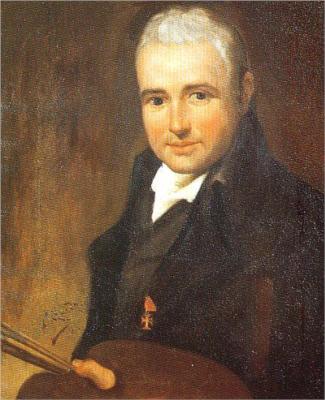
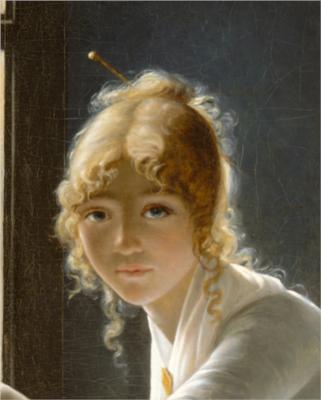
Neoclassicism Artists

Annunciation by Alexander Ivanov
Expulsion of merchants from the temple by Alexander Ivanov
Priam Begging Achilles for Hector's Body by Alexander Ivanov
The Last Supper by Alexander Ivanov
Aglaida and Boniface by Alexandre Cabanel
Cincinnatus recevant les ambassadeurs chargés de lui porter les insignes de la dictature by Alexandre Cabanel
Cleopatra Testing Poisons on Condemned Prisoners by Alexandre Cabanel
Contemplation by Alexandre Cabanel
Death of Francesca da Rimini and of Paolo Malatesta by Alexandre Cabanel
Eve After the Fall by Alexandre Cabanel
Fallen angel by Alexandre Cabanel
Florentine Poet by Alexandre Cabanel

Neoclassicism

27 artists · 1760–1850

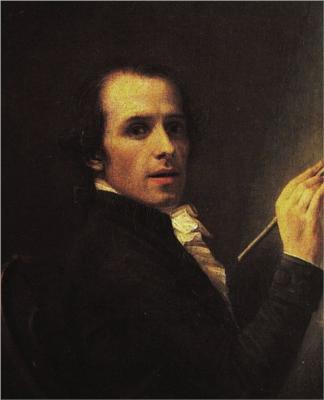
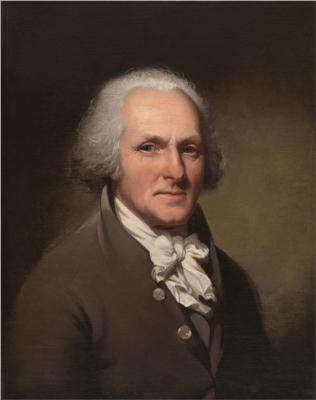
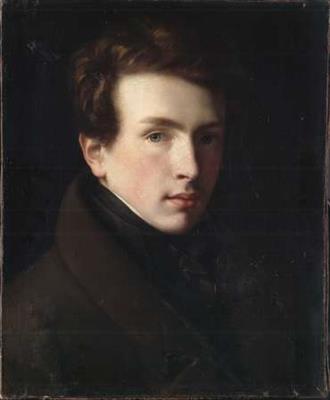
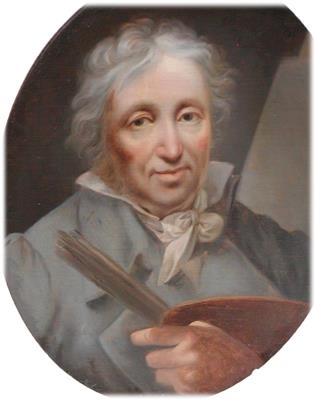
Neoclassicism emerged in the 1760s as a forceful rejection of Rococo excess. Where the previous generation had favoured pastel palettes, theatrical sentiment and decorative whimsy, a new cohort of painters turned to ancient Greece and Rome for a sterner visual language. The catalyst was twofold: the archaeological excavations at Pompeii and Herculaneum, and the theoretical writings of Johann Joachim Winckelmann, whose call for noble simplicity and quiet grandeur became the movement's founding text. Under Jacques-Louis David, Neoclassical painting became inseparable from republican ideology, its clean sight lines and muscular forms encoding civic duty, self-sacrifice and rational order. The movement attracted history painters such as David and Benjamin West, portraitists such as Angelica Kauffmann, and later academic masters including Ingres, Gerome and Bouguereau. What held them together was a shared conviction that the ancients had solved the problem of beauty, and that the task of the modern painter was to recover, not invent.

Key Ideas

  • The Authority of Antiquity

    Neoclassical painters treated Greek and Roman art as a benchmark. Winckelmann argued that classical sculpture had achieved an ideal balance of form and expression. Artists studied casts, reliefs and vase paintings before they composed a single figure.

  • Moral Purpose in Painting

    Enlightenment thinkers demanded that art should instruct as well as please. Neoclassical painters responded with subjects drawn from Plutarch, Livy and Homer, choosing moments of sacrifice and stoic endurance. A canvas was expected to function as an ethical argument.

  • Line Over Colour

    Clean contours, precise modelling and sculptural volume took priority over loose brushwork and atmospheric colour. Ingres pushed this principle to an extreme, producing figures whose porcelain surfaces and sinuous outlines owe more to Raphael than to any living model.

  • Decorum and Historical Accuracy

    Neoclassical painters pursued archaeological correctness with increasing rigour. Gerome travelled to North Africa to verify settings. Costume, furniture, weaponry and architecture were researched against published sources and excavation reports.

  • The Ideal Body

    Following Winckelmann's doctrine, painters idealised the human figure according to classical proportions. Muscles were defined but never strained; poses echoed the contrapposto of Greek statuary. Bouguereau and Cabanel carried this principle deep into the nineteenth century.

Origins

Buried Cities, Recovered Forms

The excavations at Herculaneum (from 1738) and Pompeii (from 1748) transformed European attitudes to antiquity. For the first time, painters could study domestic interiors and wall paintings preserved under volcanic ash. Roman domestic taste was restrained, geometric and colourful, nothing like the heavy Baroque grandeur that had passed for classical in previous centuries.

Winckelmann and the Theory of Ideal Beauty

Winckelmann's Reflections on the Painting and Sculpture of the Greeks (1755) argued that Greek art had achieved a perfection of form. His phrase noble simplicity and quiet grandeur became the movement's motto. His later History of Ancient Art (1764) attempted the first systematic chronology of classical styles.

The Grand Tour and the Roman Studio

Rome in the 1760s and 1770s functioned as the laboratory. Young painters arrived on Grand Tour scholarships and competed for the Prix de Rome. David arrived in Rome in 1775 and later recalled that studying ancient sculpture there was like having cataracts removed from his eyes.

Against the Rococo

Rococo painting favoured mythological subjects treated with erotic playfulness, pastel colours and loose brushwork. The Neoclassicists rejected all of this. Their subjects were drawn from republican history. Their palette was cool, their forms sculptural. Diderot called for art that could touch us, instruct us, correct us and invite us to virtue.

In Their Words

“The last and most eminent characteristic of the Greek works is a noble simplicity and sedate grandeur in gesture and expression.”
Johann Joachim Winckelmann, Reflections on the Painting and Sculpture of the Greeks, 1755
“Should we not be pleased to see painting compete with the drama in an effort to touch us, to instruct us, to correct us and to invite us to virtue?”
Denis Diderot, Essai sur la peinture, 1766
“Drawing is the probity of art.”
Jean-Auguste-Dominique Ingres, Attributed remark to pupils

All Neoclassicism Artists

27 artists.

Recommended Reading

  • Jacques-Louis David: Empire to Exile

    Jacques-Louis David: Empire to Exile

    Philippe Bordes · 2005

    A political biography tracking the full arc of Neoclassicism in France.

  • Art in an Age of Revolution, 1750-1800

    Art in an Age of Revolution, 1750-1800

    Albert Boime · 1987

    Connects artistic change to Enlightenment philosophy and political upheaval.

  • Winckelmann and the Invention of Antiquity

    Katherine Harloe · 2013

    How Winckelmann's writings shaped the aesthetic theory behind the movement.

Take Neoclassicism home.

Browse Neoclassicism Prints →
Back to Discover