



About Andrea del Verrocchio
- Renaissance
- Italian Renaissance
Florentine goldsmith-turned-sculptor who taught Leonardo da Vinci, made the Medici tombs, and died casting the Colleone equestrian statue in Venice.
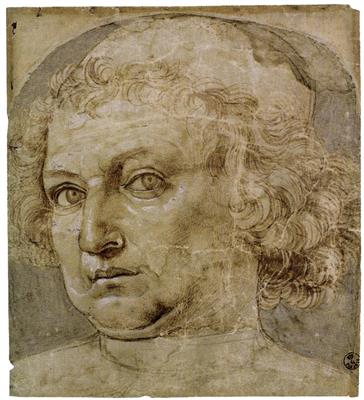
Where to see Andrea del Verrocchio
Collection holdings are reported here; current display varies. Check with each museum before visiting.
-
 6 recorded works
Bargello National Museum
Florence, Italy
-
 4 recorded works
Louvre
Paris, France
-
 2 recorded works
National Gallery of Art
Washington D.C., United States
-
 4 recorded works
Victoria and Albert Museum
London, United Kingdom
-
 2 recorded works
Kupferstichkabinett Berlin
Berlin, Germany
-
 2 recorded works
Gemäldegalerie Berlin
Berlin, Germany
-
 2 recorded works
National Gallery
London, United Kingdom
-
 2 recorded works
British Museum
London, United Kingdom
-
 2 recorded works
Bode Museum
Berlin, Germany
-
2 recorded works
Gabinetto dei disegni e delle stampe
Florence, Italy
Also here (4)

View all 22 museums
-
 1 recorded work
Courtauld Gallery
London, United Kingdom
-
 1 recorded work
National Galleries Scotland
Edinburgh, United Kingdom
-
 1 recorded work
Galleria Palatina
Florence, Italy
-
 1 recorded work
Staatliche Kunstsammlungen Dresden
Dresden, Germany
-
 1 recorded work
Museum of Fine Arts, Budapest
Budapest, Hungary
-
 1 recorded work
Rijksmuseum
Amsterdam, Netherlands
-
1 recorded work
Hermitage Museum
Saint Petersburg, Russia
-
1 recorded work
Kupferstich-Kabinett Dresden
Dresden, Germany
-
1 recorded work
Metropolitan Museum of Art
New York City, United States
-
1 recorded work
Musée Jacquemart-André
Paris, France
-
 1 recorded work
The Frick Collection
New York City, United States
-
 1 recorded work
Yale University Art Gallery
New Haven, United States


Frequently Asked Questions
Where can I see Andrea del Verrocchio's work?
Paintings and sculptures by Andrea del Verrocchio can be found in museums across Europe and the United States. In Florence, Italy, his work is held at the Galleria degli Uffizi and the Museo Nazionale del Bargello; the latter holds his marble *Bust of a Woman Holding a Nosegay*. Examples of work attributed to Verrocchio are in the Louvre, Paris; the Victoria and Albert Museum, London; the National Gallery[6] of Art, Washington, DC; and the Art Institute of Chicago. Other European museums that hold paintings by artists from Verrocchio's circle include the Bode Museum, Berlin, and the Barber Institute of Fine Arts, Birmingham. Verrocchio led an active workshop in Florence that trained artists in painting, sculpture, and goldsmithing. Leonardo da Vinci was his student; Leonardo's style was founded on his master's. It can be difficult to distinguish Verrocchio's hand from that of his assistants.What should I know about Andrea del Verrocchio's prints?
Andrea del Verrocchio, who was born in Florence in 1435[7] and died in Venice in 1488[7], was a versatile artist. He led an active workshop in Florence that trained artists in painting, sculpture, and goldsmithing. Leonardo da Vinci was his most famous pupil; others included Perugino. Verrocchio was a painter, sculptor, and accomplished draughtsman. Surviving copies of his warrior images suggest a market existed for his work during the late 1470s and early 1480s. Other works from this time show a taste for fantastic armour. One example is a parchment drawing by Marco Zoppo of a warrior, which is held at the British Museum. Verrocchio's silver reliefs of the Decapitation of St John the Baptist, now in Florence's Museo dell'Opera del Duomo, also demonstrate this interest. Lorenzo the Magnificent commissioned fanciful shields and costumes for parades. The armour's ornamentality may come from the late gothic taste for elaborate decoration, seen in manuscripts with foliage. The variety in the armour reflects Alberti's idea that modern artists should include *varietà* in their compositions.What was Andrea del Verrocchio known for?
Andrea del Verrocchio (1435[7]-1488[7]) was an Italian[7] sculptor, painter, and goldsmith who worked during the Early Renaissance[7]. He is most well-known as the teacher of Leonardo da Vinci, as well as Perugino, Lorenzo di Credi, and other artists. Verrocchio's sculpture is characterised by its realism and dynamic energy. His bronze statue of David (circa 1473-1475[7]) for the Medici family is an early example of this. It depicts David as a confident, youthful figure, and it contrasts with earlier, more static representations. Another important sculpture is The Incredulity of Saint Thomas (1467-1483), which is located in the Orsanmichele in Florence. Although Verrocchio was highly regarded as a painter, fewer paintings are attributed to him with certainty. The Baptism of Christ (circa 1472-1475), now in the Uffizi Gallery, is one of his most famous paintings. Leonardo da Vinci, who was still an apprentice in Verrocchio's workshop, painted one of the angels in the painting. Verrocchio's workshop was a centre for artistic innovation, and he played a significant role in shaping the development of Florentine art.What is Andrea del Verrocchio known for?
Andrea del Verrocchio is known for being a master sculptor, with his sculptural precision apparent in his paintings. He is also known for running a workshop in Florence that trained goldsmiths, sculptors, and painters, including Leonardo da Vinci and Perugino.What was Andrea del Verrocchio's art style?
Verrocchio's art style, apparent in works such as The Baptism of Christ, demonstrates carefully considered poses and precise anatomical detail. He also lent a dramatic intensity to his scenes.
Sources
Where to See guide aggregates verified holdings of Andrea del Verrocchio's works across the following collections.
- [1] museum Courtauld Gallery Used for: museum holdings.
- [2] museum National Galleries Scotland Used for: museum holdings.
- [3] museum Kupferstichkabinett Berlin Used for: museum holdings.
- [4] museum Department of Prints and Drawings of the Louvre Used for: museum holdings.
- [5] museum Gemäldegalerie Berlin Used for: museum holdings.
- [6] museum National Gallery Used for: museum holdings.
- [7] wikipedia Wikipedia: Andrea del Verrocchio Used for: biography.
- [8] book Art, the ape of nature : studies in honor of H. W. Janson Used for: stylistic analysis.
- [9] book Beard, Lee, 1973- author, Butler, Adam, author; Van Cleave, Claire, author; Fortenberry, Diane, author; Stirling, Susan, author, Beard, Lee, 1973- author, Butler, Adam, author; Van Cleave, Claire, author; Fortenberry, Diane, author; Stirling, Susan, author - The Art Book_ New Edition, Mini Format Used for: biography, stylistic analysis.
- [10] book da Vinci Leonardo; Müntz, Eugène; da Vinci Leonardo, Leonardo da Vinci _ artist, thinker, and man of science volume 1 Used for: biography.
- [11] book da Vinci Leonardo; Müntz, Eugène; da Vinci Leonardo, Leonardo da Vinci _ artist, thinker, and man of science volume 1 Used for: biography.
- [12] book Masterpieces of western art : a history of art in 900 individual studies from the Gothic to the present day Used for: stylistic analysis.
Editorial overseen by Solis Prints. Sources verified 2026-09-30. Click a source for details, or hover over [N] in the page above to preview.
Editorial standardsMethodologyCorrectionsAI disclosureAbout the editorial team