



About Edward Poynter
- history painting
Victorian classicist who scandalized the Royal Academy with Israel in Egypt (1867[1]) and served as its President for 22 years, related to both Burne-Jones and Kipling.
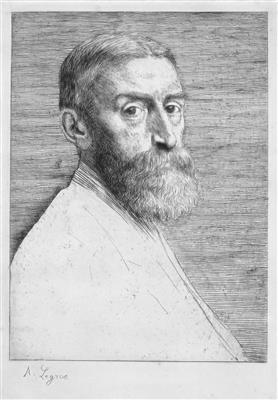
Where to see Edward Poynter
Collection holdings are reported here; current display varies. Check with each museum before visiting.
-
12 recorded works
St Paul's Cathedral
London, United Kingdom
Also here (1)
-
5 recorded works
Royal Academy of Arts
London, United Kingdom


-
4 recorded works
Walker Art Gallery
Liverpool, United Kingdom
-
4 recorded works
Manchester Art Gallery
Manchester, United Kingdom
-
3 recorded works
National Gallery
London, United Kingdom
-
2 recorded works
Art Institute of Chicago
Chicago, United States
-
2 recorded works
Victoria and Albert Museum
London, United Kingdom
-
1 recorded work
Newport Museum and Art Gallery
Newport, United Kingdom
-
1 recorded work
Jersey Museum and Art Gallery
Saint Helier, Jersey
Also here (1)
-
1 recorded work
Pérez Simón Collection
Mexico City, Mexico


View all 17 museums
-
1 recorded work
Barts Health Archives
London, United Kingdom
-
1 recorded work
Brighton Museum & Art Gallery
Brighton and Hove, United Kingdom
-
1 recorded work
Aberdeen Archives, Gallery and Museums collections
Aberdeen, United Kingdom
-
1 recorded work
Art Gallery of South Australia
Adelaide, Australia
-
1 recorded work
Parliamentary Art Collection
London, United Kingdom
-
1 recorded work
Metropolitan Museum of Art
New York City, United States
-
0 recorded works
National Gallery of Art
Washington D.C., United States


Frequently Asked Questions
Where can I see Edward Poynter's work?
You can view Edward Poynter's work in several locations. In the United Kingdom, collections are held at the Brighton Museum & Art Gallery (Royal Pavilion Gardens, Brighton), Manchester Art Gallery (Mosley Street, Manchester), the National Museums of Scotland (Royal Museum, Chambers Street, Edinburgh), and the Victoria & Albert Museum (Cromwell Road, London). In the United States, you can find his paintings at the Metropolitan Museum of Art (1000 Fifth Avenue, New York), the Minneapolis Institute of Arts (2400 Third Avenue South, Minneapolis), the Los Angeles County Museum of Art (5905 Wilshire Boulevard, Los Angeles), the Charles Hosmer Morse Museum of American Art (445 North Park Avenue, Winter Park, FL), the Museum of Modern Art (11 West 53rd Street, New York), the Virginia Museum of Fine Arts (200 N. Boulevard, Richmond), and the Wolfsonian at Florida International University (1001 Washington Avenue, Miami Beach). Other museums that hold his paintings are the Royal Ontario Museum (100 Queens Park, Toronto).What should I know about Edward Poynter's prints?
Edward Poynter (1836[1]-1919[1]) was part of a late wave of artists whose work was reproduced as fine-art prints. The Pre-Raphaelites and their circle recognised the popularity of prints and used them to promote their style to a wider audience. The fine-art etching was much admired, and from 1879[1] onward, specialist publications were dedicated to the etching. In 1880, the Printsellers’ Association noted that they were not compelled to declare the number of proof impressions of etchings, so full details of editions are not always available. Edward Burne-Jones, a contemporary of Poynter, understood the difficulties of transferring painted images into line, colour into engraved tone. He believed that the etchings and mezzotints of his works could even improve the ethereal qualities of certain subjects he chose to paint; moreover, he probably saw the commercial potential for engravings at a time when interest in his paintings had begun to wane.Why are Edward Poynter's works important today?
Edward Poynter (1836[1]-1919[1]) trained in Paris at the studio of Charles Gleyre, who also taught Jean-Léon Gérome. Poynter, along with Frederic Leighton and Lawrence Alma-Tadema, achieved considerable success within the academic Neo-Classical style. Later opinions of Poynter's art, however, varied considerably. The critic John Ruskin, while championing J.M.W. Turner, also admired the minor French genre painter Edouard Frere. Ruskin's views on James McNeill Whistler led to a famous court case, demonstrating, as with Charles Baudelaire's failure to appreciate Édouard Manet, how difficult it can be to judge contemporary art. Dante Gabriel Rossetti, visiting Paris in 1864[1], described Manet as an "idiot" whose pictures represented "simple putrescence and decomposition". Despite shifts in taste, Poynter's work provides insight into the academic art world of the 19th century. His training and success reflect the period's artistic values and the debates surrounding them.Who did Edward Poynter influence?
Edward Poynter's influence can be seen in several late-19th and early-20th century artists who adopted aspects of the Pre-Raphaelite style. These artists often selected the more sentimental and romantic elements, combined with an Italianate aesthetic that appealed to the tastes of the period. Some artists who followed this path include Henry Holiday, who created works such as *Dante and Beatrice*, and John Melhuish Strudwick, known for mythological and allegorical subjects rendered in a linear style. Sir Frank Dicksee also helped bring the Pre-Raphaelite style into the 20th century. John William Waterhouse initially worked in a neoclassical style, but later incorporated Pre-Raphaelite elements. Albert Moore initially embraced Pre-Raphaelitism before transitioning to a more fashionable aestheticism, depicting classical figures in soft pastel colours. The Pre-Raphaelites also had an impact on illustrators like Laurence Housman and Charles Ricketts, who took Pre-Raphaelite illustration in new directions. They remain important figures in the Private Press movement, which produces limited editions of poetry and literature based upon Pre-Raphaelite principles of tasteful design.Who influenced Edward Poynter?
Edward Poynter, like many artists, drew influence from a range of sources and individuals. One can see the impact of earlier masters on his artistic development. Poynter, along with other artists, was searching for a guide. He admired many artists, but he sought something more than what they offered. He wanted art that could touch the hearts of living men, something more than mere prettiness or conventionality. He found inspiration in the works of Italian artists such as Francia and Ludovico Mazzolini, and he also admired the newly acquired Van Eyck, finding them profitable for youthful emulation. He observed the dandelion clock in Raphael's "St Catherine" and the flowers in Titian's "Bacchus and Ariadne", seeing them as examples of patient self-restraint. Poynter also studied prints, a practice shared by Pre-Raphaelites like Holman Hunt and Millais. Hunt copied prints as a child and later made commissioned copies at the British[1] Museum. Millais based his earliest works on prints, using them to visualise entire scenes with all their details.What is Edward Poynter's most famous work?
Poynter is best known for his large historical paintings, particularly those depicting scenes from ancient history. One of his most recognised works is "Israel in Egypt", completed in 1867[1]. This piece depicts enslaved Israelites building Egyptian cities. It established Poynter's reputation as a painter of historical subjects. Another highly regarded painting by Poynter is "The Visit to Aesculapius", finished in 1880. It presents a scene in the temple of Aesculapius, the Greek god of medicine. The painting is admired for its detailed depiction of classical architecture and figures. Poynter's "Queen of Sheba's Visit to King Solomon", exhibited in 1890, is also among his most famous works. This large painting is celebrated for its scale and elaborate detail. It illustrates the biblical story of the Queen of Sheba's visit to King Solomon's court, displaying the opulence and grandeur of the event. These paintings, among others, have cemented Poynter's place in the history of British[1] art.What style or movement did Edward Poynter belong to?
Edward Poynter belonged to the academic art tradition. This system of artistic training reinforced history painting[1], considered the most important form of artistic endeavour. The critic Jules Castagnary, writing in 1868[1], defined history painting as excluding only still life and encompassing classical history, mythology, national events, military engagements, modern-life subjects, religious subjects, and portraits. Success for students at the École des Beaux-Arts meant winning the Prix de Rome. Subjects for the competition came from classical history, mythology, or the Bible. This meant students focused almost exclusively on specialised history painting. Official commissions for public buildings also involved historical subjects, either classical or episodes from French history, encouraged by Louis-Philippe. The pupils and admirers of Jacques-Louis David dominated the Neo-Classical school at the start of the nineteenth century. J.-A.-D. Ingres, the most important of these, influenced history painting. The Ingrist tradition persisted throughout the nineteenth century.What was Edward Poynter known for?
Edward Poynter (born in Birmingham, 1833; died in London, 1898[1]) was a painter, illustrator, and designer associated with the second phase of the Pre-Raphaelite movement. His work displays the influence of early Italian Renaissance artists, such as Sandro Botticelli and Andrea Mantegna. Although not an original member of the Pre-Raphaelite Brotherhood, his paintings share many ideas with those painters. Poynter's paintings often possess a mystical, spiritual quality, seen in his attention to detail. Poynter contributed illustrations to Archibald Maclaren’s *The Fairy Family* (1857) and to periodicals such as *Good Words* (1862-3), Mrs Gatty’s *Parables from Nature* (1865), and the Dalziels’ *Bible Gallery* (1880). He collaborated with William Morris on *The Earthly Paradise* and *The Story of Cupid and Psyche*, though the latter remained unpublished. Later, he worked with Morris at the Kelmscott Press, designing illustrations for publications including the Kelmscott *Chaucer* (1896). Examples of engravings after Poynter include *A Sibyl*, *The Birth of Galatea*, *Pan and Psyche*, and *King Cophetua and the Beggar Maid*.
Sources
Where to See guide aggregates verified holdings of Edward Poynter's works across the following collections.
- [1] wikipedia Wikipedia: Edward Poynter Used for: biography.
- [2] book Beard, Lee, 1973- author, Butler, Adam, author; Van Cleave, Claire, author; Fortenberry, Diane, author; Stirling, Susan, author, Beard, Lee, 1973- author, Butler, Adam, author; Van Cleave, Claire, author; Fortenberry, Diane, author; Stirling, Susan, author - The Art Book_ New Edition, Mini Format Used for: biography, stylistic analysis.
- [3] book Lucinda Hawksley, Lizzie Siddal Used for: biography, stylistic analysis.
- [4] book Masterpieces of western art : a history of art in 900 individual studies from the Gothic to the present day Used for: biography.
- [5] book Engen, Rodney K, Pre-Raphaelite prints : the graphic art of Millais, Holman Hunt, Rossetti and their followers Used for: biography, stylistic analysis.
Editorial overseen by Solis Prints. Sources verified 2026-09-30. Click a source for details, or hover over [N] in the page above to preview.
Editorial standardsMethodologyCorrectionsAI disclosureAbout the editorial team