



About Edward Wadsworth
- vorticism
English Vorticist painter who designed WWI dazzle camouflage and later produced spare coastal still lifes in tempera.
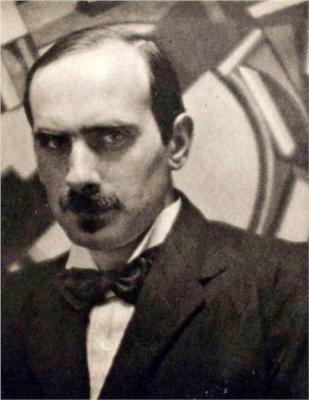
Where to see Edward Wadsworth
Collection holdings are reported here; current display varies. Check with each museum before visiting.
-
4 recorded works
National Gallery
London, United Kingdom
-
2 recorded works
UCL Art Museum
London, United Kingdom


-
2 recorded works
Laing Art Gallery
Newcastle upon Tyne, United Kingdom
-
2 recorded works
Manchester Art Gallery
Manchester, United Kingdom
-
2 recorded works
Victoria and Albert Museum
London, United Kingdom
-
2 recorded works
Thyssen-Bornemisza Museum
Madrid, Spain
-
2 recorded works
National Gallery of Canada
Ottawa, Canada
-
1 recorded work
Mercer Art Gallery
Harrogate, United Kingdom
-
1 recorded work
National Galleries Scotland
Edinburgh, United Kingdom
-
1 recorded work
Newport Museum and Art Gallery
Newport, United Kingdom


Own a piece of it
Edward Wadsworth prints
Hand-finished archival prints from Edward Wadsworth's body of work.
 Broadbottom, near Glossop - Edward Wadsworth
From £28.00
Broadbottom, near Glossop - Edward Wadsworth
From £28.00
 Still Life - Edward Wadsworth
From £28.00
Still Life - Edward Wadsworth
From £28.00
 Bronze Ballet - Edward Wadsworth
From £28.00
Bronze Ballet - Edward Wadsworth
From £28.00
 Rue Fontaine de Caylus, Marseilles, France - Edward Wadsworth
From £28.00
Rue Fontaine de Caylus, Marseilles, France - Edward Wadsworth
From £28.00
 Regalia - Edward Wadsworth
From £28.00
Regalia - Edward Wadsworth
From £28.00
 Satellitium - Edward Wadsworth
From £28.00
Satellitium - Edward Wadsworth
From £28.00
 Marine Screw Propeller - Edward Wadsworth
From £37.00
Marine Screw Propeller - Edward Wadsworth
From £37.00
 Marseilles - Edward Wadsworth
From £28.00
Marseilles - Edward Wadsworth
From £28.00
View all 16 museums
-
1 recorded work
Brighton Museum & Art Gallery
Brighton and Hove, United Kingdom
-
1 recorded work
Portsmouth Museums and Visitor Services
Portsmouth, United Kingdom
-
1 recorded work
Aberdeen Archives, Gallery and Museums collections
Aberdeen, United Kingdom
-
1 recorded work
Leicester Museum & Art Gallery
Leicester, United Kingdom
-
1 recorded work
Kirklees Museums and Galleries
Huddersfield, United Kingdom
-
1 recorded work
National Portrait Gallery
London, United Kingdom


Can't travel? Bring Edward Wadsworth home.
See all Edward Wadsworth prints →Frequently Asked Questions
Where can I see Edward Wadsworth's work?
Edward Wadsworth's artworks can be viewed in several galleries and museums. In London, The Tate holds "The Beached Margin", while the Victoria and Albert Museum also has pieces. Other UK locations include the Brighton Museum & Art Gallery, Manchester Art Gallery, the National Museums of Scotland (Royal Museum) in Edinburgh, and the Towneley Hall Art Gallery in Burnley. Outside the UK, museums with holdings of Wadsworth's work include the Los Angeles County Museum of Art (LACMA), the Metropolitan Museum of Art in New York, the Minneapolis Institute of Arts, the Museum of Modern Art in New York, the Royal Ontario Museum in Toronto, and the Virginia Museum of Fine Arts in Richmond.What should I know about Edward Wadsworth's prints?
Edward Wadsworth is known for his association with Vorticism, and his prints often reflect this interest in geometric forms and industrial subjects. When considering Wadsworth's prints, remember that the artist usually decides to limit the edition. The number of prints is not limited by the woodblock itself; one block can produce many prints if cared for properly. The artist's decision to limit an edition is a choice, not a necessity. Each print in a limited edition is typically numbered and signed by the artist, usually in pencil, on the bottom margin. This indicates the print's place within the edition (for example, 1/50 means it is the first print of an edition of 50). The title is written in the centre, and the signature on the right. These practices help to authenticate the print and confirm the artist's approval. The edition claim is written as a pair of numbers on the left bottom margin of the print itself.Why are Edward Wadsworth's works important today?
Edward Wadsworth (1889[1]-1949[1]) is significant for his contribution to British[1] modernism, particularly Vorticism and his later adoption of a refined form of Surrealism. As a Vorticist, he was among the avant-garde artists who challenged traditional artistic conventions in pre- and post-First World War Britain. His wartime service, including work in naval intelligence, influenced his art. After the war, Wadsworth moved away from the machine aesthetic of Vorticism, developing a style that combined precisionism with surreal elements. This is visible in his tempera paintings of objects and coastal scenes. Wadsworth’s work provides insight into the artistic responses to rapid industrialisation and the changing social environment of the early 20th century. His exploration of form, his engagement with international art movements, and his individual stylistic development make him a figure of interest for those studying the development of modern art in Britain.What techniques or materials did Edward Wadsworth use?
Edward Wadsworth initially favoured a precise, ordered style, influenced by his engineering background. He briefly explored Post-Impressionism and was associated with Vorticism. Wadsworth is known to have read books about painting technique. He abandoned oil paint in favour of tempera. Tempera involves mixing pigments with a binder, typically egg yolk and water with a little acetic acid. This medium dries rapidly, so colour is built up via thin coats or hatched strokes. For his tempera paintings, Wadsworth often used a plywood panel covered with linen canvas and a thick gesso ground. He would sketch his composition in pencil on the gesso, sometimes scoring lines into the ground to guide his brush. He used subtle colour ranges, often earth tones with accents of viridian and ultramarine. He briefly experimented with Seurat's Pointillist technique, applying colours in dots.Who did Edward Wadsworth influence?
Edward Wadsworth's influence is most apparent in the work of artists who engaged with Vorticism and abstraction in Britain. Although Vorticism, the movement he helped found with Wyndham Lewis, was short-lived (lasting roughly from 1914[1] to 1920), it promoted a distinctly modern aesthetic. After the First World War, Wadsworth moved away from complete abstraction. He developed a style incorporating hard-edged realism with surrealist elements. This later work, featuring precisely rendered objects and maritime themes, had an impact on a range of younger artists. For example, his influence can be seen in the paintings of Tristram Hillier, who shared Wadsworth's interest in the precise depiction of objects and the creation of unsettling juxtapositions. Others who explored similar themes in their work include artists associated with the Unit One group, which was founded by Paul Nash in 1933 to promote modernism in British[1] art and architecture. While not a direct stylistic imitation, Wadsworth's example encouraged a generation to explore new possibilities in the representation of the modern world.Who influenced Edward Wadsworth?
Edward Wadsworth's early work shows the influence of various sources, including his engineering studies. He studied engineering at Munich between 1906[1] and 1909; during this period, he encountered German Jugendstil and the work of Swiss artist Ferdinand Hodler. After returning to Britain, Wadsworth became associated with Wyndham Lewis and other members of the Vorticist group. Wadsworth's paintings and woodcuts from this period show the influence of Cubism and Futurism, styles promoted by the group. However, Wadsworth's approach was distinct; he developed a style that combined the machine aesthetic with an interest in surface pattern and texture. Unlike some of his Vorticist colleagues, Wadsworth moved away from pure abstraction after the First World War. His later work incorporated more representational elements, often featuring maritime subjects and classical motifs. These later paintings demonstrate an engagement with Surrealism and a broader interest in European modernism.What is Edward Wadsworth's most famous work?
Edward Wadsworth is well known for his precise style, his interest in the sea, and his use of tempera. Although he experimented briefly with Post-Impressionism early in his career, he is best known for adopting a style that has been linked to Surrealism. This influence is visible in his dreamlike clarity and unusual arrangements of familiar seaside objects. His painting *The Beached Margin*, completed in 1937[1], is one example of this style. It depicts nautical objects set against a marine backdrop, rendered with careful detail. Wadsworth's technical skill is clear in his handling of egg tempera, a medium he mixed himself. Another example is *Havant port, Marseilles* from 1926. The painting is tempera on plywood with a linen canvas, and gesso ground. The detailed vessels are traversing a perfectly calm sea.What style or movement did Edward Wadsworth belong to?
Edward Wadsworth was initially associated with Vorticism, a British[1] movement that emerged around 1914[1]. Vorticism combined elements of Cubism and Futurism, but it distinguished itself via its focus on geometric shapes and machine-age aesthetics. Wadsworth contributed woodcuts to the Vorticist journal *Blast*. His work from this period displays a stark, abstract style. After the First World War, Wadsworth moved away from Vorticism. By the 1920s, his style had evolved towards a precise, meticulous realism, often using tempera. Although he retained an interest in geometric forms, his later work incorporated surreal elements and unexpected juxtapositions. Some critics have noted a connection between his work and Surrealism, particularly in his treatment of objects and space. His style is marked by clarity and detailed representation, and often features maritime subjects.
Sources
Where to See guide aggregates verified holdings of Edward Wadsworth's works across the following collections.
- [1] wikipedia Wikipedia: Edward Wadsworth Used for: biography.
- [2] book Beard, Lee, 1973- author, Butler, Adam, author; Van Cleave, Claire, author; Fortenberry, Diane, author; Stirling, Susan, author, Beard, Lee, 1973- author, Butler, Adam, author; Van Cleave, Claire, author; Fortenberry, Diane, author; Stirling, Susan, author - The Art Book_ New Edition, Mini Format Used for: biography, stylistic analysis.
- [3] book Post-impressionism : cross-currents in European painting Used for: biography.
- [4] book Post-impressionism : cross-currents in European painting Used for: biography.
- [5] book Anfam, David A;Callen, Anthea. Techniques of the impressionists, Techniques of the great masters of art Used for: biography, stylistic analysis.
- [6] book Qian, Zhaoming, The modernist response to Chinese art : Pound, Moore, Stevens Used for: stylistic analysis.
Editorial overseen by Solis Prints. Sources verified 2026-10-01. Click a source for details, or hover over [N] in the page above to preview.
Editorial standardsMethodologyCorrectionsAI disclosureAbout the editorial team