



About Benny Andrews
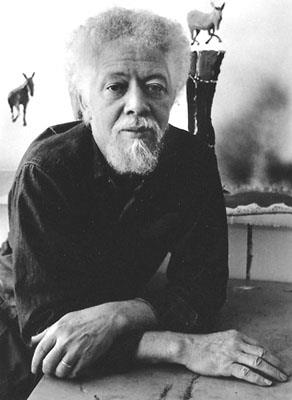
Museums10
Countries1
Largest reported holdingMetropolitan Museum of Art, New York City · 5 recorded works
Loading map…
Where to see Benny Andrews
Collection holdings are reported here; current display varies. Check with each museum before visiting.
-
5 recorded works
Metropolitan Museum of Art
New York City, United States
-
3 recorded works
Detroit Institute of Arts
Detroit, United States


-
2 recorded works
Smithsonian American Art Museum
Washington D.C., United States
-
1 recorded work
New Britain Museum of American Art
New Britain, United States
-
1 recorded work
Museum of Fine Arts Boston
Boston, United States
-
1 recorded work
National Gallery of Art
Washington D.C., United States
-
1 recorded work
Pennsylvania Academy of the Fine Arts
Philadelphia, United States
-
1 recorded work
Museum of Modern Art
New York City, United States
-
1 recorded work
Art Institute of Chicago
Chicago, United States
-
1 recorded work
Yale University Art Gallery
New Haven, United States


Frequently Asked Questions
Where can I see Benny Andrews's work?
Benny Andrews's work can be viewed in several prominent museums. In New York, his pieces are held at the Metropolitan Museum of Art, the Museum of Modern Art, and the Whitney Museum of American[1] Art. Other US locations include the Los Angeles County Museum of Art (LACMA), the Minneapolis Institute of Arts, the Virginia Museum of Fine Arts in Richmond, and the Wolfsonian at Florida International University in Miami Beach. You can also find his work at the Yale University Art Gallery in New Haven. In the United Kingdom, collections that include work by artists of similar periods can be found at the Brighton Museum & Art Gallery, Manchester Art Gallery, and the Victoria & Albert Museum in London. Additionally, the National Museums of Scotland, Royal Museum in Edinburgh may hold relevant pieces.What should I know about Benny Andrews's prints?
Benny Andrews (1930[1]-2006[1]) was an American[1] artist, activist, and educator. Born in rural Georgia, Andrews is best known for his "collage-paintings", works that combine painted areas with attached fabrics. Andrews explored themes of social justice, identity, and the African-American experience. He often depicted scenes from everyday life, as well as historical and literary subjects. His prints share many of these concerns. For example, his series "Autobiography" includes prints that revisit scenes and subjects from his life. As an artist, Andrews was deeply engaged with the Civil Rights movement. He co-founded the Black Emergency Cultural Coalition in 1969[1]. This organisation advocated for greater representation of African-American artists in museums and galleries. Andrews also taught art in various institutions, including Queens College, City University of New York. His work can be found in the collections of the Metropolitan Museum of Art, the Museum of Modern Art, and the Smithsonian American Art Museum. Andrews's prints offer a more accessible way to engage with his distinctive vision and social commentary.Why are Benny Andrews's works important today?
Benny Andrews (1930[1]-2006[1]) was an American[1] artist whose work often engaged with themes of social justice, identity, and the African American experience. He is known for his "collage-paintings", which combined painted areas with attached fabric and other materials, adding a sculptural dimension to his art. Andrews's art is important because of its narrative power. He addressed issues such as poverty, racism, and political oppression, offering perspectives often excluded from mainstream art. His images frequently depict everyday people, imbuing them with dignity. He wanted to portray the reality of their lives. Beyond his artistic output, Andrews was an advocate for artists and arts education. He worked to broaden access to art for underserved communities. His efforts to challenge the art world's biases are relevant to contemporary discussions about representation and equity. Andrews's work continues to resonate with audiences interested in art that confronts social issues and celebrates the human spirit.What techniques or materials did Benny Andrews use?
Benny Andrews, born in 1930[1], employed a distinctive approach to his art. He is particularly known for his use of collage elements in combination with paint. Andrews often layered pieces of fabric and other materials onto his canvases, building up surfaces to add texture and depth. This mixed-media approach allowed him to move beyond the flat picture plane, creating works that have a tactile quality. He used these techniques to explore themes of identity, social justice, and the human condition. Andrews’s method involved both careful planning and spontaneous improvisation. He would often begin with a basic composition, then add collage elements and paint in response to the emerging image. This process allowed for a dynamic interplay between different materials and textures, resulting in works that are both visually stimulating and conceptually complex.Who did Benny Andrews influence?
Benny Andrews's influence is difficult to trace to specific individuals, but his work and ideas had an impact on the broader artistic community, particularly concerning social and political themes. Andrews belonged to a generation of African American[1] artists who came to prominence after the Civil Rights movement. These artists explored personal aesthetics, often adopting expressive representational styles to communicate a distinctive perspective directly to their communities. Andrews's own style combined figuration and collage, often addressing issues of race, class, and social justice. Later artists working in similar veins, sometimes called postmodernists, reckoned with the institutional manipulation of public engagement. They challenged the authority with which art has been institutionalised and commodified. They also offered cultural critiques, most notably feminist ones, that insisted on social and political transformation. Andrews's example may have proven informative to them.Who influenced Benny Andrews?
In the 1940s, Benny Andrews found inspiration in Henri Matisse's work, particularly admiring his use of colour. However, Andrews felt more drawn to Analytic Cubist drawing during his early period. By the 1950s, Andrews considered the New York School artists, such as Jackson Pollock, Willem de Kooning, and Mark Rothko, as mentors. He saw Arshile Gorky's exhibition at the Whitney in 1951[1], which included *Agony* (1947) and *The Liver Is the Cock's Comb* (1944); this show made a considerable impression on him. Andrews also viewed many of Pollock's works from the 1940s, including his later enamel paintings. Andrews also mentions influences from nature, such as the way swallows dart, the shape of rocks, and the colour of a dry doe. He also drew inspiration from his friends and contemporaries.What is Benny Andrews's most famous work?
It is difficult to identify a single, universally recognised 'most famous work' by Benny Andrews. He produced a large and varied body of paintings, drawings, and prints throughout his career. Andrews is best known for his "collage paintings", works that combined painted areas with attached pieces of fabric to add a sculptural element. Andrews often addressed themes of social justice, identity, and the African American[1] experience in his art. He is known for series such as the "Bicentennial Series", which offered a critical perspective on American history, and the "Migration Series", which explored the movement of African Americans from the rural South to the urban North. Andrews also created many works depicting everyday life, portraits, and scenes inspired by his personal experiences. His work defies easy categorisation; its notability depends on the viewer and their interests.What style or movement did Benny Andrews belong to?
Benny Andrews's artistic practice resists easy categorisation. While he engaged with aspects of Expressionism[1], particularly in his emotionally charged figuration and use of bold colours, he did not adhere strictly to its tenets. Expressionism, which peaked in the early 20th century, involved the distortion of form and colour to convey intense emotion. Andrews's work also contains elements of social realism, addressing themes of identity, struggle, and social justice. His "collage-paintings", combining painted areas with attached fabric elements, further set him apart. These works often incorporate found objects and textiles, adding layers of texture and meaning. Andrews's style is perhaps best understood as a synthesis of different approaches, reflecting his personal vision and engagement with social issues. His art defies simple labels, occupying a space between Expressionism and social commentary.
Sources
Where to See guide aggregates verified holdings of Benny Andrews's works across the following collections.
- [1] wikipedia Wikipedia: Benny Andrews Used for: biography.
- [2] book guggenheim-masterp00solo Used for: biography.
- [3] book Penelope J.E. Davies, Walter B. Denny, Frima Fox Hofrichter, Joseph Jacobs, Ann S. Roberts, David L. Simon, Janson's History of Art_ The Western Tradition (8th Edition) Used for: biography.
- [4] book Masterpieces of western art : a history of art in 900 individual studies from the Gothic to the present day Used for: biography.
Editorial overseen by Solis Prints. Sources verified 2026-09-30. Click a source for details, or hover over [N] in the page above to preview.
Editorial standardsMethodologyCorrectionsAI disclosureAbout the editorial team