



Andrea del Verrocchio
- Renaissance
- Italian Renaissance
When Luca Landucci saw the newly unveiled bronze group at Or San Michele on 21 June 1483, the Florentine pharmacist wrote in his diary that it was "the most beautiful thing imaginable and the finest head of the Savior that has yet been made." The Incredulity of Thomas by Andrea del Verrocchio had been years in the making, and it ranks among the defining sculptures of the Florentine Renaissance[7].
Biography
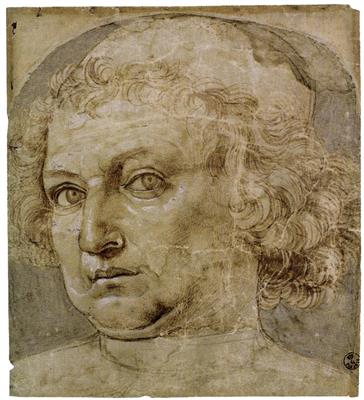
Born in Florence in 1435[7] and trained initially as a goldsmith, Verrocchio became the leading sculptor in the city after Donatello's death. He practised painting and drawing alongside his primary medium, but it was his workshop that most shaped Florentine art: Perugino trained there, and so did Leonardo da Vinci, accepted as a pupil at around 15 after Verrocchio saw his early drawings and responded with enthusiasm. The relationship was not simply one-way: some scholars have argued that Leonardo's presence accelerated Verrocchio's own development rather than solely the reverse.
The Medici family were his principal patrons for much of his career. Commissions for them included the tomb of Cosimo de' Medici at San Lorenzo (1464-1467[7]), the bronze sarcophagus of Giovanni and Piero de' Medici (1472), and the Putto with a Dolphin (c. 1480-1485, Palazzo Vecchio). The Baptism of Christ (c. 1475, Uffizi, 177 x 151 cm, tempera on wood) shows his sculptural precision applied to paint: the standing figures are anatomically deliberate, while the landscape dissolves into atmospheric colour behind them, a passage now generally attributed to Leonardo.
Verrocchio died in Venice in 1488[7], having gone there to cast the equestrian statue of Bartolomeo Colleone. The bronze was unfinished at his death; it stands today in the Campo Santi Giovanni e Paolo and is considered one of the greatest equestrian sculptures ever made.
Timeline
- 1435Born
- 1460Painted “Bust of a Young Woman”
- 1460Painted “David with the head of Goliath”
- 1470Painted “Virgin with the Seated Child”
- 1470Painted “Putto with a Dolphin”
- 1470Painted “The Baptism of Christ”
- 1470Painted “Tobias and the Angel”
- 1476Painted “Model for the Cardinal Forteguerri monument”
- 1488Died
- 1488Painted “Statue of Bartolomeo Colleoni”
Notable Works
Tap a work to read about it, or to view it larger.


Where to See Andrea del Verrocchio
12 museums worldwide.
-
-
 4 works
Louvre
Paris, France
Wed–Mon 09:00–18:00 (Fri until 21:45); closed Tue · €22 adults, free under-18
-
 4 works
Victoria and Albert Museum
London, United Kingdom
Daily 10:00–17:45, Friday 10:00–22:00 · Free
-
2 works
Bode Museum
Berlin, Germany
Tue–Fri 10:00–17:00, Sat–Sun 10:00–18:00, closed Mondays
-

-
 2 works
National Gallery
London, United Kingdom
Daily 10:00–18:00 (Fri until 21:00) · Free


Next stop
Renaissance →
Explore the artists and ideas of Renaissance.
Related Artists



Frequently Asked Questions
What is Andrea del Verrocchio known for?
Andrea del Verrocchio is known for being a master sculptor, with his sculptural precision apparent in his paintings. He is also known for running a workshop in Florence that trained goldsmiths, sculptors, and painters, including Leonardo da Vinci and Perugino.What is Andrea del Verrocchio's most famous work?
Andrea del Verrocchio, born in Florence in 1435[7], was a versatile artist. He worked as a goldsmith, sculptor, and painter. He is known for training Leonardo da Vinci, whose style was influenced by his master. Verrocchio's painting *The Baptism of Christ*, circa 1475, in the Uffizi Gallery, Florence, is among his most recognised works. The poses of the figures show the artist's sculptural skill. Christ turns towards John the Baptist, who appears to enter the scene. The foreground is dominated by line, while colour is used in the background. Leonardo da Vinci assisted his master on this painting. Verrocchio's bronze statue of *David*, completed by 1476, is another noted piece. In 1483, his *Christ and Doubting Thomas* was unveiled at Orsanmichele. A diarist at the time called it "the most beautiful thing imaginable". It is the only work added to Orsanmichele in the second half of the fifteenth century that contains more than one figure and a narrative. He also created the tombs of Cosimo de' Medici (1464-1467[7]) and Cosimo's sons, Giovanni and Piero de' Medici (circa 1470). Verrocchio died in Venice in 1488[7].What should I know about Andrea del Verrocchio's prints?
Andrea del Verrocchio, who was born in Florence in 1435[7] and died in Venice in 1488[7], was a versatile artist. He led an active workshop in Florence that trained artists in painting, sculpture, and goldsmithing. Leonardo da Vinci was his most famous pupil; others included Perugino. Verrocchio was a painter, sculptor, and accomplished draughtsman. Surviving copies of his warrior images suggest a market existed for his work during the late 1470s and early 1480s. Other works from this time show a taste for fantastic armour. One example is a parchment drawing by Marco Zoppo of a warrior, which is held at the British Museum. Verrocchio's silver reliefs of the Decapitation of St John the Baptist, now in Florence's Museo dell'Opera del Duomo, also demonstrate this interest. Lorenzo the Magnificent commissioned fanciful shields and costumes for parades. The armour's ornamentality may come from the late gothic taste for elaborate decoration, seen in manuscripts with foliage. The variety in the armour reflects Alberti's idea that modern artists should include *varietà* in their compositions.What style or movement did Andrea del Verrocchio belong to?
Andrea del Verrocchio (born around 1435[7], died 1488[7]) was a Florentine artist of the early Renaissance[7], also known as the Quattrocento. He was a versatile artist, working as a goldsmith, sculptor, and painter. His sculptures, such as *The Incredulity of Thomas* (commissioned sometime after 1462), show an interest in textures, the play of light, and illusion. The figures' poses and gestures convey the drama of the scene. The sculpture shares qualities with contemporary paintings, indicating a cross-media artistic approach. Verrocchio's painting, such as *The Baptism of Christ* (c. 1475), also displays his sculptural sensibilities. The figures' poses are carefully considered, and their anatomical details are precisely rendered. The robes and exposed body parts are traced with sharpness. Verrocchio led a workshop in Florence that trained artists in various media. Leonardo da Vinci was among his pupils. Leonardo's drawings and paintings were founded on his master's style, and his hand can be recognised in some of Verrocchio's own paintings and sculpture.What techniques or materials did Andrea del Verrocchio use?
Andrea del Verrocchio, a versatile Florentine artist born in 1435[7], was skilled in various media. He was a painter, sculptor, goldsmith and draughtsman. Verrocchio's workshop was a training centre for artists, including Leonardo da Vinci, Perugino, and others. Leonardo's style was built upon his master's teachings, and his hand is identifiable in some of Verrocchio's works. Verrocchio worked with clay, sometimes adding wool fibres for strength. For example, his *Putto Poised on a Globe* (circa 1480) is made of unfired clay over an iron armature. Quartz was added to the clay to prevent cracking. He also worked with terracotta, sometimes adding polychromy, as seen in Francesco di Simone Ferrucci's *Adoration of the Shepherds* (1475-1485[7]), a piece attributed to Verrocchio's workshop. For bronze sculptures, he used the lost-wax method. Examples of his bronze work include a candelabrum for the Palazzo Vecchio (1468-1469), the sarcophagus of Giovanni and Piero de’ Medici (1472), and the statue of David (1476). He also carved marble, such as his *Bust of a Woman Holding a Nosegay*.What was Andrea del Verrocchio known for?
Andrea del Verrocchio (1435[7]-1488[7]) was an Italian[7] sculptor, painter, and goldsmith who worked during the Early Renaissance[7]. He is most well-known as the teacher of Leonardo da Vinci, as well as Perugino, Lorenzo di Credi, and other artists. Verrocchio's sculpture is characterised by its realism and dynamic energy. His bronze statue of David (circa 1473-1475[7]) for the Medici family is an early example of this. It depicts David as a confident, youthful figure, and it contrasts with earlier, more static representations. Another important sculpture is The Incredulity of Saint Thomas (1467-1483), which is located in the Orsanmichele in Florence. Although Verrocchio was highly regarded as a painter, fewer paintings are attributed to him with certainty. The Baptism of Christ (circa 1472-1475), now in the Uffizi Gallery, is one of his most famous paintings. Leonardo da Vinci, who was still an apprentice in Verrocchio's workshop, painted one of the angels in the painting. Verrocchio's workshop was a centre for artistic innovation, and he played a significant role in shaping the development of Florentine art.When did Andrea del Verrocchio live and work?
Andrea del Verrocchio was born in Florence in 1435[7]. He died in Venice in 1488[7], at the age of 53. Verrocchio trained as a goldsmith, but he also worked as a sculptor and painter. He led an active workshop in Florence that trained artists in multiple media. Leonardo da Vinci was his most famous pupil; others included Perugino and Lorenzo di Credi. Leonardo's drawings and paintings are based on his master's style, and his hand can be recognised in some of Verrocchio’s paintings and sculpture. Verrocchio's commissions included a bronze candelabrum for the Palazzo Vecchio (1468-1469[7]) and the bronze sarcophagus of Giovanni and Piero de’ Medici in the church of San Lorenzo (1472). In 1474, he began the mausoleum of Cardinal Forteguerra in the cathedral at Pistoja. The bronze statue of David brought him into prominence in 1476. Later works include the bas-relief of the Beheading of John the Baptist (1477) and, between 1476 and 1483, the Disbelief of St Thomas. Near the end of his life, he worked on the equestrian statue of Colleone, which remained unfinished at his death.Where can I see Andrea del Verrocchio's work?
Paintings and sculptures by Andrea del Verrocchio can be found in museums across Europe and the United States. In Florence, Italy, his work is held at the Galleria degli Uffizi and the Museo Nazionale del Bargello; the latter holds his marble *Bust of a Woman Holding a Nosegay*. Examples of work attributed to Verrocchio are in the Louvre, Paris; the Victoria and Albert Museum, London; the National Gallery[6] of Art, Washington, DC; and the Art Institute of Chicago. Other European museums that hold paintings by artists from Verrocchio's circle include the Bode Museum, Berlin, and the Barber Institute of Fine Arts, Birmingham. Verrocchio led an active workshop in Florence that trained artists in painting, sculpture, and goldsmithing. Leonardo da Vinci was his student; Leonardo's style was founded on his master's. It can be difficult to distinguish Verrocchio's hand from that of his assistants.Where was Andrea del Verrocchio from?
Andrea del Verrocchio was born in Florence in 1435[7]. He was a leading artist in Florence during the early Renaissance[7]; his training encompassed goldsmithing, sculpture, painting, and draughtsmanship. Verrocchio led a busy workshop in Florence. He trained many artists, including Perugino, Lorenzo di Credi, and Leonardo da Vinci. Leonardo's drawings and paintings show the influence of his master's style. Some of Verrocchio's paintings and sculptures may contain Leonardo's hand. His commissions included a bronze candelabrum for the Palazzo Vecchio (1468-1469[7]), the sarcophagus of Giovanni and Piero de’ Medici in San Lorenzo (1472), and the mausoleum of Cardinal Forteguerra in Pistoja (begun 1474). His bronze statue of David (now in the Museo Nazionale, Florence) dates to 1476. Later works include the bas-relief of the Beheading of John the Baptist (1477) and the statue of Colleone. Verrocchio died in Venice in 1488[7], at the age of fifty-three.Who did Andrea del Verrocchio influence?
Andrea del Verrocchio (born 1435[7]) led an active workshop in Florence that trained artists to be goldsmiths, sculptors, and painters. Leonardo da Vinci was perhaps the most well-known product of Verrocchio’s tutelage. Leonardo's drawings and paintings are founded on his master’s style, and his hand can be recognised in some of Verrocchio’s own paintings and sculpture. Other artists who trained with Verrocchio include Perugino and Lorenzo di Credi (1459-1537[7]). Perugino, born in 1446, may have studied the science of colouring and the chemical properties of colours with Verrocchio. Lorenzo di Credi was still working under Verrocchio at the age of twenty-one. A tender friendship united Lorenzo and his master, who named him his executor. Fiorenzo di Lorenzo of Perugia also appears to have worked in Verrocchio’s studio. His first dated work, the altarpiece in the Gallery of Perugia (1472) shows that he was influenced by the Florentine master.Who influenced Andrea del Verrocchio?
Andrea del Verrocchio (born in Florence, 1435[7]) was a versatile artist. He worked as a goldsmith, sculptor, painter, and draughtsman. He led an active workshop in Florence that trained artists in various media, including painting and sculpture. His pupils included Perugino, Lorenzo di Credi, and Leonardo da Vinci. Leonardo’s drawings and paintings are founded on his master’s style; his hand can be recognised in some of Verrocchio’s paintings and sculpture. According to Vasari, Verrocchio’s evolution as an artist was influenced by the masterpieces of antiquity in Rome. However, another view suggests that Leonardo, who quickly transformed from pupil to master, influenced Verrocchio. This influence caused the beauty in Verrocchio’s work to mature, as seen in works such as the *Disbelief of St Thomas*, the Angels of the Forteguerra monument, and the equestrian statue of Colleone. Verrocchio reacted against the cold austerity of Tuscan masters Mino di Fiesole and Matteo Civitale di Lucca. He favoured a somewhat unhealthy type of beauty, with pensive and melancholy figures.Who was Andrea del Verrocchio?
Andrea del Verrocchio (born 1435[7] in Florence, died 1488[7] in Venice) was a versatile Florentine artist of the Renaissance[7]. He was trained as a goldsmith, but he also worked as a sculptor and painter. Verrocchio led a busy workshop in Florence that trained artists in multiple media. Leonardo da Vinci was his most famous pupil; his early work was influenced by Verrocchio's style. Other pupils included Perugino. Verrocchio's commissions included a bronze candelabrum for the Palazzo Vecchio (1468-1469[7]) and, for the church of San Lorenzo, the sarcophagus of Giovanni and Piero de’ Medici (1472) and the tomb of Cosimo de' Medici (1464-1467). In 1474, he began the mausoleum of Cardinal Forteguerra in the cathedral at Pistoja. His bronze statue of David dates to 1476. The bas-relief of the Beheading of John the Baptist (for the silver altar of the Baptistery) dates to 1477. Between 1476 and 1483, he created the Disbelief of St Thomas. Near the end of his life, he was at work on the equestrian statue of Colleone, which remained unfinished at his death.
Sources
Editorial draws on the following primary and tertiary references for Andrea del Verrocchio.
- [1] museum Courtauld Gallery Used for: museum holdings.
- [2] museum National Galleries Scotland Used for: museum holdings.
- [3] museum Kupferstichkabinett Berlin Used for: museum holdings.
- [4] museum Department of Prints and Drawings of the Louvre Used for: museum holdings.
- [5] museum Gemäldegalerie Berlin Used for: museum holdings.
- [6] museum National Gallery Used for: museum holdings.
- [7] wikipedia Wikipedia: Andrea del Verrocchio Used for: biography, birth dates, death dates, identifiers, movement attribution, nationality.
- [8] book Art, the ape of nature : studies in honor of H. W. Janson Used for: stylistic analysis.
- [9] book Beard, Lee, 1973- author, Butler, Adam, author; Van Cleave, Claire, author; Fortenberry, Diane, author; Stirling, Susan, author, Beard, Lee, 1973- author, Butler, Adam, author; Van Cleave, Claire, author; Fortenberry, Diane, author; Stirling, Susan, author - The Art Book_ New Edition, Mini Format Used for: biography, stylistic analysis.
- [10] book da Vinci Leonardo; Müntz, Eugène; da Vinci Leonardo, Leonardo da Vinci _ artist, thinker, and man of science volume 1 Used for: biography.
- [11] book da Vinci Leonardo; Müntz, Eugène; da Vinci Leonardo, Leonardo da Vinci _ artist, thinker, and man of science volume 1 Used for: biography.
- [12] book Masterpieces of western art : a history of art in 900 individual studies from the Gothic to the present day Used for: stylistic analysis.
Editorial overseen by Solis Prints. Sources verified 2026-09-21. Click a source for details, or hover over [N] in the page above to preview.
Editorial standardsMethodologyCorrectionsAI disclosureAbout the editorial team