



About Claudio Coello
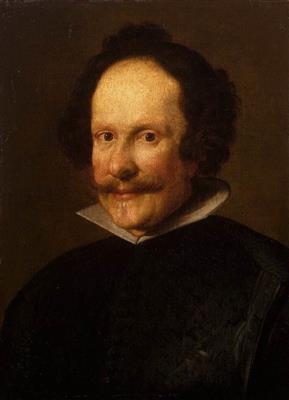
Museums10
Countries4
Largest reported holdingMuseo del Prado, Madrid · 10 recorded works
Loading map…
Where to see Claudio Coello
Collection holdings are reported here; current display varies. Check with each museum before visiting.
-
10 recorded works
Museo del Prado
Madrid, Spain
-
2 recorded works
Goya Museum
Castres, France


-
2 recorded works
Hermitage Museum
Saint Petersburg, Russia
-
2 recorded works
RISD Museum
Providence, United States
-
2 recorded works
Museu Nacional d'Art de Catalunya
Barcelona, Spain
-
1 recorded work
Toledo Museum of Art
Toledo, United States
-
1 recorded work
Royal Monastery of San Lorenzo de El Escorial
San Lorenzo de El Escorial, Spain
-
1 recorded work
Bilbao Fine Arts Museum
Bilbao, Spain
-
1 recorded work
Royal Academy of Fine Arts of San Fernando
Madrid, Spain
-
1 recorded work
Museum of Fine Arts, Houston
Houston, United States


Frequently Asked Questions
Where can I see Claudio Coello's work?
Claudio Coello (1642[1]-1693[1]) was a painter in the court during the last third of the seventeenth century. He is considered the most distinguished artist of his generation. Several museums hold examples of Coello's work. The Museo del Prado in Madrid possesses a number of his paintings, including *Charles II*, *Triumph of Saint Augustine*, and *Padre Cabanillas*. The Alte Pinakothek in Munich holds *Queen Mariana of Austria*. The Toledo Museum of Art (Ohio, USA) has *Saint Joseph with the Christ Child*. Coello also worked as a mural painter. Although only a small fraction of his frescoes survive, he is considered the best-represented muralist of his circle. One example is *Martyrdom of Saint Stephen* in the Church of San Esteban, Salamanca. Coello's portraits, such as those of Charles II and Queen Mariana, display a vitality that sets them apart from those by painters such as Carreño. Coello's career was cut short by his death at the age of fifty-one.What should I know about Claudio Coello's prints?
Claudio Coello (1642[1]-1693[1]) was a Spanish[1] Baroque[1] painter, born in Madrid. He became a court painter to Charles II of Spain. Although primarily a painter, prints after Coello's work circulated during and after his lifetime, extending his influence. Coello trained with Francisco Rizi, and he absorbed influences from Venetian and Flemish painting. He also studied the works of earlier artists in the Spanish royal collection. His style is characterised by dramatic compositions, attention to detail, and a talent for portraiture. One of Coello's most significant paintings is the high altarpiece in the Escorial church. Titled *The Holy Family*, it was completed in 1684[1]. This large-scale work cemented his position as a leading artist in Spain. Other important paintings include works in the Prado Museum, Madrid, and various churches around Spain. Printmakers reproduced some of these famous compositions for collectors. Prints offer a more accessible way to engage with Coello's artistic vision. They allow one to appreciate his skill in composition and his characteristic Baroque aesthetic, even if the colour is absent. They also provide a glimpse into the artistic tastes of 17th-century Spain.Why are Claudio Coello's works important today?
Claudio Coello (1642[1]-1693[1]) is considered the last significant artist to emerge in Spain for a considerable time. His importance lies in his portraiture and mural work, of which only a fraction survives. Coello's portraits often served to represent the Spanish[1] court, with works commissioned for other royal houses. His unfinished portrait of King Charles II provides insight into his working methods, showing his attention to detail in depicting armour and fabrics. A portrait of Charles II from the Stidel in Frankfurt (lost in 1945) suggests that Coello later toned down some of the more extravagant details in a later version. Coello's portrait of Queen Mariana continued a style established by earlier artists, showing her in widow's weeds. This portrait, likely painted c. 1690[1]-93, depicts Mariana as more monumental than in previous portraits. His portraits, such as the *Sagrada Forma*, the oval portrait of Charles II, and *Padre Cabanillas*, display a vitality. In *Padre Cabanillas*, the composition directs the viewer's attention to the subject's face, captured with a touch reminiscent of Velázquez.What techniques or materials did Claudio Coello use?
Claudio Coello was active in the second half of the seventeenth century. Like other Baroque[1] masters, he employed techniques that allowed for flexibility and larger formats. One approach involved toning the surface with a middle or darker value. The image was then created with an underpainting of washes, which could be controlled or spontaneous. Areas to be highlighted were built up with heavy impasto white paint. This created luminous colour, with thin, transparent darks that revealed the preliminary wash. The highlights, defining the volume, appear thick and raised from the painted surface. Another technique involved direct surface blending. Individual colours and values were mixed and applied to indicate highlight and shadow. Each new application of colour was carefully blended into the surrounding paint, resulting in a smooth flow. The underdrawing and underpainting served as a guide for the surface painting, but did not actively affect the surface itself. All traces of brushwork could be blended out, resulting in a smooth, detailed surface with gradual shifts from highlight to shadow.Who did Claudio Coello influence?
Claudio Coello (1642[1]-1693[1]) was the most accomplished painter of his generation working at the court during the last third of the seventeenth century. He is considered the final significant artist of the Golden Age of Spanish[1] painting. Coello's early training was with Francisco Rizi, where he began as an apprentice assisting with metalwork designs. Rizi's influence is apparent in the grandeur and drama of Coello's compositions. Coello also studied the works of Rubens and Van Dyck, both directly and through prints. Coello's portraits, for example his portrait of Charles II in the Museo del Prado and Queen Mariana of Austria, display a certain vitality. His portrait Padre Cabanillas uses a simple composition and sombre colouring to focus attention on the subject's head. Coello died at the age of fifty-one. His death brought an end to the last great artist to emerge in Spain for a considerable time.Who influenced Claudio Coello?
Claudio Coello's artistic development involved several influences. The decoration of walls and ceilings in works such as the ceilings of the vestry of the cathedral of Toledo (1671[1]-74) and of the Casa de la Panadería in Madrid (1672-73) owes a debt to the Bolognese painters Michelangelo Colonna and Agostino Mitelli. They had been brought to the Spanish[1] court by Velázquez in 1658 to decorate the Alcazar. This illusionistic approach shaped the mural painting of Rizi and Carreño, and then that of Coello, who collaborated with José Jiménez Donoso. Their frescoes are similar to those painted by Italian artists. Coello also painted portraits. In his portrait of Queen Mariana, Coello continued the type established by Martínez del Mazo in 1666 and developed by Carreño in the decade of 1670-80. Coello's portraits show a light touch worthy of Velázquez. Near the end of his life, Coello's style changed again. According to rumour, Luca Giordano's arrival at the Spanish court influenced Coello. His last major work, *Martyrdom of Saint Stephen*, echoes the frescoes and canvases painted by Giordano.What is Claudio Coello's most famous work?
Claudio Coello was a prolific painter, muralist, and portraitist. Though many of his frescoes have been lost, he is considered the best-represented muralist of his era, among those whose work survives in Madrid. Coello received an important commission in 1668[1] from the Benedictine nuns of San Placido: paintings for the high altar, the two side altars, and frescoes for the Chapel of the Holy Sepulchre. He signed and dated the high altar painting and one of the lateral works in 1668. Among Coello's well-known portraits are those of Charles II, Queen Mariana of Austria, and Padre Cabanillas. Coello painted Mariana in the style of Martínez del Mazo (active in 1666) and Carreño (active 1670-80). Coello's portrait shows the queen in widow's weeds, seated, and in full length. The portrait, now in the Alte Pinakothek (Munich), likely dates from 1690-93. Coello's portraits are noted for their vitality, particularly when compared to those of Carreño.What style or movement did Claudio Coello belong to?
Claudio Coello (1642[1]-1693[1]) is considered the most accomplished painter of his generation working at court during the final third of the seventeenth century. He is often described as the last significant artist of the Spanish[1] Golden Age. Coello was born in Madrid to a family of Portuguese descent. Initially apprenticed to Francisco Rizi to learn drawing, his painting talent led him to remain with Rizi until 1660[1], after which he began independent work. Rizi's influence is apparent in the grandeur and drama of Coello's compositions. Coello also studied the works of Rubens and Van Dyck, both directly and through prints. The elaborate settings in his religious paintings may reflect Rizi's experience as a set designer, though such features are common in Baroque[1] painting generally. The architectural backgrounds in some of Coello's paintings reference sixteenth-century works by Veronese and Tintoretto that were present in Madrid at the time. Coello's portraits, such as those of Charles II and Queen Mariana of Austria, display a vitality that distinguishes them from those of his contemporaries, such as Carreño. His murals are well represented among the surviving works of his contemporaries in Madrid.
Sources
Where to See guide aggregates verified holdings of Claudio Coello's works across the following collections.
- [1] wikipedia Wikipedia: Claudio Coello Used for: biography.
- [2] book Nina A. Mallory, El Greco to Murillo Used for: biography, stylistic analysis.
- [3] book Masterpieces of western art : a history of art in 900 individual studies from the Gothic to the present day Used for: biography, stylistic analysis.
Editorial overseen by Solis Prints. Sources verified 2026-09-30. Click a source for details, or hover over [N] in the page above to preview.
Editorial standardsMethodologyCorrectionsAI disclosureAbout the editorial team