



About Eric Fischl
American figurative painter whose psychologically charged suburban scenes of the 1980s made him a central figure of Neo-Expressionist narrative art.
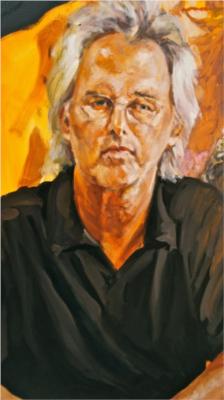
Where to see Eric Fischl
Ranked by works you can see in person.
-
8 works
National Gallery of Canada
Ottawa, Canada
-
3 works
Seattle Art Museum
Seattle, United States


-
2 works
Whitney Museum of American Art
New York City, United States
-
2 works
Museum of Modern Art
New York City, United States
-
2 works
Smithsonian American Art Museum
Washington D.C., United States
-
1 works
National Gallery of Art
Washington D.C., United States
-
1 works
Museo Nacional Centro de Arte Reina Sofía
Madrid, Spain
-
1 works
Art Institute of Chicago
Chicago, United States
-
1 works
Cincinnati Art Museum
Cincinnati, United States
-
1 works
Minneapolis Institute of Art
Minneapolis, United States


View all 12 museums
-
1 works
Metropolitan Museum of Art
New York City, United States
-
0 works
Vanderbilt Museum of Art
Nashville, United States

Frequently Asked Questions
Where can I see Eric Fischl's work?
Eric Fischl's art can be seen in several prominent museums. In New York City, his work is held in the collections of the Metropolitan Museum of Art, the Museum of Modern Art, and the Whitney Museum of American Art. Outside of New York, you can find his pieces at the National Gallery of Art and the National Museum of American Art in Washington, DC. Other locations include the Philadelphia Museum of Art, the Carnegie Museum of Art in Pittsburgh, and the Los Angeles County Museum of Art (LACMA). These institutions offer opportunities to view Fischl's contributions to contemporary art, alongside a diverse range of other artists and movements. Always check museum websites for current exhibitions.What should I know about Eric Fischl's prints?
Eric Fischl, born in New York in 1948[1], is an American painter, sculptor, and printmaker associated with the New Figuration movement. He attended the California Institute of the Arts, where he was taught by conceptual artist Allan Kaprow. Fischl returned to New York in the late 1970s and began producing his signature figurative paintings and prints. These works often depict suburban American life, with an emphasis on its discontents and anxieties. Fischl's prints often explore themes of adolescence, sexuality, and voyeurism. His printmaking techniques include lithography, etching, and woodcut. Fischl frequently combines these methods to create complex, multi-layered images. He has collaborated with several master printers, including Kenneth Tyler. Tyler, a significant figure in American printmaking, worked with artists such as David Hockney and Frank Stella. Fischl's prints are often large in scale and incorporate bold colours and expressive brushstrokes. His work can be found in many public collections, including the Museum of Modern Art in New York and the Tate Gallery in London.Why are Eric Fischl's works important today?
Eric Fischl, born in 1948[1], gained attention in 1979 with "Sleepwalker", a painting depicting a boy masturbating. His work often explores the anxieties of middle-class suburban life, revealing loneliness and desperation beneath the surface. Critics saw his images as exposing the failures of the American dream; his paintings invite viewers to interpret their ambiguities. Fischl's paintings often carry a sense of unease. His work "A Visit To/A Visit From/The Island" (1983) contrasts affluent tourists with the struggles of the local working class, highlighting the ignorance of the privileged. A gathering storm symbolises the threat to the vulnerable. Fischl himself stated that he aims to create "the effect of something unsaid". His paintings address themes of parental estrangement, adolescent rebellion, and suburban emptiness. Fischl's narratives focus on the white middle class, presenting a tense, farcical, and erotically charged vision of suburban life. His style has been compared to Edward Hopper, but with less formal control.What techniques or materials did Eric Fischl use?
Eric Fischl is known for his expressive paintings and prints. Like many oil painters, Fischl may prepare his canvases with gesso, a primer that creates a receptive surface for paint. Artists often use cotton duck canvas, or sometimes Masonite panels, for their work. These can be purchased ready-made or prepared by the artist. To adjust the consistency of oil paints, artists use mediums and thinners. Thinners, such as turpentine or mineral spirits, evaporate quickly and do not alter the paint's chemical composition. Mediums, such as linseed oil or damar varnish, modify the paint's chemical composition and can create different textural qualities. When painting on photographic images, artists may use oils, watercolours, or pastels, often applying a preparatory layer of gelatin (for oils) or shellac (for watercolours and pastels).Who did Eric Fischl influence?
It is difficult to identify specific artists who were directly influenced by Eric Fischl, as influence is often subtle and complex. Fischl's work, which often deals with suburban sexuality and unease, has parallels with other contemporary figurative painters. His unflinching portrayal of the human form and exploration of psychological themes may have resonated with artists interested in similar subjects. Some art historians have noted his connection to the Pictures Generation, a group of artists working in the 1970s and 1980s who explored representation and image culture. While not formally part of that group, Fischl shared some of their concerns about the constructed nature of reality and the power of images. Examining the generation of figurative painters who emerged after Fischl might reveal artists whose approach to narrative, figuration, or subject matter bears a discernible connection to his work. Further research into the reception and critical analysis of Fischl's art could provide additional insight into his impact on the art world and subsequent generations of artists.Who influenced Eric Fischl?
Eric Fischl's artistic development involved several influences. He was drawn to Jackson Pollock's work, which resonated with him and opened the way for him to make his own contribution. Fischl also studied the Old Masters, Cubists, and artists such as Manet, Monet, and Gorky, considering how they made their paintings and attempting to understand them. He has said that he didn't understand Manet until he made *For E. M.* (1981), a version of Manet's painting *Fish (Still Life)* (1864). Only then could he realise how Manet worked with space and made his paintings both three-dimensional and flat. Fischl was also influenced by Matisse, particularly in the 1940s, and followed his work. By 1950-51, Pollock, de Kooning, and Rothko, and the entire New York School had become his mentors.What is Eric Fischl's most famous work?
Eric Fischl, born in New York in 1948[1], gained attention with "Sleepwalker" in 1979. The painting depicts a teenage boy masturbating in a backyard swimming pool. Critics interpreted Fischl's unsettling images as exposing the failure of the American dream. Like John Cheever's short stories, Fischl's paintings appear to portray ordinary suburban life, but with underlying themes of loneliness, desperation, and dread. His sexually charged images of middle-class existence often carry a sense of unease. Viewers are invited to participate in resolving the ambiguities within these narrative canvases, which are psychologically tense and emotionally complex. After initially setting his work in suburban settings, Fischl expanded to exotic locations, such as the Caribbean, Morocco, India, and the Riviera. Despite the appearance of travel scenes, his paintings retain a sense of danger and enigma. According to Fischl, these later paintings reflect his place in the world, whereas his earlier work reflected the world within him; he considers both equally disturbing.What style or movement did Eric Fischl belong to?
Eric Fischl (born 1948[1]) is a New York painter whose work is associated with narrative art. His 1979 painting "Sleepwalker", depicting a boy masturbating, brought him notoriety. Fischl's paintings often portray ordinary suburban life, but with a subtext of loneliness, desperation, and dread. Critics have interpreted his work as exposing the failure of the American dream. Fischl himself describes his theme as "the crisis of American identity". His paintings often have sexually charged elements and leave a sense of unease. Fischl's style has been compared to John Cheever's short stories, where the surface appearance of normality conceals deeper, disturbing undercurrents. Fischl's paintings require active engagement from the viewer to resolve their ambiguities. Later in his career, Fischl set his scenes in locations such as the Caribbean, Morocco, India, and the Riviera; however, the sense of danger and enigma remained present.
Sources
Where to See guide aggregates verified holdings of Eric Fischl's works across the following collections.
- [1] wikipedia Wikipedia: Eric Fischl Used for: biography.
- [2] book Carol Strickland and John Boswell, The Annotated Mona Lisa Used for: biography, stylistic analysis.
- [3] book Carol Strickland and John Boswell, The Annotated Mona Lisa Used for: biography.
- [4] book Carol Strickland and John Boswell, The Annotated Mona Lisa Used for: biography.
Editorial overseen by Solis Prints. Sources verified 2026-08-29. Click a source for details, or hover over [N] in the page above to preview.
Editorial standardsMethodologyCorrectionsAI disclosureAbout the editorial team