



About Alfred Jensen
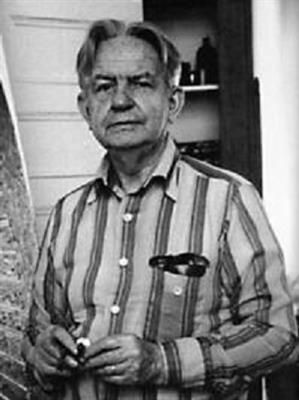
Guatemalan-born painter whose grid-based canvases encoded Pythagorean number theory, Mayan calendars, and Goethe's colour system into dense, layered impasto.
Where to see Alfred Jensen
Ranked by works you can see in person.
-
5 works
Museum of Modern Art
New York City, United States
-
4 works
Buffalo AKG Art Museum
Buffalo, United States


-
4 works
Whitney Museum of American Art
New York City, United States
-
2 works
Yale University Art Gallery
New Haven, United States
-
1 works
Carnegie Museum of Art
Pittsburgh, United States
-
1 works
The Nelson-Atkins Museum of Art
Kansas City, United States
-
1 works
National Gallery of Art
Washington D.C., United States
-
1 works
Harvard Art Museums
Cambridge, United States
-
1 works
Art Institute of Chicago
Chicago, United States
-
1 works
Indianapolis Museum of Art
Indianapolis, United States


View all 13 museums
-
1 works
Seattle Art Museum
Seattle, United States
-
1 works
Detroit Institute of Arts
Detroit, United States
-
1 works
Smithsonian American Art Museum
Washington D.C., United States


Frequently Asked Questions
Where can I see Alfred Jensen's work?
Alfred Jensen's works can be viewed in several museum collections. In the United States, these include the Art Institute of Chicago, the Cincinnati Art Museum, the Cleveland Museum of Art, the Metropolitan Museum of Art, the Museum of Modern Art (both in New York), the Busch-Reisinger Museum (at Harvard University, in Cambridge, Massachusetts), the Los Angeles County Museum of Art, the Minneapolis Institute of Arts, the Virginia Museum of Fine Arts (Richmond), the Charles Hosmer Morse Museum of American[1] Art (Winter Park, Florida), and the Wolfsonian at Florida International University (Miami Beach). In Europe, Jensen's art can be seen at the Aarhus Kunstmuseum (Denmark), the Albertina (Vienna), the Museum am Ostwall (Dortmund, Germany), the Kunstmuseum Bern, the Kunstmuseum Luzern, the Louisiana Museum of Modern Art (Humlebaek, Denmark), the Musée National d'Art Moderne (Centre Georges Pompidou, Paris), the Nasjonalgalleriet (Oslo), and the Nationalmuseum (Stockholm). Other locations include the Amos Andersonin Taidemuseo (Helsinki), the Arkiv for Dekorativ Konst (Lund, Sweden), the Fondation Maeght (Saint Paul de Vence, France), the Fyns Stifts Kunstmuseum (Odense, Denmark), the Henie-Onstad Art Center (Hovikodden, Norway), the Malmö Museum (Sweden), and the Museum of Modern Art (Oxford).What should I know about Alfred Jensen's prints?
Alfred Jensen (1903[1]-1981[1]) was a Guatemalan-American[1] abstract painter. His mature work engaged with number systems, calendars, and theories, rendered in a grid-like, colour-coded style. Jensen's prints are less well known than his paintings, but they represent a significant aspect of his wider practice. He explored similar themes in his printmaking as in his paintings, including mathematical and philosophical concepts. Like other artists of his generation, Jensen's approach to printmaking was experimental. He was less concerned with traditional techniques than with using print as another medium for exploring his ideas. His prints often incorporate bold colours and geometric shapes, mirroring the style of his paintings. Collectors should be aware that Jensen's prints, like those of many artists, were not always produced under strict rules. The numbering of prints, for example, was not a standard practice early in his career. The intent of the artist is a useful guide when assessing the status of a print, differentiating between an original print and a reproduction.Why are Alfred Jensen's works important today?
Alfred Jensen (1903[1]-1981[1]) was born in Guatemala. He studied art in California, Munich, and Paris. His work gained attention in the 1950s, with solo exhibitions in New York and inclusion in group shows. Jensen's art is notable for its engagement with colour theory, mathematics, and ancient cultures. His paintings often incorporate grids and geometric patterns, reflecting his interest in numerical relationships and their connection to astronomical theories. For example, Uaxactun (1964[1]) uses squared numbers and relates them to Mayan observatories. Jensen's work was exhibited at the Solomon R. Guggenheim Museum in 1961. Later in life, he had solo exhibitions at the Stedelijk Museum in Amsterdam and the Kunsthalle Basel in 1964. His paintings offer a unique synthesis of abstract expressionism, colour theory, and mathematical concepts.What techniques or materials did Alfred Jensen use?
Alfred Jensen's paintings often involved oil on canvas. One example, "Uaxactun" (1964[1]), is oil on canvas measuring approximately 127 x 127 cm. Jensen's approach involved colour and form (numbers), structured according to what he called "the pyramid builders' concepts". These expressions, he explained, represented time-cycles, planetary orbits, and the sun, set against a background of fixed stars. He associated numerical relationships with astronomical theories from Central American[1] cultures, drawing inspiration from his travels and observations of landscapes and pyramids in Guatemala, Yucatan, and Mexico. His work often explored the arithmetic properties of squared numbers. In "Uaxactun", the twenty-eight squares of the perimeter have a reciprocal relationship to the total number of squares in the painting. He linked these numerical relationships to the astronomical theories of Central American cultures, while citing Pythagoras as a source.Who did Alfred Jensen influence?
It is difficult to make definitive claims about Jensen's artistic influence. The Danish art scene maintained lively contact with Paris and the Bauhaus. Before 1939[1], a group of young artists, some of whom became important after the war, had already established themselves. Their idols included artists like Kandinsky and Klee, as well as Mondrian and the great Russians. Their avant-garde spirit survived the war years, and immediately after 1945, they renewed their international contacts. Robert Jacobsen and Richard Mortensen moved to Paris, where they stayed for many years. Parallel to this movement was the COBRA group (Copenhagen, Brussels, Amsterdam), whose prime mover was the Danish artist Asger Jorn, who also moved to Paris but spent long periods in Denmark and Sweden. There were active links with German art, particularly in the wake of the COBRA movement. These links can be traced to the SPUR group in West Germany, to the international situationist movement, and to Fluxus.Who influenced Alfred Jensen?
Alfred Jensen's artistic development involved a range of influences, most notably from the fields of mathematics, science, and philosophy. He studied with Hans Hofmann in Munich in the early 1930s; Hofmann's theories about colour and space had a considerable effect on Jensen's early work. Jensen's interest in systems of knowledge led him to explore diverse subjects such as Goethe's colour theory, the I Ching, Mayan mathematics, and ancient Greek philosophy. These intellectual pursuits shaped his mature artistic style, which is characterised by grid-like structures and the use of colour to represent abstract concepts. While Jensen was part of the Abstract Expressionist movement, his work diverges from its emphasis on spontaneous gesture. Instead, he favoured a more systematic approach, reflecting his deep engagement with intellectual and philosophical ideas. Piet Mondrian's geometric abstraction and Paul Klee's symbolic language are also seen as antecedents to Jensen's unique artistic vocabulary. His paintings are visualisations of complex systems, demonstrating the artist's synthesis of art and knowledge.What is Alfred Jensen's most famous work?
Alfred Jensen is not known for one single, definitive work. Instead, he developed a recognisable style centred on geometric abstraction and colour theory. His paintings often incorporate grids, squares, and numerical sequences. Jensen's mature works explored systems of knowledge. He was influenced by Goethe's colour theory, magic squares, and ancient cosmological diagrams. He aimed to represent complex ideas through visual form. Examples of Jensen's paintings include "Great Pyramid I" (1960[1]), "The Mayan Calendar" (1961), and his series of calendar paintings. These works demonstrate his interest in systems of order and the relationships between colour and number. While no single piece overshadows his other creations, his overall approach to painting, combining mathematical and philosophical concepts with abstract forms, defines his artistic output. His work invites viewers to contemplate the underlying structures of the universe.What style or movement did Alfred Jensen belong to?
Alfred Jensen's artistic affiliations are complex. He was born in Guatemala in 1903[1], but his early travels in Europe exposed him to modernism. He studied at Hans Hofmann's school in Munich in 1926[1], and at the Academie Scandinave in Paris in 1929. These experiences introduced him to contemporary European art. Jensen settled in New York in 1951, and he befriended Mark Rothko. His work from the 1950s and onward displays an interest in colour theory, mathematics, and ancient cultures. His paintings often incorporate grids and geometric shapes, referencing systems like the Mayan calendar or Pythagorean mathematics. One example, "Uaxactun" (1964), relates to a Mayan astronomical observatory. While Jensen's work does not fit neatly into a single category, it shares characteristics with abstract expressionism and geometric abstraction. His interest in systems and theories sets him apart, but his use of colour and form aligns with abstract painting traditions. He died in 1981[1] in New Jersey.
Sources
Where to See guide aggregates verified holdings of Alfred Jensen's works across the following collections.
- [1] wikipedia Wikipedia: Alfred Jensen Used for: biography.
- [2] book guggenheim-guhe00solo Used for: biography.
- [3] book guggenheim-northernvisionss03solo Used for: biography.
- [4] book Landauer, Susan, The not-so-still life : a century of California painting and sculpture Used for: biography.
Editorial overseen by Solis Prints. Sources verified 2026-08-29. Click a source for details, or hover over [N] in the page above to preview.
Editorial standardsMethodologyCorrectionsAI disclosureAbout the editorial team