



About Dmitry Levitzky
- portrait painting
- portrait
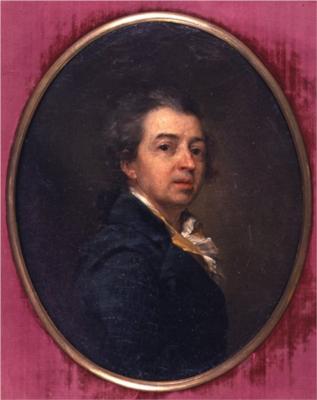
Leading 18th-century Russian[1] court portraitist, celebrated for the Smolny Institute series commissioned by Catherine II.
Where to see Dmitry Levitzky
Collection holdings are reported here; current display varies. Check with each museum before visiting.
-
16 recorded works
Russian Museum
Saint Petersburg, Russia
-
13 recorded works
Tretyakov Gallery
Moscow, Russia


-
6 recorded works
Hermitage Museum
Saint Petersburg, Russia
-
2 recorded works
Radishchev Art Museum
Saratov, Russia
-
2 recorded works
National Museum in Warsaw
Warsaw, Poland
-
1 recorded work
National Gallery of Armenia
Yerevan, Armenia
Also here (6)


Own a piece of it
Dmitry Levitzky prints
Hand-finished archival prints from Dmitry Levitzky's body of work.
 Portrait of A. D. Levitzkaya, Artist's Daughter - Dmitry Levitzky
From £28.00
Portrait of A. D. Levitzkaya, Artist's Daughter - Dmitry Levitzky
From £28.00
 Portrait of Count Artemiy Vorontsov - Dmitry Levitzky
From £28.00
Portrait of Count Artemiy Vorontsov - Dmitry Levitzky
From £28.00
 Portrait of Praskovia Vorontsova - Dmitry Levitzky
From £28.00
Portrait of Praskovia Vorontsova - Dmitry Levitzky
From £28.00
 Portrait of an Unknown Woman with a Rose - Dmitry Levitzky
From £28.00
Portrait of an Unknown Woman with a Rose - Dmitry Levitzky
From £28.00
 Portrait of Gubarev - Dmitry Levitzky
From £28.00
Portrait of Gubarev - Dmitry Levitzky
From £28.00
 Portrait of Natalia Borshchova - Dmitry Levitzky
From £28.00
Portrait of Natalia Borshchova - Dmitry Levitzky
From £28.00
 Portrait of Ekaterina Nelidova - Dmitry Levitzky
From £28.00
Portrait of Ekaterina Nelidova - Dmitry Levitzky
From £28.00
 Portrait of Ivan Varfolomeevich Lamb - Dmitry Levitzky
From £28.00
Portrait of Ivan Varfolomeevich Lamb - Dmitry Levitzky
From £28.00
Can't travel? Bring Dmitry Levitzky home.
See all Dmitry Levitzky prints →Frequently Asked Questions
Where can I see Dmitry Levitzky's work?
Dmitry Levitzky's works can be found in numerous museums and collections. These include the All-Russian[1] Museum of Decorative and Folk Art, the Astrakhan Kustodiev Picture Gallery, and the Kuskovo State Porcelain Museum. These are all located in Russia. His art is also held in international collections. These include the Albright-Knox Art Gallery (Buffalo, New York), the Dallas Museum of Art, the Los Angeles County Museum of Art, and the Peggy Guggenheim Collection in Venice. These are located in the United States and Italy. Other locations include the Wilhelm Hack Museum (Ludwigshafen, Germany) and the Irkutsk Regional Art Museum. Many other galleries and private collections throughout Europe and the United States also hold works. These include the Galerie Gmurzynska (Cologne), Annely Juda Fine Art (London), and the Collection Thea Berggren (Chicago).Why are Dmitry Levitzky's works important today?
Dmitry Levitzky's portraits offer insights into 18th-century Russian[1] society and the development of portraiture as a genre. He captured the likenesses of Catherine the Great and members of the Russian aristocracy, providing a visual record of the elite during a transformative period. Levitzky's skill in portraying not only physical appearance but also character and social standing makes his works valuable historical documents. His portraits often include details of clothing, setting, and pose that reflect the sitter's status and interests. Moreover, Levitzky's artistic techniques, such as his use of light and shadow, contribute to the aesthetic appeal of his paintings. His ability to create realistic and flattering images made him a sought-after portraitist. Museums continue to exhibit his works.What techniques or materials did Dmitry Levitzky use?
Dmitry Levitzky's painting techniques are not described in detail in the reference passages. However, information about painting practices of the period, and analysis of contemporary works, provides some context. Seventeenth-century Latvian churches used materials that reflected regional availability and various artistic influences. The churches at Nurmuizha and Burtnieki, both decorated in the 1680s, show different approaches. Nurmuizha used a chalk-glue ground, while Burtnieki used an ochre in oil ground. Pigments like indigo and smalt were common for blue colours; natural ultramarine was rare. Gilding was used, sometimes with water-gilding techniques. Decorative wood carvings were often silvered, with coloured glazes applied in some areas. The choice of materials and techniques often depended on the craftspeople available, as there was considerable movement of such workers. A painter might be brought in from any workshop, especially in rural areas, introducing their typical methods.Who did Dmitry Levitzky influence?
Information about Dmitry Levitzky's influence on other artists is scarce. However, the broader context of Russian[1] art history offers some relevant connections. The Blue Rose group, emerging in the early 1900s, favoured a subjective, intuitive approach to art. Essays by Nikolai Kulbin and Vladimir Markov emphasised this. Their focus on the psychological aspects of the creative process links to a tentative expressionist movement in Russia. David Burliuk and Pavel Filonov might be assigned to it. Figures such as Liubov Popova, Alexander Rodchenko, and Vladimir Tatlin were influenced by Mikhail Vrubel. Rodchenko stated that in the early 1910s he 'painted like Vrubel,' while Tatlin valued and collected Vrubel's artwork. Other avant-garde artists who encountered Vrubel’s work include Natalia Goncharova, Mikhail Larionov, Alexandra Ekster, Alexander Archipenko, David Burliuk, and Kazimir Malevich. Naum Gabo summarised Vrubel’s impact, stating that he freed painting and sculpture from academic schemata. Gabo considered Vrubel's influence on their visual consciousness as decisive as Cézanne’s.Who influenced Dmitry Levitzky?
Dmitry Levitzky, born in Ukraine, was the son of a priest and gifted engraver. He initially studied with Antropov. Later, from 1771[1] to 1788, he taught portrait painting[1] at the Academy. During his time, Russian[1] painting owed much to European fashions, which often reached Russia with some delay. However, Russian painters could familiarise themselves with art through reproductions and the art-buying habits of the ruling class. Catherine the Great, for example, acquired French, Italian, and Dutch masterpieces for the Hermitage. Levitzky's style has been compared to that of Boucher and Watteau. He excelled at female portraiture, painting Ursula Mniszech and Maria Diakova, among others. Between 1773 and 1776, he painted Catherine the Great's favourite pupils at the Smolny Institute, depicting them in activities such as amateur dramatics and playing musical instruments.What is Dmitry Levitzky's most famous work?
Dmitry Grigoryevich Levitzky (1735[1]-1822[1]) was a Ukrainian-born painter who created portraits for the Russian[1] Imperial court. He is best known for his formal portraits of Catherine the Great and members of the Russian aristocracy. Among Levitzky's most recognised works is his series of portraits depicting young women from the Smolny Institute for Noble Maidens, a school for girls from aristocratic families. Commissioned by Catherine II, these portraits (executed in the 1770s) captured the grace and accomplishments of the students. The sitters are shown engaged in activities such as performing music, dancing, and acting in theatrical productions. His 1780s portrait[1] of Catherine II as a Legislator in the Temple of Justice is another popular work. It presents the Empress in front of an altar to the Roman goddess of Justice. She wears a simple dress and stands barefoot, presenting herself as a humble servant of the state. The painting is now part of the collection of the Russian Museum in St Petersburg.What style or movement did Dmitry Levitzky belong to?
Dmitry Levitzky was a portrait[1] painter who worked in Russia during the second half of the eighteenth century. He is generally regarded as one of the three most important Russian[1] portraitists of the era, alongside Fyodor Rokotov and Vladimir Borovikovsky; however, their styles differed considerably. Levitzky was born in Ukraine, the son of a priest and engraver. He studied with Antropov, then produced icons in Moscow for some years. From 1771[1] to 1788, he taught portraiture at the Academy. He is known for his ability to capture and express personality in his portraits, paying careful attention to detail while maintaining a sense of spontaneity. Catherine the Great commissioned Levitzky to paint portraits of her favourite pupils at the Smolny Institute between 1773 and 1776. These portraits depicted the young noblewomen engaged in activities such as amateur dramatics, playing the harp, and dancing. His portraits of foreign visitors to Saint Petersburg, including Diderot, brought him international recognition, with some comparing his style to that of Boucher and Watteau. In 1788, illness forced him to retire from the Academy.What was Dmitry Levitzky known for?
Dmitry Levitzky, a Ukrainian-born painter, is remembered for his skill in portraiture. The son of a priest and engraver, he studied with Antropov before creating icons for churches in Moscow. From 1771[1] to 1788, Levitzky taught portrait painting[1] at the Academy. Levitzky excelled at portraying women. His subjects included the aristocrat Ursula Mniszech and Maria Diakova, who was the wife of Nikolaï Lvov. Between 1773 and 1776, Catherine the Great commissioned him to paint portraits of her favourite pupils at the Smolny Institute, a school for young noblewomen. These paintings depicted the girls engaged in activities such as amateur dramatics, playing the harp, and dancing. His portraits of foreign visitors to Saint Petersburg, including Diderot, brought him international recognition. Some critics compared his style to that of Boucher and Watteau. Illness forced his retirement from the Academy in 1788, and he painted very little in the last three decades of his life. He possessed an ability to interpret and express personality, and his work maintained a feeling of spontaneity.
Sources
Where to See guide aggregates verified holdings of Dmitry Levitzky's works across the following collections.
- [1] wikipedia Wikipedia: Dmitry Levitzky Used for: biography.
- [2] book J. Bruyn, B. Haak, S. H. Levie, P. J. J. van Thiel, E. van de Wetering (auth.), A Corpus of Rembrandt Paintings _ Volume II_ 1631–1634 Used for: biography.
- [3] book Natalya Strizhkova Andrei Sarabyanov, Art and Power_ The Russian Avant-garde under Soviet Rule, 1917–1928 Used for: stylistic analysis.
- [4] book Palmer, Allison Lee, Historical Dictionary of Neoclassical Art and Architecture Used for: biography.
- [5] book Yevgenia Petrova (editor), Origins of the Russian avant-garde_ celebrating the 300th anniversary of St. Petersburg_ the Walters Art Museum, Baltimore (13 February-25 May 2003), Fine Arts Museums of San Francisco (29 June-21 September 2003) Used for: biography.
- [6] book Steven Nadler, Rembrandt's Jews Used for: biography.
- [7] book Rococo : art and design in Hogarth's England Used for: biography.
- [8] book J. E. Bowlt, Russian Art of the Avant Garde - Theory and Criticism 1902-1934 Used for: stylistic analysis.
- [9] book Russian art of the avant-garde : theory and criticism, 1902-1934, with 105 illustrations Used for: stylistic analysis.
- [10] book Peter. Leek, Russian Painting Used for: biography.
Editorial overseen by Solis Prints. Sources verified 2026-09-30. Click a source for details, or hover over [N] in the page above to preview.
Editorial standardsMethodologyCorrectionsAI disclosureAbout the editorial team