



About Alexey Venetsianov
Russian[1] founder of peasant genre painting who ran a school at Safonkovo training over seventy pupils, including serfs he freed to give them the chance to paint.
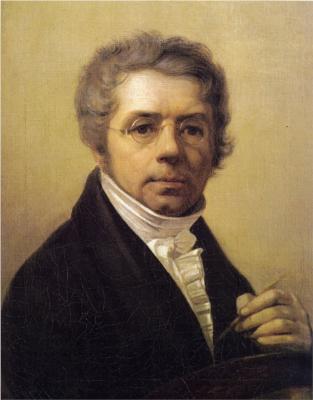
Where to see Alexey Venetsianov
Collection holdings are reported here; current display varies. Check with each museum before visiting.
-
24 recorded works
Russian Museum
Saint Petersburg, Russia
-
19 recorded works
Tretyakov Gallery
Moscow, Russia


-
1 recorded work
Kovalenko Krasnodar Regional Art Museum
Krasnodar, Russia
Also here (2)

Own a piece of it
Alexey Venetsianov prints
Hand-finished archival prints from Alexey Venetsianov's body of work.
 Portrait of a Girl - Alexey Venetsianov
From £37.00
Portrait of a Girl - Alexey Venetsianov
From £37.00
 A Boy in a Red Shirt - Alexey Venetsianov
From £28.00
A Boy in a Red Shirt - Alexey Venetsianov
From £28.00
 A Peasant Girl from Tver - Alexey Venetsianov
From £28.00
A Peasant Girl from Tver - Alexey Venetsianov
From £28.00
 Shelling of Beet - Alexey Venetsianov
From £28.00
Shelling of Beet - Alexey Venetsianov
From £28.00
 The Spinner - Alexey Venetsianov
From £28.00
The Spinner - Alexey Venetsianov
From £28.00
 Peter the Great. Founding of St. Petersburg - Alexey Venetsianov
From £28.00
Peter the Great. Founding of St. Petersburg - Alexey Venetsianov
From £28.00
 Threshing-Floor - Alexey Venetsianov
From £28.00
Threshing-Floor - Alexey Venetsianov
From £28.00
 Harvesting. Summer - Alexey Venetsianov
From £28.00
Harvesting. Summer - Alexey Venetsianov
From £28.00
Can't travel? Bring Alexey Venetsianov home.
See all Alexey Venetsianov prints →Frequently Asked Questions
Where can I see Alexey Venetsianov's work?
Alexey Venetsianov's paintings can be viewed in several museums. The Hermitage Museum in St Petersburg has a collection of his work. The Pushkin Museum of Fine Arts in Moscow also holds examples. Outside Russia, the National Gallery of Victoria in Melbourne, Australia, possesses at least one painting. In the United States, the Minneapolis Institute of Arts has an example. Other museums with works by Venetsianov include the Louvre in Paris; the Musée des Beaux-Arts in Nancy, France; and the Alte Pinakothek in Munich, Germany. The National Gallery in London also holds paintings by the artist. It is worth checking museum websites in advance for current exhibitions and availability of specific works.Why are Alexey Venetsianov's works important today?
Alexey Venetsianov (1780[1]-1847[1]) is significant for his quiet realism in depicting ordinary people, marking a development in Russian[1] painting. His influence was felt for decades after his death. Initially a civil servant, Venetsianov studied with Borovikovsky and offered his services as a portrait painter in Saint Petersburg. He gained recognition from the Academy for his self-portrait in 1811[1] and was nominated as an academician for his portrait of Golovachevsky. In 1823, he declared his intention to focus on genre painting, though he continued to paint portraits of family and peasants, including Gogol in 1834. Venetsianov aimed to represent nature directly, without imitating other artists. In 1819, he left the civil service and moved to his estate, Safonkovo, near Moscow. There, he taught painting to neighbours and serfs, and over seventy pupils absorbed his artistic approach. His work was transformed after seeing François Granet's painting in 1820, which inspired his treatment of space and light, seen in 'The Threshing Floor'.What techniques or materials did Alexey Venetsianov use?
Alexey Venetsianov began his artistic career as a portrait painter, after working as a draughtsman and land surveyor. He studied with Borovikovsky after moving to Saint Petersburg in 1802[1]. He advertised his services as a portrait painter and received an award from the Academy for a self-portrait in 1811. Technique, for Venetsianov and his contemporaries, involved choices in the application of paint. Pointillé, thick relief impasto, glaze, a smooth finish, and layering of paints were all methods used to create a good picture surface. Some artists used multiple palettes, each for a distinct tone; Lorenzo di Credi sometimes had as many as thirty tones on his palette, with a different brush for each. Other artists, such as Amico Aspertini, used small pots hung from the belt instead of a palette, like a fresco painter. Venetsianov’s early portraits led to his nomination as an academician. However, in 1823, he declared his intention to focus on genre painting, writing that he was relinquishing portrait painting on the back of a recently finished portrait.Who did Alexey Venetsianov influence?
Alexey Venetsianov's quiet realism influenced Russian[1] painting for several decades. He aimed to depict nature as it appeared, without emulating other artists. In 1819[1], he left civil service to teach painting at his Safonkovo estate, east of Moscow. Over seventy pupils absorbed his approach, and some became teachers themselves, passing his ideas to future generations. Two of Venetsianov’s students, Nikifor Krylov (1802-31) and Grigory Soroka (1823-64), had considerable influence despite their short careers. Krylov's Winter Landscape (1827) is distinctly Russian in its depiction of the countryside and people. To achieve realism, Krylov built a simple wooden studio overlooking the snow-covered plain. Yuri Krylov (1805-41) may also have been Venetsianov’s pupil. His painting, The Kitchen, shares a similar mood, attention to detail, and preoccupation with perspective and light as Venetsianov’s work.Who influenced Alexey Venetsianov?
Alexey Venetsianov initially studied with Borovikovsky after moving to Saint Petersburg in 1802[1]. He also studied the work of other artists through reproductions and the art-buying habits of the Russian[1] ruling class. Catherine the Great, for example, acquired French, Italian, and Dutch masterpieces for the Hermitage. Venetsianov received a distinction from the Academy for a self-portrait in 1811, which was compared to Chardin's for its frankness. Later, after seeing François Granet's The Choir of the Church of the Capuchin Monastery on the Piazza Barberini in the Hermitage in 1820, Venetsianov was struck by Granet's use of space and light. This inspired him to apply similar techniques to Russian interiors, resulting in paintings such as The Threshing Floor. Venetsianov aimed to depict nature accurately, without emulating specific artists like Rembrandt or Rubens. In 1819, he moved to his country estate, Safonkovo, and began teaching art to neighbours and serfs. Over seventy pupils absorbed his approach, and some became teachers themselves, passing on his ideas.What is Alexey Venetsianov's most famous work?
Alexey Venetsianov is best known for his genre paintings depicting ordinary Russian[1] people, a style that marked a shift towards realism in Russian art. Although he painted portraits early in his career, including one of Golovachevsky, which earned him the distinction of academician, he declared in 1823[1] that he would focus on genre painting. However, he continued to paint portraits of his family and peasants, blurring the lines between the two categories. His interest in depicting scenes from everyday life is evident in works such as *Girl with a Birch-Bark Jar* and *Reaper*, both painted after 1823. Venetsianov aimed to represent nature accurately, avoiding imitation of other artists' styles. His exposure to François Granet's work, particularly *The Choir of the Church of the Capuchin Monastery on the Piazza Barberini*, inspired him to explore the use of light and space in his paintings of interiors. This is exemplified in *The Threshing Floor*, for which he altered a barn to achieve the desired lighting and detail.What style or movement did Alexey Venetsianov belong to?
Alexey Venetsianov's work represents an important step in the development of Russian[1] painting because of its quiet realism. He painted ordinary people, and his style influenced Russian artists for several decades. Before dedicating himself to painting, Venetsianov worked as a draughtsman and land surveyor. In 1802[1], he moved to Saint Petersburg and studied with Borovikovsky. He advertised his services as a portrait painter. In 1811, the Academy recognised his self-portrait, which has been compared to Chardin's for its frankness. He was nominated as an academician for a portrait of Golovachevsky. In 1823, Venetsianov decided to focus on genre painting. However, the distinction between his portraiture and genre works is blurred, as seen in paintings such as *Girl with a Birch-Bark Jar* and *Reaper*. He continued to paint portraits of his family and peasants, including a series of peasant girls wearing shawls. In 1834, he painted a portrait of Gogol. Venetsianov aimed to depict nature as it appeared, without emulating other artists. In 1819, he left the civil service and moved to his estate, Safonkovo, where he taught painting to neighbours and serfs. Over seventy pupils absorbed his approach to art.What was Alexey Venetsianov known for?
Alexey Venetsianov (1780[1]-1847[1]) is known for genre paintings depicting ordinary people. His quiet realism influenced Russian[1] painting for several decades. Before becoming a painter, Venetsianov worked as a draughtsman and land surveyor. In 1802[1], he moved to Saint Petersburg and studied with Borovikovsky. He advertised his services as a portrait painter and received a distinction from the Academy for a self-portrait in 1811. He was nominated as an academician for a portrait of Golovachevsky. In 1823, Venetsianov shifted his focus to genre painting. However, he continued to paint portraits of his wife, daughter, and young serfs. His stated aim was to depict nature as it appears, without emulating other artists. In 1819, he left the civil service and moved to his country estate, Safonkovo, where he taught painting to neighbours and serfs. Over seventy pupils absorbed his approach to art; some became teachers themselves. His work, such as *Girl with a Birch-Bark Jar* and *Reaper*, blurred the lines between portraiture and genre painting. He admired progressive ideas, and in 1834, painted a portrait of Gogol.
Sources
Where to See guide aggregates verified holdings of Alexey Venetsianov's works across the following collections.
- [1] wikipedia Wikipedia: Alexey Venetsianov Used for: biography.
- [2] book Peter. Leek, Russian Painting Used for: biography.
Editorial overseen by Solis Prints. Sources verified 2026-09-30. Click a source for details, or hover over [N] in the page above to preview.
Editorial standardsMethodologyCorrectionsAI disclosureAbout the editorial team